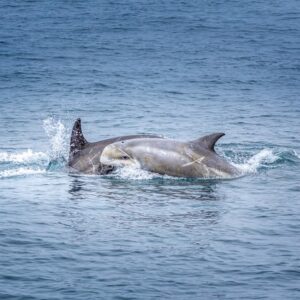
The Strait of Gibraltar is one of the few places in Europe where sightings of cetaceans are common, and not by chance: the 14-kilometre stretch of sea marks the passage between the Atlantic and the Mediterranean.
What species are there, when can each one be seen, and how does a trip work?.
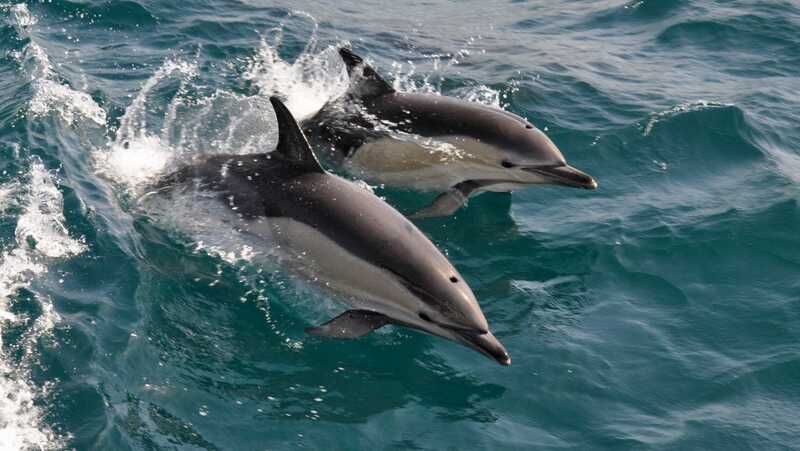
The important distinction is between residents and visitors, because it determines whether you’ll see anything on your date:
| Species | Attendance | When |
|---|---|---|
| Common dolphin, striped dolphin and bottlenose dolphin | Residents | All year round |
| Common cormorant | Resident | All year round |
| Fin whale | By the way | Spring and summer |
| Sperm whale | By the way | Spring and summer |
| Orca | Seasonal | July and August |
Dolphins and pilot whales are always, so a trip in January also makes sense, weather permitting.
The great ones are in a league of their own. The The common blue whale is the second-largest animal on the planet, and the sperm whale, the largest of the toothed cetaceans. They’re just passing through; they don’t live here.
They appear in July and August, and there is a specific reason for this: are tracking the migration of bluefin tuna across the Strait.
That makes them the most predictable species on the calendar and, at the same time, the most limited: outside those months, they are not there.
There are three factors at play:
It’s both a mandatory running section and a refreshment area, which explains why such a small stretch has such a high density.

Between two and three hours, including the time taken to sail to the areas where the animals are usually found and the duration of the observation. The sightseeing cruise itself lasts around 90 minutes.
There is a guide on board, which provides information on the species and alerts you when there is activity.
In the event of strong easterly winds, departures are delayed or cancelled for safety’s sake. It’s not unusual: the Levante is the prevailing wind in the area and it’s windier in summer, right in the middle of the high season.
Please confirm your departure on the day itself before heading to the port. If it coincides with the east wind, Here’s what to do in Tarifa over those few days.
And one thing we should be clear about: They are animals living in the wild. No trip can guarantee a sighting, and reputable companies do not make such promises.
In Spanish waters, approaching cetaceans is regulated. This is not a recommendation: there are regulations in place.
How to tell if the boat is performing well:
If, whilst on board, you see a group being chased or the distance being closed in for a photo, that operator is not complying with the rules.
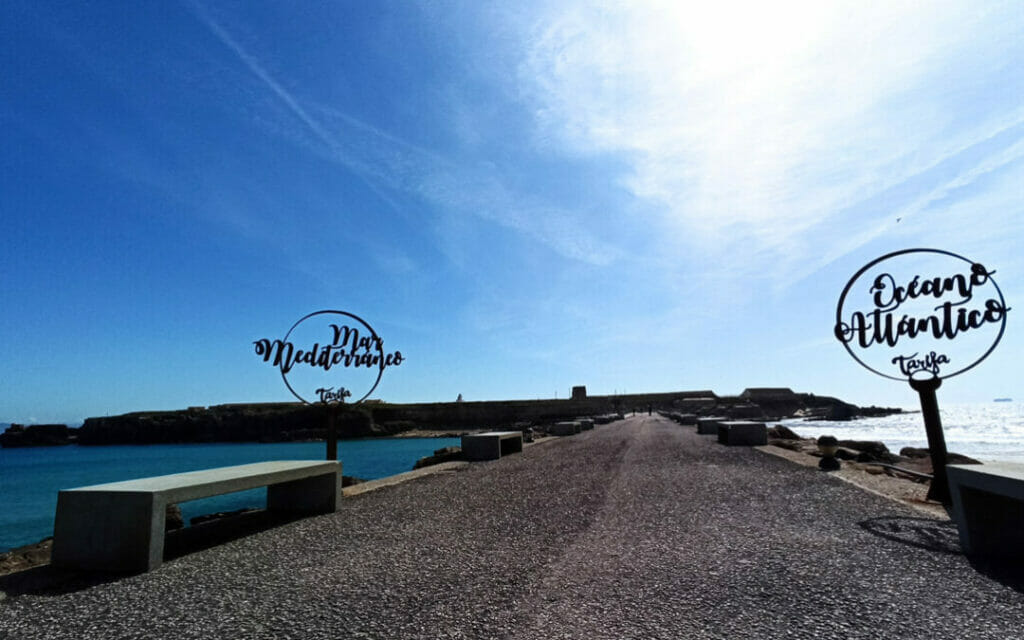
You don’t need a boat to give it a go. The Isthmus of Isla de las Palomas, in Tarifa, is the southernmost point of the Iberian Peninsula and you can walk around freely.
With binoculars and a bit of patience, you can spot cetaceans in the distance, especially on days when the sea is calm.
Don’t expect the same as from the boat: you’ll see them from a distance and only briefly. But it’s free, and the views of the Strait make up for it anyway.
We are a local tour operator based in Málaga with over 50 years’ experience organising trips around Andalusia.
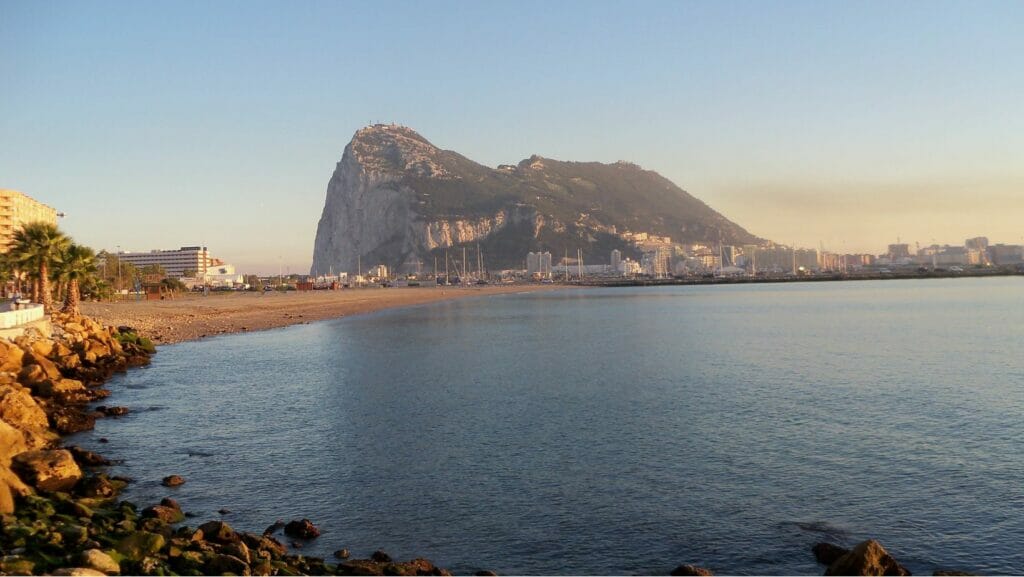
Our sightseeing tour departs from Málaga and the Costa del Sol, and combines a day out in Gibraltar with a whale-watching trip around the bay:
It is worth knowing the difference between the two scenarios, because they are not the same thing:
| Algeciras Bay | Open strait | |
|---|---|---|
| Sea | Sheltered | Open |
| What can be seen | Above all dolphins | Also fin whales and orcas |
| Feeling dizzy | More comfortable | More lively |
The bay is the safe option if you’re travelling with children or are prone to seasickness. The open strait offers access to larger species, but it’s more challenging.
Our trip starts from the bay and includes some free time in Gibraltar. Full details at whales and dolphins in Gibraltar y what to see in Gibraltar in one day.
And as for the rest of the itinerary in Tarifa: What to see in Tarifa.
Common dolphins, striped dolphins, bottlenose dolphins and long-finned pilot whales are resident and can be seen all year round. The fin whale, which is the second-largest animal on the planet, and the sperm whale pass through the area in spring and summer. Orcas appear seasonally in July and August.
In July and August, because they follow the migration of bluefin tuna through the Strait. Outside these months they are not present, so it is the most predictable species in terms of timing and, at the same time, the one with the most limited fishing window.
Yes. Bottlenose, striped and common dolphins, along with long-finned pilot whales, are resident in the Strait and can be spotted all year round, provided sea conditions allow us to go out. What you won’t see during those months are fin whales, sperm whales or killer whales, as they only pass through in spring and summer.
Between two and three hours in total, including the boat journey to the viewing areas. The sighting trip itself lasts around ninety minutes. The exact duration depends on sea conditions and where the animals are located on the day.
In strong easterly winds, sailings are delayed or cancelled for safety reasons, and it is worth noting that the easterly is the prevailing wind in the area and blows most frequently in summer, at the height of the high season. It is advisable to confirm your departure on the day itself before heading to the port.
Yes, with binoculars and a bit of patience, particularly from the isthmus of Isla de las Palomas, which is the southernmost point of the peninsula and freely accessible. Sightings will be distant and sporadic, very different from those you can spot from a boat, but it costs nothing to give it a go.
Algeciras Bay is a sheltered area where dolphins are the most common sight, and is more comfortable for those travelling with children or who are prone to seasickness. The open Strait also offers the chance to see fin whales and orcas, but the sea is rougher there. These are complementary options, not equivalents.