Let’s start with the most frequently asked question: the demonym is Gibraltarian, but they call themselves little flats.
And from then on, a land of just over six square kilometres with more curiosities per square metre than anywhere else in Europe.
This is the best one of all. At 1848 He turned up at the Forbes quarry, on the Rock, a human skull that nobody could identify. It was put away and forgotten.
Eight years later, in 1856, another similar one appeared in the valley of Neander, in Germany. That one was studied in good time, and gave its name to the species: Neanderthal.
The one from Gibraltar was the same type of hominid and had been found previously. If they had recognised him back then, today we would be talking about the «man from Gibraltar».
And the Rock was also one of his last refuges in Europe: the Gorham's Cave, on the south-eastern face, still bears traces of Neanderthal occupation dating back tens of thousands of years, by which time they had already disappeared from the rest of the continent. UNESCO declared it a World Heritage Site in 2016.
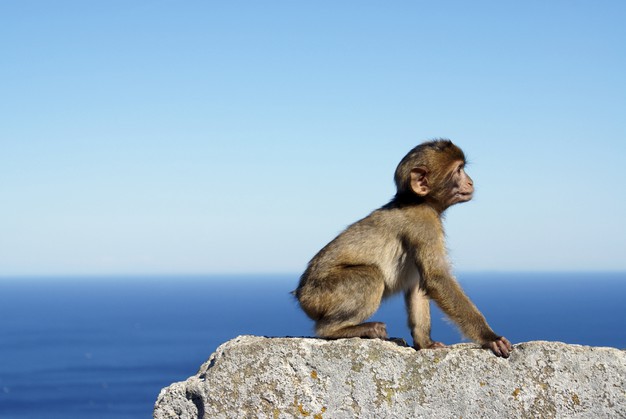
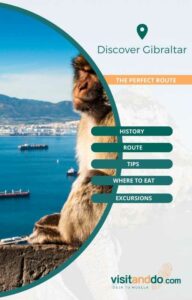
Around 300 Barbary macaques They roam freely in the upper reaches, in five matriarchal tribes. They are the only primates living in the wild on the continent.
And they were on the verge of disappearing: at In 1942, there were seven left. Churchill ordered the resettlement of people from Morocco and Algeria, and DNA confirms that present-day individuals are descended from those.
Everything, in the monkeys of Gibraltar.
It’s called plain (or ‘yanito’) and is neither Spanish nor English: is to jump from one to the other in the middle of a sentence, with loanwords adapted from both, as well as some Genoese and Hebrew.
The The official language is English —administration, schools, signs— but on the street you hear ‘llanito’. It is the only place in the world where people speak.
And there’s a story behind this. Gibraltar had been trying for decades to have its football association recognised, despite opposition from Spain and certain sections of UEFA itself.
They succeeded in court: on Court of Arbitration for Sport (CAS) ruled in his favour, and the 24 May 2013 were admitted as full members. In In 2016, they joined FIFA as its 211th member.
The finishing touch: In the Euro qualifying draw, they were drawn in Group Spain, and UEFA he moved them to a different group to avoid a confrontation.
What’s more, for years they have had to to play a home match away from Gibraltar, in Portugal, because its stadium did not meet UEFA’s requirements.
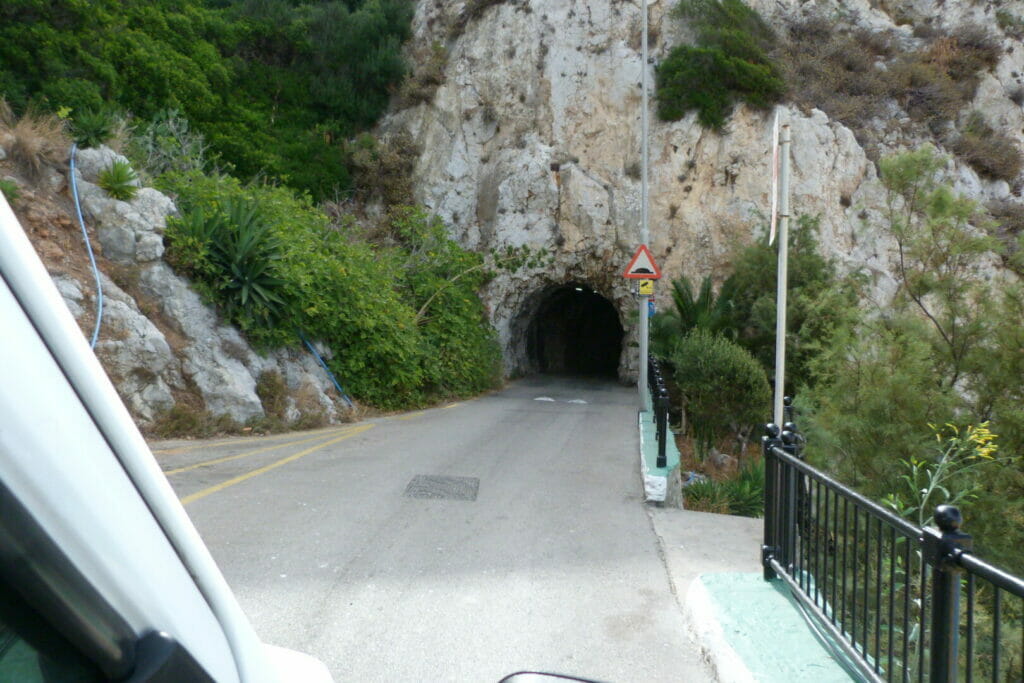
There are more kilometres of tunnel inside the rock than there are of road outside it. More than fifty, excavated during two very different periods:
These can be visited with the Reserve entry ticket: at What to see at the Rock of Gibraltar.
20 March 1969, at a ceremony held on about ten minutes. They chose Gibraltar because it was a British territory, where the process was quick and discreet.
And he put it in writing: Lennon recounted it in The Ballad of John and Yoko, with that verse about getting married in Gibraltar, near Spain. From there they flew to Amsterdam, where they staged their famous protest in bed.
For the Greeks, the Rock and a hill on the African shore These were the two pillars that Hercules had parted, and they marked the end of the world as we know it.
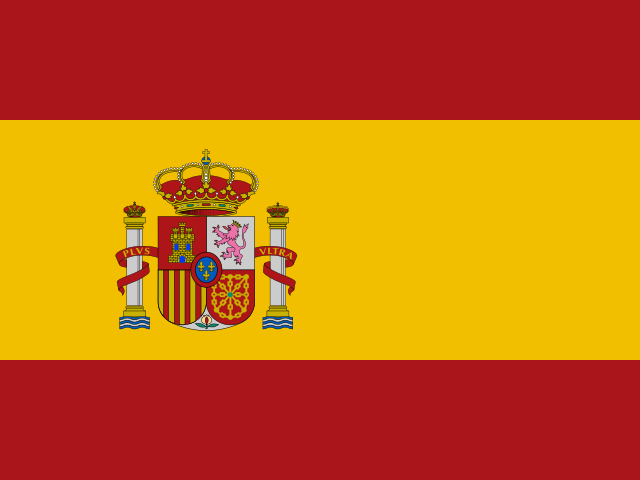
And there’s that little nod again: those two columns are the ones that appear on the coat of arms of Spain, with the slogan Plus Ultra —«beyond»—, adopted when it turned out that there really was a world on the other side.
Gibraltar does not charge VAT, which is why so many people cross the border to buy tobacco, alcohol, perfumes and electronics.
Mind the limits what can be brought in without declaring it. We discuss this in What to buy in Gibraltar.
Its favourable tax regime also explains why it is home to a large number of European online bookmakers, one of its largest employers: thousands of jobs, many of which are held by residents of the Campo de Gibraltar who cross over every day.
Virtually everything is in the service sector. The port — supplying fuel to ships, repairs, transit through the Strait —, finance, online gambling and tourism.
There is no heavy industry or agriculture. It won’t fit into six square kilometres.
Here are the latest updates and the changes that will have the biggest impact on your visit: on 15 July 2026 the agreement between the European Union and the United Kingdom came into force, and the land border controls were abolished.
The fence has been dismantled. Crossing from La Línea is now a matter of moments, and for Spanish nationals, all they need is the Valid national identity card. Checks are still in place at the port and the airport.
After more than half a century of queues —the border was completely closed between 1969 and 1982—is a historic change. In What you need to enter Gibraltar.
The cable car is closed closed from November 2025 for renovation, and will not reopen until around 2027. You can get on at tourist taxi, on foot or on a guided tour: Private vehicles are not permitted to enter the Reserve.
The options, in how to climb the Rock. The full programme, at what to see in Gibraltar in one day, and for lunch, where to eat.
We are a local tour operator based in Málaga with over 50 years’ experience organising trips around Andalusia. There’s time for all this in a single day, with transport and border issues sorted out:
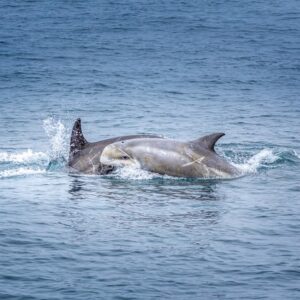
And if you’re into dolphins, whales and dolphins in Gibraltar. The entire destination, in Gibraltar.
The term ‘oficial’ refers to a man from Gibraltar; the feminine form is ‘gibraltareña’. Colloquially, the inhabitants call themselves ‘llanitos’ – also spelled ‘yanitos’ – a term that also gives its name to their dialect: a mixture of English and Andalusian Spanish that is unique to the region.
The official language is English, which is used in administration, education and signage. On the streets, people speak ‘Llanito’, a dialect that alternates between English and Spanish within the same sentence and incorporates distorted loanwords from both languages, as well as Genoese and Hebrew influences. It is the only place in the world where it is spoken.
The first skull of this hominid was discovered at the Forbes Quarry in Gibraltar in 1848, eight years before the discovery in the Neander Valley that gave the species its name. As it was not correctly identified at the time, the name ended up being ‘Neanderthal’. Furthermore, Gorham’s Cave was one of the last known refuges of these hominids in Europe and was designated a UNESCO World Heritage Site in 2016.
Because it achieved this through the courts. After decades of opposition, the Court of Arbitration for Sport ruled in its favour and, on 24 May 2013, it was admitted as a full member; in 2016, it joined FIFA as its 211th member. In the Euro qualifying draw, it was drawn in the same group as Spain, and UEFA moved it to another group to avoid a clash.
No, the territory does not charge VAT, which explains why it is an attractive place to buy tobacco, alcohol, perfumes or electronics. It is worth bearing in mind the limits on what can be taken across the border without declaring it. That same favourable tax regime has made the Rock the headquarters for a large number of European online bookmakers.
No longer at the land border. On 15 July 2026, the agreement between the European Union and the United Kingdom came into force, and border controls were abolished, whilst the ‘Verja’ barrier was dismantled. For Spanish nationals and citizens of the European Economic Area, a valid national identity card is sufficient. Border controls remain in place at the port and the airport.