The Pasaje de Chinitas is a narrow pedestrian street in Málaga’s old town which, despite being only a few metres long, encapsulates a significant part of the city’s cultural heritage. It is not notable for its monuments or grand façades, but for what took place there: this is where the famous Café de Chinitas, one of Spain’s most famous singing cafés, which made this venue a landmark of Málaga’s flamenco scene between the late 19th and early 20th centuries.
This route connects the Plaza de la Constitución with Calle Fresca, right in the heart of the city’s commercial and historic centre, and can be covered in a matter of minutes as part of a stroll through the city centre. If you’d like to explore it in context or combine it with other parts of the city, you can plan your day with the excursions and guided tours of Málaga who explore the historic centre on foot.
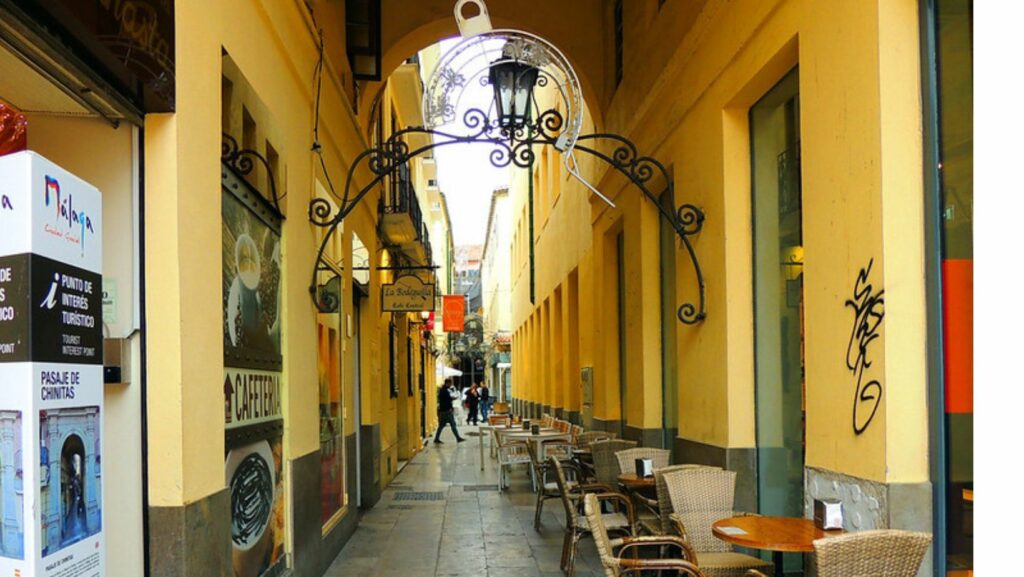
Where the passage is today, there once stood the Convent of the Discalced Augustinian Recollect Nuns, founded in 1628. Following Mendizábal’s confiscation, the building passed into the hands of the State, was auctioned off and ended up in the possession of Antonio María Álvarez de Quindós y Gutiérrez de Aragón, a businessman and former civil and military governor of Málaga, who was responsible for promoting and building the passageway on that land. Hence its original name: Álvarez Passage.
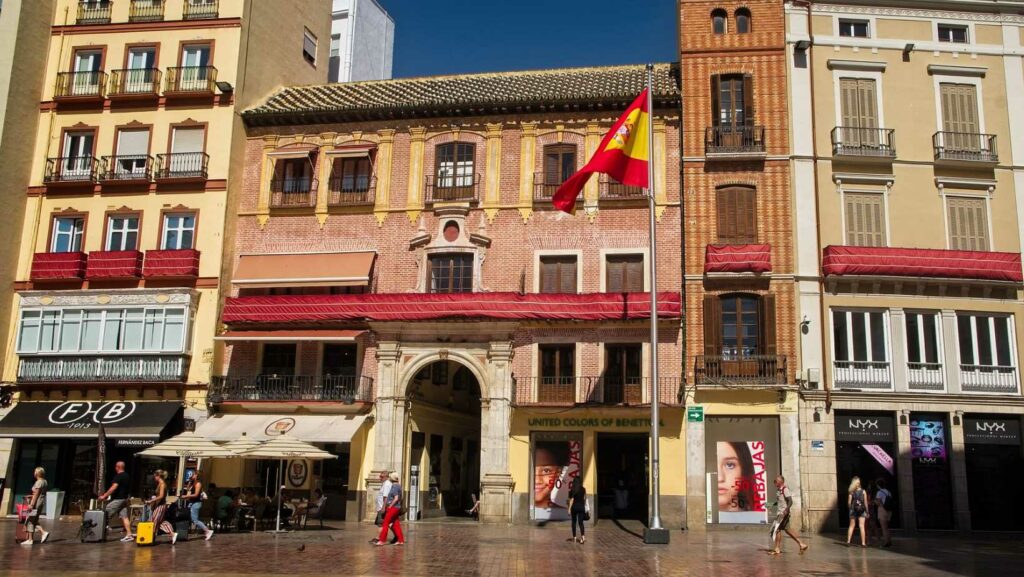
Only one thing remains of the convent, and it is well worth taking a closer look at: The marble gateway, carved from stone, which leads into the passageway from the Plaza de la Constitución, was once the entrance to the Church of the Agustinas. It is the only surviving part of the religious complex.
Another detail that can be explained by that past: the passage has cross-shaped plant, with a central courtyard-like space and two axes converging on it, alluding to the fact that it was built on consecrated ground.
In 1857, Álvarez set aside part of the arcade for a café-theatre which was originally called Café Royal. Over time, he became known by the nickname Gabriel Guerra, a dramatic actor of the time who became a prominent figure at the venue: «Chinitas». The name became so popular that the mayor Francisco García Grana He ended up renaming the Pasaje de Álvarez the Pasaje de Chinitas.
From the mid-19th century onwards, the café became a temple of cante jondo, in a Málaga that once boasted as many as eleven cafés cantantes. Legendary figures of flamenco took to its stage, such as Juan Breva, Antonio Chacón o The Girl with the Combs, and female flamenco dancers such as La Macarrona y La Juana.
His fame spread beyond the local area thanks to Federico García Lorca, who included it in his poem dedicated to the bullfighter Paquiro – verses that have kept the name alive for generations. The café closed down for good in 1937, following a decision by the local authorities at the height of the Civil War, after eight decades of operation.
It is this literary connection that explains why such an inconspicuous alleyway continues to feature in city guides: more than just a place, the passageway preserves the memory of a time when flamenco was a daily part of life in the centre of Málaga. Today, it retains its working-class atmosphere, with small bars and traditional shops.
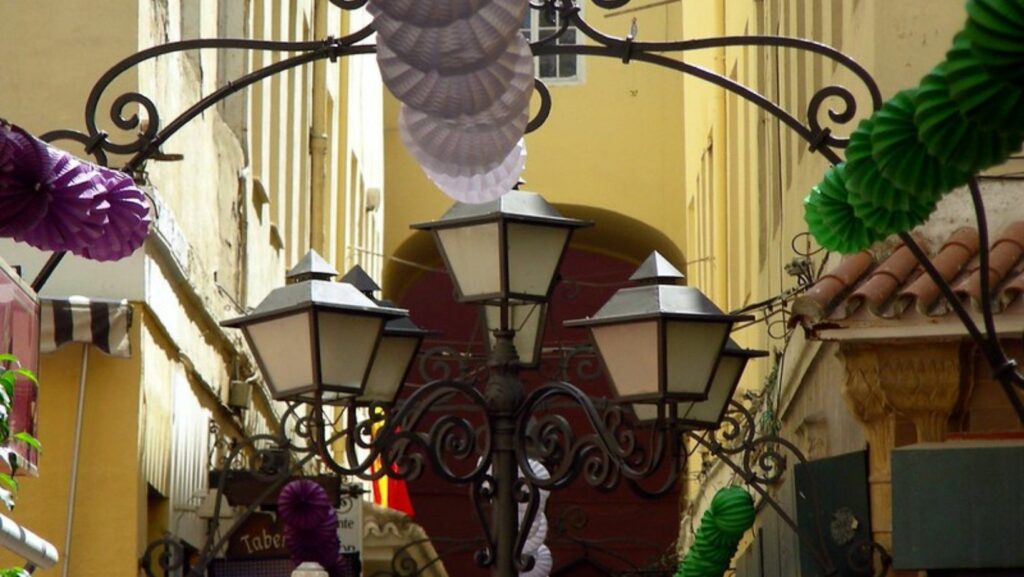
The Pasaje de Chinitas is situated right in the heart of Málaga’s historic centre, between the Plaza de la Constitución and Calle Fresca, in a completely pedestrianised area. Here are the options for getting there:
The passage itself can be walked through in a few minutes, so its greatest appeal lies in what surrounds it. Its location means you can combine several visits to the historic centre in a single walk:
If you’re planning to visit Málaga and would like to explore the surrounding area, all our excursions from Malaga they leave from the pick-up point at the 10 Avenida de Andalucía, a short distance from the city centre:
The Pasaje de Chinitas is a narrow pedestrian street in Málaga’s old town that connects the Plaza de la Constitución with Calle Fresca. It was built in the 19th century by Antonio María Álvarez on the site of the former Convent of the Augustinian Nuns, and its original name was Pasaje de Álvarez. It takes its current name from the Café de Chinitas, the café-concert that once operated there.
It is famous for the Café de Chinitas, one of Spain’s most renowned singing cafés between 1857 and 1937, a mecca for flamenco singing that was graced by the likes of Juan Breva, Antonio Chacón and La Niña de los Peines. Its name became widely known thanks to Federico García Lorca, who mentioned it in his poem dedicated to the bullfighter Paquiro.
From the nickname of Gabriel Guerra, a stage actor of the time who gained fame performing at the venue. The café, which was called Café Royal when it opened in 1857, became popularly known as Chinitas, and the venue’s fame led the mayor, Francisco García Grana, to rename the Pasaje de Álvarez as the Pasaje de Chinitas.
The passage is right in the heart of the historic centre, between Plaza de la Constitución and Calle Fresca, in a pedestrianised area. The easiest way to get there is on foot from Plaza de la Constitución: the entrance is on one of its sides, beneath the marble archway. Atarazanas underground station and the bus stops on Alameda Principal are just a few minutes’ walk away.
Nearby are the Plaza de la Constitución, Calle Marqués de Larios, Málaga Cathedral, the Carmen Thyssen Museum and, a little further afield, the Alcazaba, the Roman Theatre and the Atarazanas Central Market. Its central location means you can visit several attractions in the historic centre in a single walking tour.