People speak differently in Málaga. It’s not just the accent: there’s own vocabulary, and an exam that everyone fails on the first day: order a coffee.
Here are the words you’ll hear and a full explanation of how the café system works.
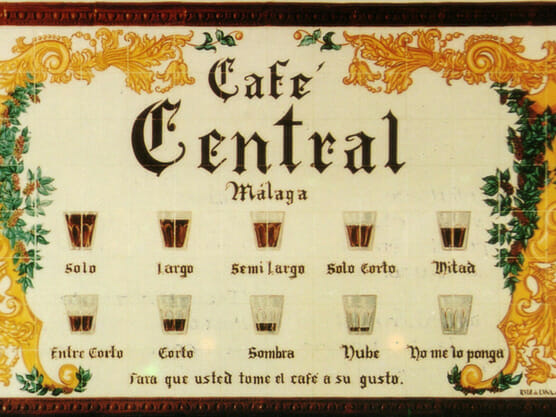
The key to understanding this: In Málaga, you don’t order coffee by size, but by the exact ratio of coffee to milk. And it works like a scale, from more coffee to less:
| Name | Proportion |
|---|---|
| Alone | 100% brown |
| Long | 90% brown |
| Mid-length | 80% coffee |
| Short only | 60% brown |
| Half | 50% coffee and 50% milk |
| Stammering | 40% coffee and 60% milk |
| Short | 30% coffee and 70% milk |
| Shadow | 20% coffee and 80% milk |
| Cloud | 10% coffee and 90% milk |
| Please don’t put that on me | The empty glass |
Bear in mind one nuance that hardly anyone explains: the first four — solo, long, semi-long and short solo — they don't contain milk. What changes is how full the glass gets coffee. The milk is added from halfway through.
And if you were to choose just two: calls for half if you’d like your usual latte, and cloud if you want it loose.
It was invented by a specific person, in a specific place.
He was running 1954, in the immediate post-war period, when coffee was expensive and in short supply. José Prado Crespo, owner of the Café Central, in the Plaza de la Constitución, I could see how much was going to waste: every customer wanted it their own way, pointing at their cup, and we had to either pour the coffee away or make a fresh one.
So he set about tidying up and it established nine designations, from the local machine to the cloud, to create a poster.
And here’s the best bit: When he arranged the posters in two rows, he noticed that Nine just didn’t add up. There was one missing to complete the bottom row. It was then that one of their waiters came up with the idea: «Don’t put that on me», the empty glass.
Café Central is still open, still belongs to the Prado family and preserves the tiled mosaic with the ten cups of coffee on the wall. If you’re not sure, pop in and have a look. It’s at the Plaza de la Constitución.
From A to Z, the ones that are actually used:
If you get four right, you’ll pass the exam. The rest takes care of itself.
A word of warning: There are some explanations that are often repeated —aliquindoi from English, jopo from hop off, merdellón from French— which They sound brilliant, but they haven’t been confirmed. These are folk etymologies, and that is how they should be presented.
The country boy This is the ultimate test: a round loaf of bread pressed on a griddle, with cooked ham, cheese, lettuce, tomato and sauces. It’s unlike any other sandwich.
And as for the rest, traditional dishes from Málaga. The best kebabs, at the beach bars in Pedregalejo and El Palo.
If you’re interested in language and popular culture, you’ll also find the women from Málaga y the traditions of Málaga.
We are a local tour operator based in Málaga with over 50 years’ experience organising tours around Andalusia. Our guides are locals, so the local lingo is all part of the package:
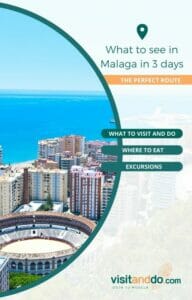
Cusha, they’re filling up. You can find the entire catalogue at excursions, the city in What to see in Málaga in three days and destiny in The Malaga Guide.
It’s all about the ratio of coffee to milk, not the size. The scale ranges from ‘solo’, which is 100% coffee, to ‘nube’, with 10% coffee and 90% milk, passing through ‘largo’, ‘semilargo’, ‘solo corto’, ‘mitad’, ‘entrecorto’, ‘corto’ and ‘sombra’. If you just want to remember two: ‘mitad’ is the classic coffee with milk and ‘nube’ is the weakest.
They were created in 1954 by José Prado Crespo, owner of the Café Central in the Plaza de la Constitución, to stop wasting coffee in the immediate post-war period. He established nine categories, ranging from «solo» to ‘nube’, but when he arranged the sign in two rows, he realised he was one short to make it even. A waiter then suggested the tenth: ‘don’t serve me any’, which refers to an empty glass.
No. The first four on the scale — solo, lungo, semi-lungo and corto — are all just coffee, and the only difference between them is how full the cup is. Milk starts to appear from the ‘half’ level, which is 50% for each, and increases up to the ‘cloud’ level. This is the nuance that confuses newcomers the most.
To be on the lookout or alert. If someone tells you «stay on your toes», they’re asking you to keep your eyes peeled. It’s popularly believed to have an English origin, from the Have a go at it which was heard in the harbour, although this etymology is unconfirmed and should be taken for what it is: a traditional explanation.
The quintessential Málaga sandwich: a round loaf of bread, pressed on a griddle, usually filled with cooked ham, cheese, lettuce, tomato and sauces. It’s unlike any other sandwich found elsewhere in Spain and is one of the things that people from Málaga living abroad miss the most.
You can get a long way with just a few: «cusha» to get someone’s attention, «quillo» as a form of address, «fite» to express amazement, «pechá» to mean «a lot», «chuminá» for something silly, «esmallao» for hunger and ‘ozú’ as a catch-all. With these, you can follow a conversation on a terrace without missing a beat.