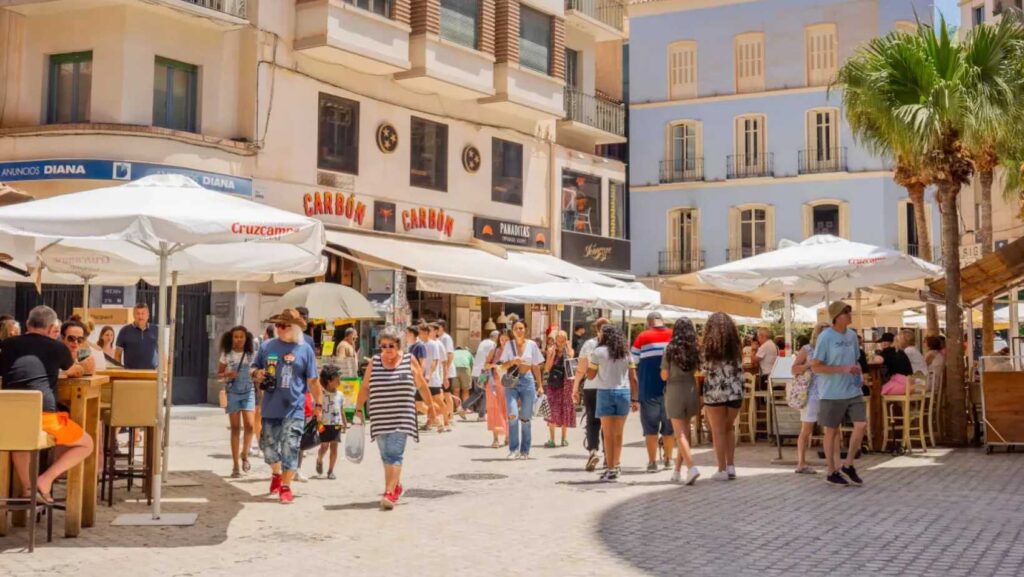
The Coal Square It’s one of those places you happen to come across without realising it. It’s in Málaga’s historic centre, at the junction of Granada Street, Sánchez Pastor Street and Calderería Street, and it is small: rather than a square, it is a widening where several streets converge.
But it has two things worth knowing before going through it, and none of them are visible to the naked eye.
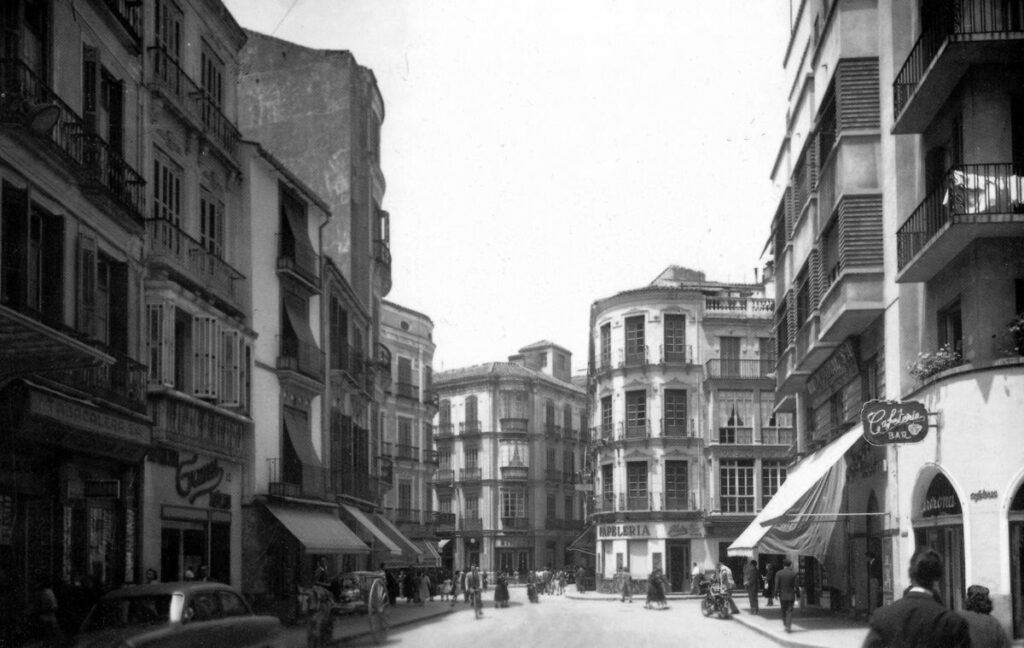
It is often said that there used to be a coal market here. The real explanation is more specific and more interesting.
Take a look at the name of the street leading off the square: Boiler making. It was installed there the boilermakers’ guild, who worked with copper and metal and needed constant fire.
And to keep that fire going, there was a coal yard, established here following the conquest by the Catholic Monarchs, which specifically supplied that guild. The square takes its name from it.
In other words: the two place names go together. Boilermaking and Coal tell the same story, that of a neighbourhood of fire service workers.
Look at the floor. You’ll see some small lights set into the pavement, made from fibreglass cables. They settled in the 2005 refurbishment.
They’re not just for decoration: that scatter plot traces the course of the stream that once flowed along Calle Granada before the city swallowed it up.
Thousands of people walk across them every day without realising they are walking on the riverbed.
Another thing that’s confusing: ever since its refurbishment in 2005, the Plaza del Carbón forms a single urban space with two neighbours:
That is why it is difficult to tell where one ends and the other begins: In terms of town planning, there is no longer any separation. If you’re looking for the ‘Carbón’ one and it seems as though you’re on the ‘Siglo’ one, you’re actually on both.
The building with the richest history in the complex is the Former High School of Málaga, from the 18th century, recognisable by its wrought-iron balconies and windows. It was the headquarters of the cultural society that enlivened Malaga’s intellectual life in the 19th century.
There are other buildings of interest in the surrounding area, such as Sánchez Pastor 9 and 12, and that of 23 Granada Street, by 1943, designed by the architect José Joaquín González Edo.
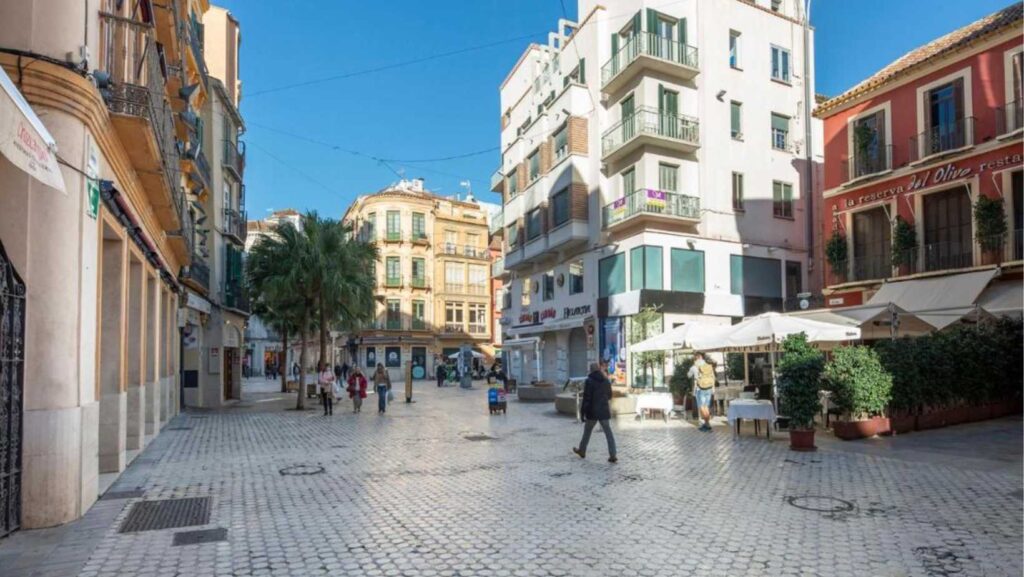
Sit down. That’s what it’s really like: there are terraces, it’s a pedestrianised street and it’s quieter than Calle Granada, which is always packed.
Let’s be clear: It is neither a monument nor a place of interest in its own right. It is a five-minute stop It’s part of a stroll through the city centre, and as such it works very well: it’s right on the route between the Plaza de la Constitución and La Merced.
A good time: at dusk, when the lights on the ground come on and you can really see them.
You can visit north of the Plaza de la Constitución, heading up Calle Granada. From the Larios Street It’s a five-minute walk. The whole area is pedestrianised, so you’ll be walking there.
Less than five minutes away:
You’ve sorted them into The 8 must-see monuments in Málaga.
You’re right in the heart of tapas country. What you should order, in traditional dishes from Málaga, and to choose the right sweet wine, the wines of Málaga.
And if you want to understand what you hear on the terraces, you have The Malaga Dictionary.
All of this is free: more free plans at free things to do in Málaga.
We are a local tour operator based in Málaga with over 50 years’ experience organising trips around Andalusia. If the centre of Málaga isn’t quite enough for you:
You’ve got the whole city at your fingertips What to see in Málaga in three days and destiny in The Malaga Guide.
This is due to a coal yard that was established here following the conquest by the Catholic Monarchs and which supplied the coppersmiths based in the adjacent street, which is named ‘Calderería’ after that trade. The coppersmiths worked with metal and needed a constant supply of fire, hence the link between the two place names. It was not, therefore, a general coal market, as is sometimes claimed.
Small lights embedded in the pavement, made from fibreglass cables and installed during the 2005 urban regeneration project. They are not merely decorative: the cluster of lights traces the course of the stream that once flowed along Calle Granada before the city covered it over. They are best seen at dusk.
In the historic centre of Málaga, at the junction of Granada, Sánchez Pastor and Calderería streets, to the north of the Plaza de la Constitución. It is about a five-minute walk from Calle Larios, and the whole area is pedestrianised. It is a small space – more of a widening between streets than a square in the true sense of the word.
In urban planning terms, almost. Since the 2005 redevelopment, the Plaza del Carbón has formed a single, continuous space with the neighbouring Plaza del Siglo and Plaza de Spínola, with no visible boundary between them. Plaza del Siglo came into being following the demolition in 1868 of the Convent of Santa Clara, which had been founded in 1495.
As a stop off on a stroll through the city centre, yes; as a destination in its own right, no. It is a small area with terraces, with no notable monuments apart from the Old Lyceum of Málaga, an 18th-century building with wrought-iron balconies. Its appeal lies in the atmosphere and the hidden details it offers, and it’s situated right on the route between Plaza de la Constitución and La Merced.
Virtually the entire historic centre. Less than a five-minute walk away are the Plaza de la Constitución, the Cathedral and the Plaza del Obispo to the south, and the Picasso Museum and the Plaza de la Merced further north along Calle Granada. The Atarazanas Market is a little further on, also within walking distance.