Three days in Córdoba is enough time for everything: the historic centre, Medina Azahara and the courtyards, without visiting the monuments one after the other.
The cast that works, and two notes on Medina Azahara that are worth reading first.
And if you’re taking the tourist bus from the city centre, you’ll need to book it one day in advance at the tourist information office.
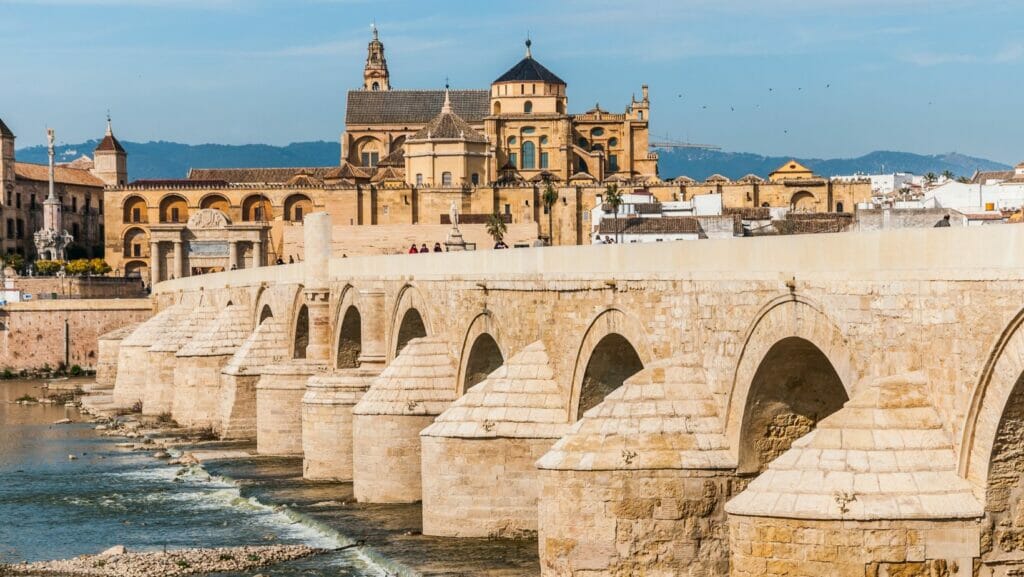
Tomorrow: the Mosque-Cathedral. Get there first thing with your pre-booked ticket, as it gets busy by mid-morning. Allow at least an hour.
A tip: There is a free entry slot first thing in the morning, from Monday to Saturday, but Group visits are not permitted in it, and the building is vacated once it’s finished. Check it beforehand.
After that, everything else is secondary:
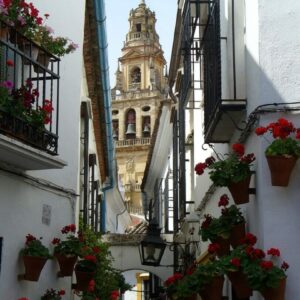
Afternoon: the Jewish Quarter. The Synagogue, dating from 1315 and one of the three remaining medieval examples in Spain, the Calleja de las Flores and the Calleja del Pañuelo, which is the narrowest street in the city.
The detailed itinerary, at the Jewish quarter of Cordoba. And the monument, in its architecture y its parts.
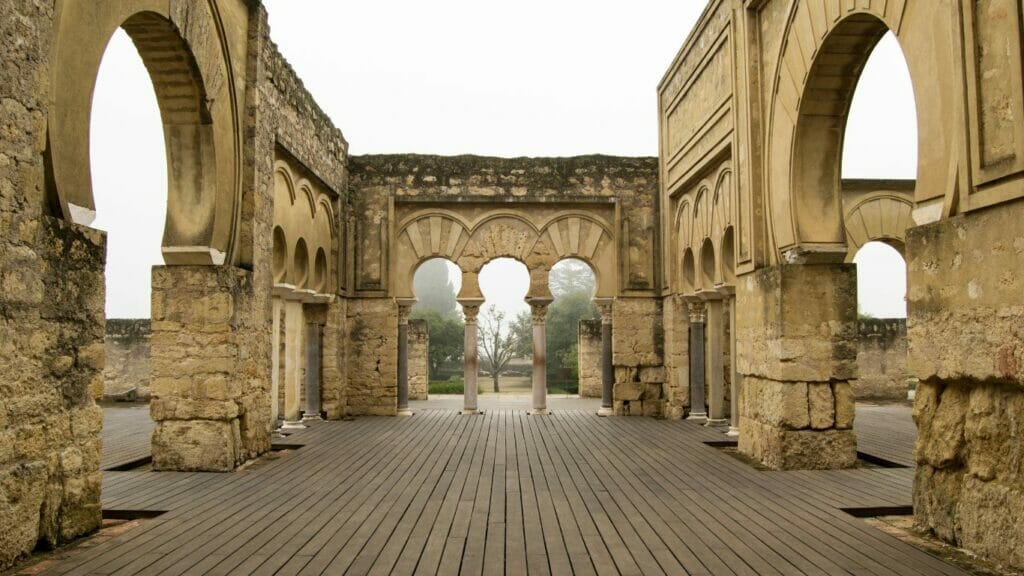
Set aside the whole morning. It is 8 kilometres in the town centre, on the road to Palma del Río, and between the journey, the museum and the archaeological site, the day is up.
The palatine city that Abd al-Rahman III ordered to be built around the year 936 to serve as the seat of the caliphate. It occupied 112 hectares spread across three terraces following the slope of the Sierra Morena.
And it lasted seventy years. It was plundered and destroyed between 1009 and 1013, during the fitna, the civil war that brought an end to the Caliphate of Córdoba. It is worth pointing this out because one often reads that it was destroyed by the Spanish Civil War: the fitna predates it by a thousand years.
It then served as a quarry for centuries. Its materials are now in other buildings in Córdoba, and it was so forgotten that It was not identified again until the 19th century. The excavations began in 1911, and even today only around 10% has been excavated.
It has been a World Heritage Site since 1 July 2018.
It is said that he had it built in honour of a favourite named Azahara. It’s the story that’s told time and time again, and Historians regard it as a legend.
Madinat al-Zahra means «the shining city», in reference to the splendour of the Caliphate’s power. The legend is a fine one; the facts tell a different story.
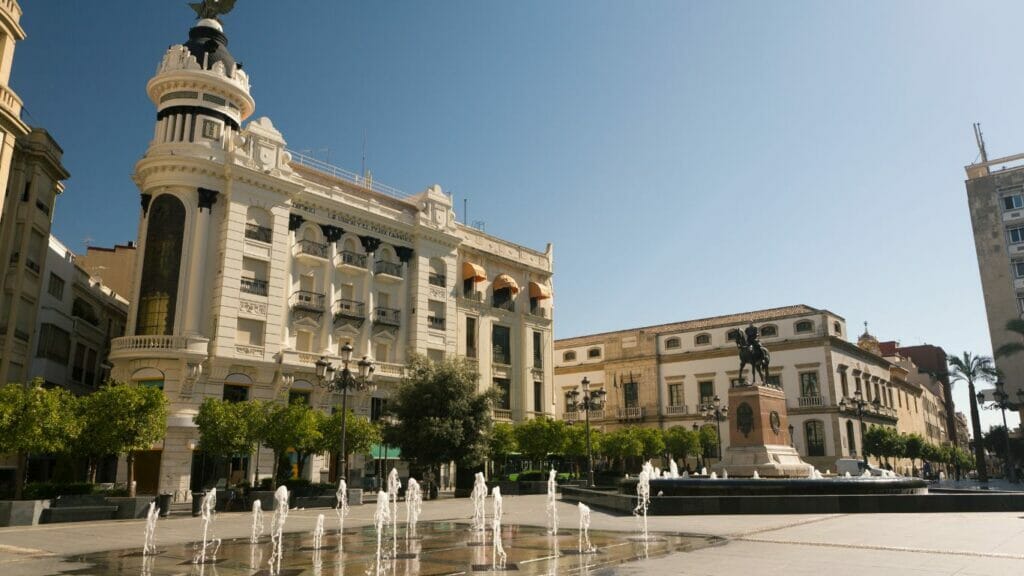
Back to the city centre, which didn’t make it on the first day:
More at the monuments of Córdoba.
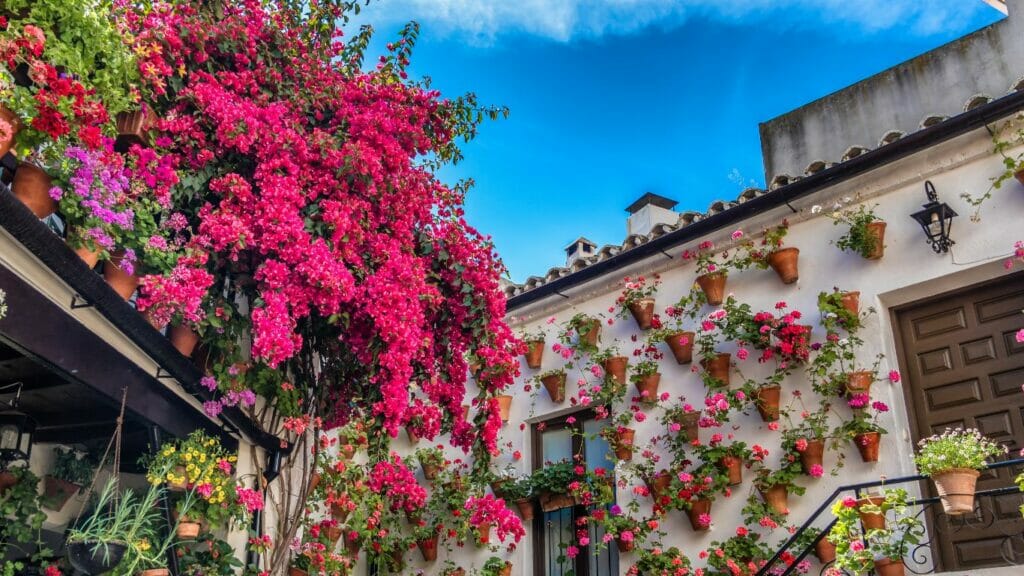
The quietest day – and the most ‘Cordoban’ of all.
About the courtyards: are Intangible Cultural Heritage of Humanity, and its moment is the May Festival, when the neighbours open their homes. Outside May, there are far fewer visitors, so if you’re visiting at a different time of year, bear that in mind. Full details at the courtyards of Córdoba.
The dish here is salmorejo, not gazpacho: thicker, without peppers or cucumbers, topped with a hard-boiled egg and ham.
And two more: on flamenquín and the oxtail. Specific locations, in Where to eat in Córdoba.
The Victoria Market, next to the Victoria Gardens, is a great place to grab a bite to eat without having to think too hard about what to choose.
You don't need a car For the three days: the whole historic centre can be explored on foot, and you can get to Medina Azahara by bus.
For further information: on Botanical Garden, the Municipal Market crafts and the Baths of the Caliphate Alcazar.
With children, it’s a good idea to alternate between monuments and more relaxed stops: we discuss this in Things to do in Córdoba with children. And if you’re on a tight budget, What to see for free in Córdoba.
We are a local tour operator based in Málaga with over 50 years’ experience organising trips around Andalusia. If you wish to delegate one of the sessions, the tour includes transport, entry to the Mosque and a guided tour of the Jewish Quarter:
It’s a good fit for Day 1, leaving the other two for Medina Azahara and the courtyards for you to explore on your own.
The general guide, at What to see in Córdoba.
On Mondays, except on the eve of a public holiday. It is worth bearing this in mind when planning the three days, as this visit takes a whole morning and cannot be improvised.
You can get as far as the museum, but not as far as the archaeological site. Access to the archaeological site is by shuttle bus only, which leaves from the museum every twenty minutes. Anyone wishing to take the sightseeing bus from the centre of Córdoba must book it a day in advance at the tourist office.
Between 1009 and 1013, it was sacked by Berber troops during the fitna, the civil war that brought an end to the Caliphate of Córdoba. It is often claimed that it was destroyed by the Spanish Civil War, which would mean a discrepancy of a thousand years. It subsequently served as a quarry for centuries and was not identified again until the 19th century.
It is a legend. The story of the favourite named Azahara is widely told, but historians agree that Madinat al-Zahra means «the shining city», in reference to the splendour of the Caliph’s power. The city was conceived as the seat of government, not as a gift.
Yes, and with plenty of time to spare. You can cover the historic centre in a single day; on the second day, you can spend the morning at Medina Azahara and the afternoon visiting the monuments you missed the first time round; and the third day is set aside for courtyards, squares and palaces. There’s still time for breaks and to explore a few of the less-visited spots.
Some do, particularly in the San Basilio neighbourhood, and the Palacio de Viana has twelve courtyards that are open to the public all year round. However, the large-scale opening of private courtyards is concentrated around the May Festival, which has been declared an Intangible Cultural Heritage of Humanity, so at other times of the year there are far fewer to visit.