Ronda can be explored on foot in a single day. Its historic centre is compact, so with a well-organised day, you’ll have time to visit the fourteen places we’ve included in this guide, in an order that avoids any detours.
The city is situated right in the heart of Mountain range, in the heart of the White Villages Route of Málaga and Cádiz, and is split in two by the Tajo, a gorge over one hundred metres deep which the Puente Nuevo spans, linking the old town with the modern part of the city.
To make the most of the day, it’s best to set off in the morning, when the monuments open and there are fewer people at the viewpoints. Allow for between six and seven hours to take your time exploring it, stopping for a bite to eat in the La Bola street area. Wear comfortable shoes: the town centre has slopes and cobblestones, and going down to the Water Mine or to the bottom of the Tajo involves climbing stairs. Only the Acinipo archaeological site is on the outskirts and requires a car.
If you’re staying in Málaga, Torremolinos, Benalmádena, Fuengirola or elsewhere on the Costa del Sol, you can also visit Ronda on an organised day trip and make the most of your day without having to worry about transport.
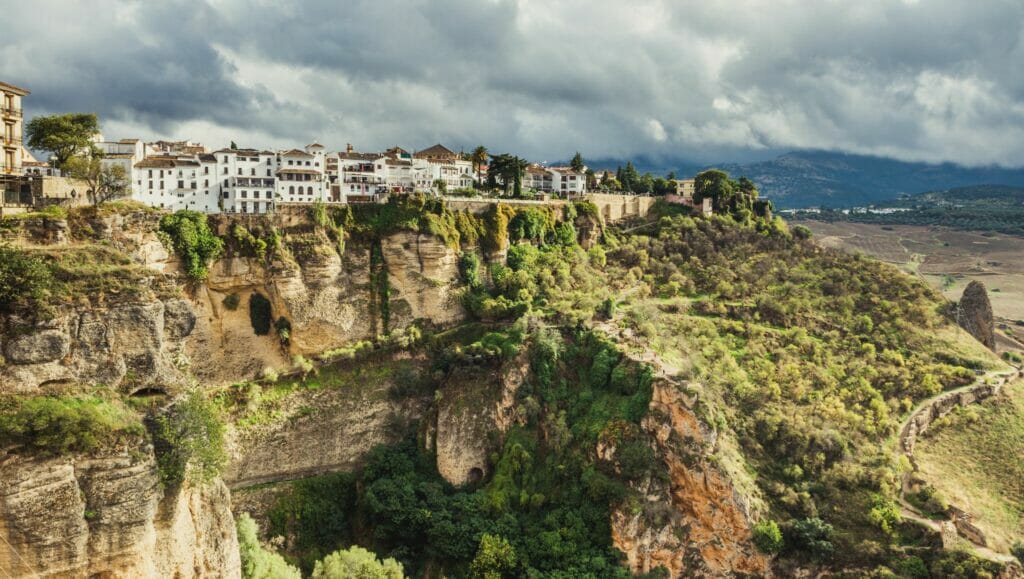
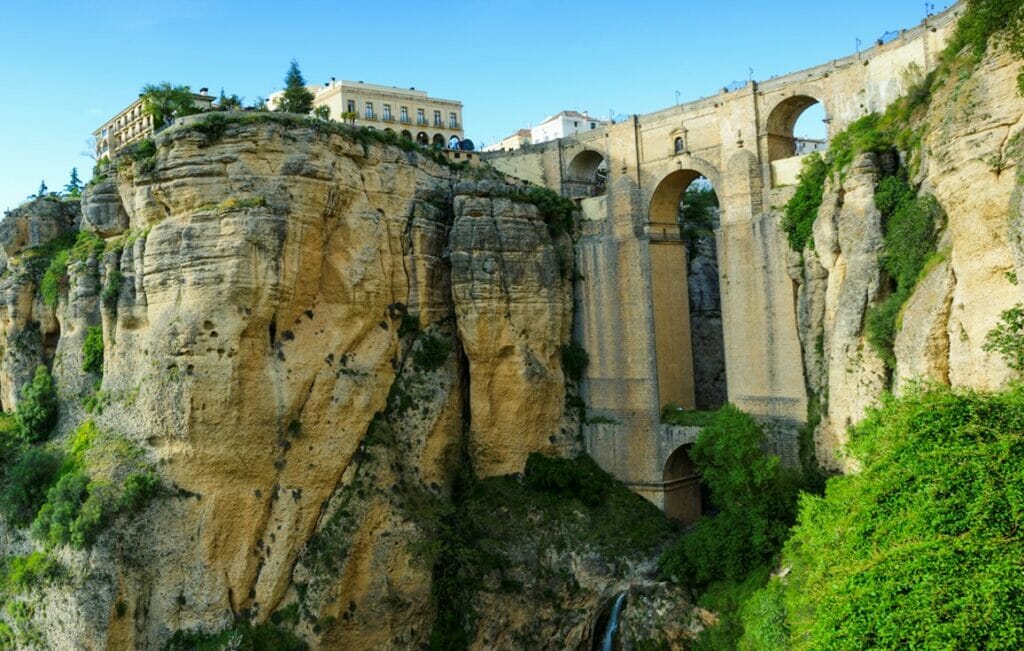
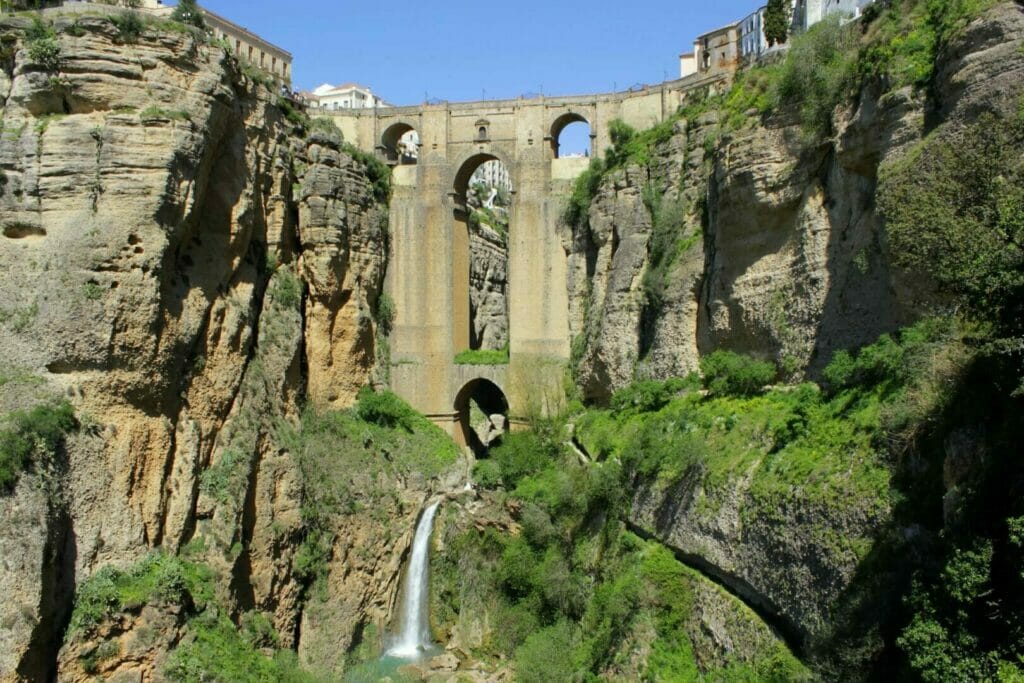
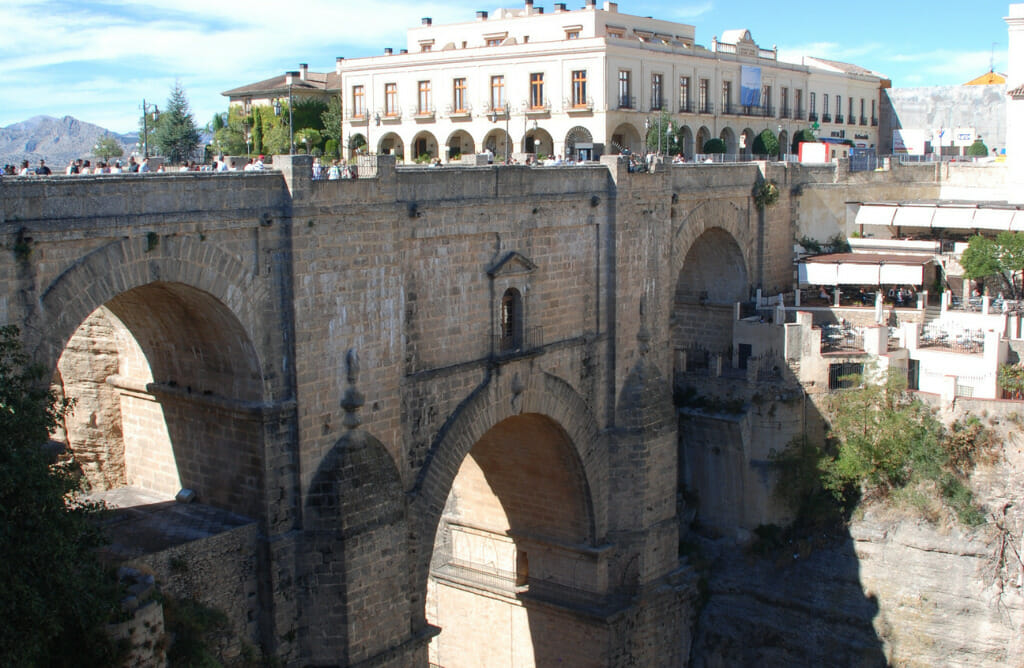
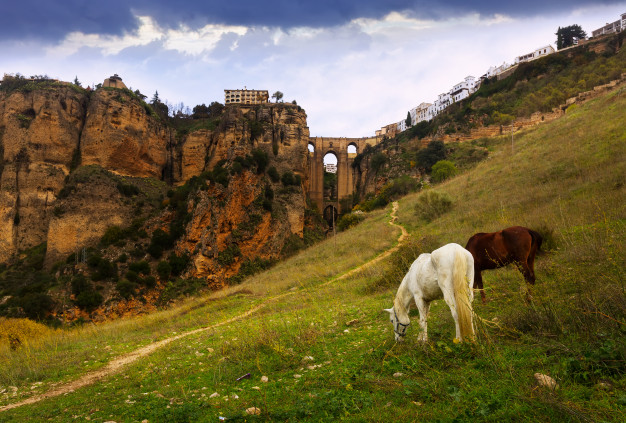
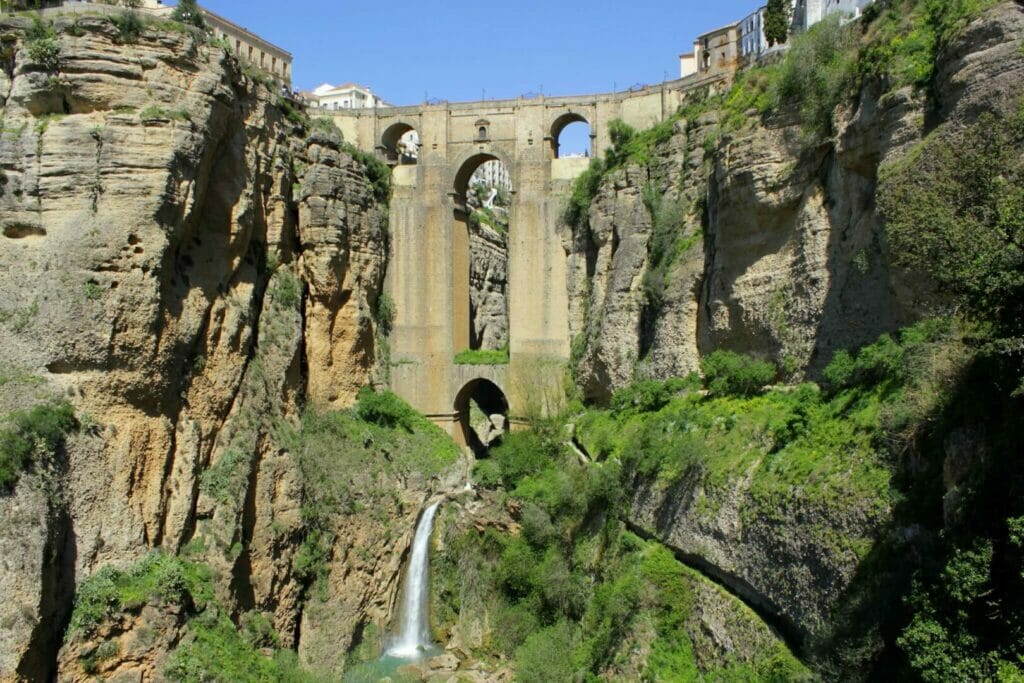
It is the most famous view of Ronda and the natural starting point. The "Puente Nuevo" stood up in the 18th century to link the two ends of the town across the gorge, at a height of around one hundred metres.
Take a look from the nearby viewing points to see it in profile and the riverbed of the Guadalevín in the background. This is also where it starts the Tajo Gorge trail, which leads down to the bottom of the gorge and offers a view of the bridge from below. If you have the time and fancy a walk, this is the best way to appreciate the scale of the structure.
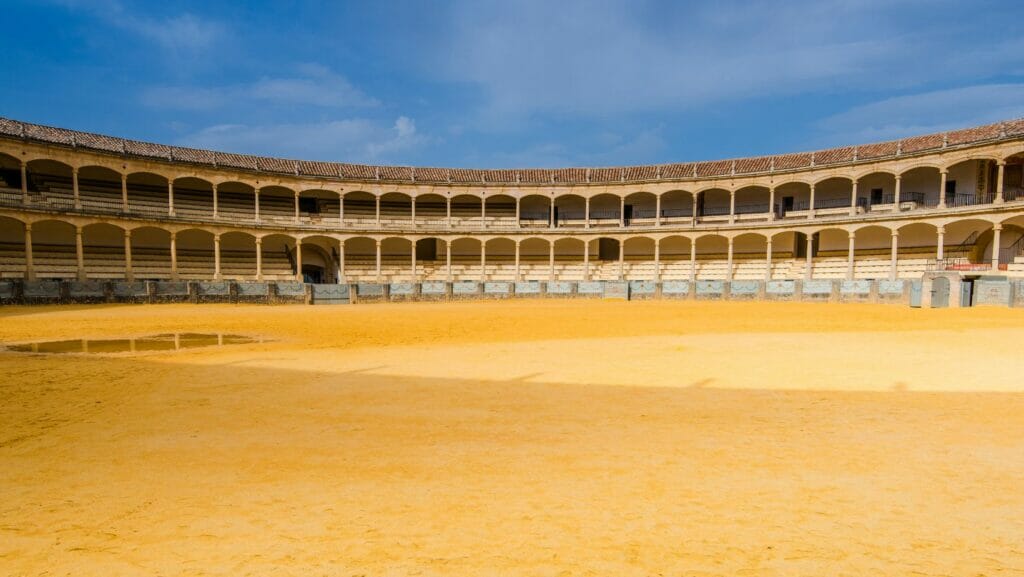
It is one of the oldest bullrings in Spain, having opened at the end of the 18th century, and it is regarded as the the cradle of modern bullfighting: this is where bullfighting on foot originated, thanks to the Rosemary. Its stone ring and its double arched gallery make it a unique example of bullfighting architecture.
You can visit the interior together with the Bullfighting Museum, which displays costumes, posters and equipment, and the tour includes the bullring, the pens and the stables. Allow plenty of time: it’s one of the tours that takes the longest.
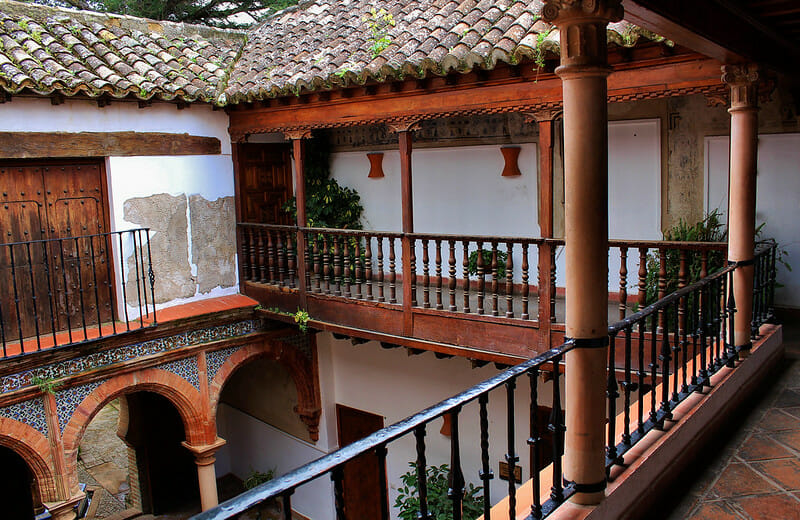
It is the most significant civilian building in Ronda and has a long history: of Islamic origin, it was King Abomelic’s residence, and passed into Christian hands following the conquest of 1485, when it was renovated whilst retaining its original structure.
It features courtyards decorated in the Mudejar style and gardens with views of the mountains, and today it is home to the Ronda Municipal Museum, dedicated to the history and archaeology of the region. If you’re interested in museums, you’ll find more options in our guide to museums in Ronda to visit in one day.
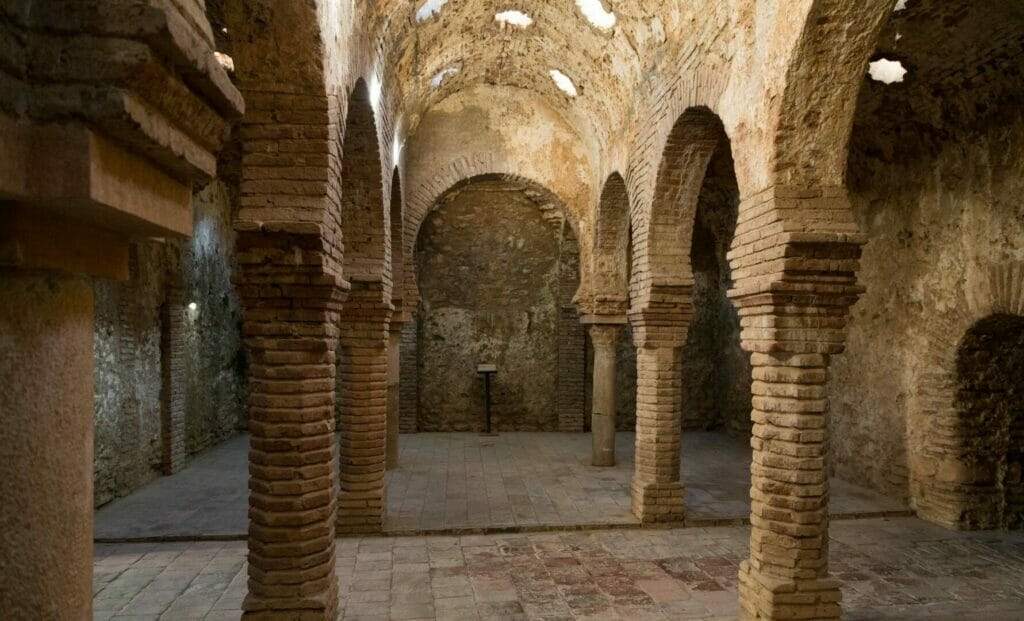
They are among the the best-preserved on the peninsula. They date from the late 13th century and maintain the three rooms on the tour —cold, warm and hot—, each with its own role in the bathing process, and their characteristic features star-shaped skylights in the vaults.
They’re in the old one suburb, next to the Culebras stream, in the lower part of the town. An information panel and a video presentation explain the water heating system and the waterwheel that drew water from the stream, which goes a long way towards understanding the site as a whole. It is also worth remembering that these baths were not just about hygiene: they were also a space for social interaction and ritual.
Combine three things in one visit: one stately home, about terraced gardens designed in the early 20th century and the so-called Water mine, a staircase carved into the rock that leads down to the bottom of the Tajo, beside the river.
Lowering and raising their more than two hundred steps It takes a bit of effort, but it leaves you right at the foot of the gorge, with a view that you don’t get from up above. It’s one of those visits you’ll remember.
They serve as a reminder of Ronda’s past as a fortified town. The best-preserved section surrounds the old outer quarter and can be explored, in part, on foot.
The Almocabar Gate, of Islamic origin, was the main entrance from the south and still retains the towers flanking the entrance. Next to it is the Gate of Charles V, dating from the Christian period, so that within just a few metres one can see the transition from the Andalusian rampart to the modern one.
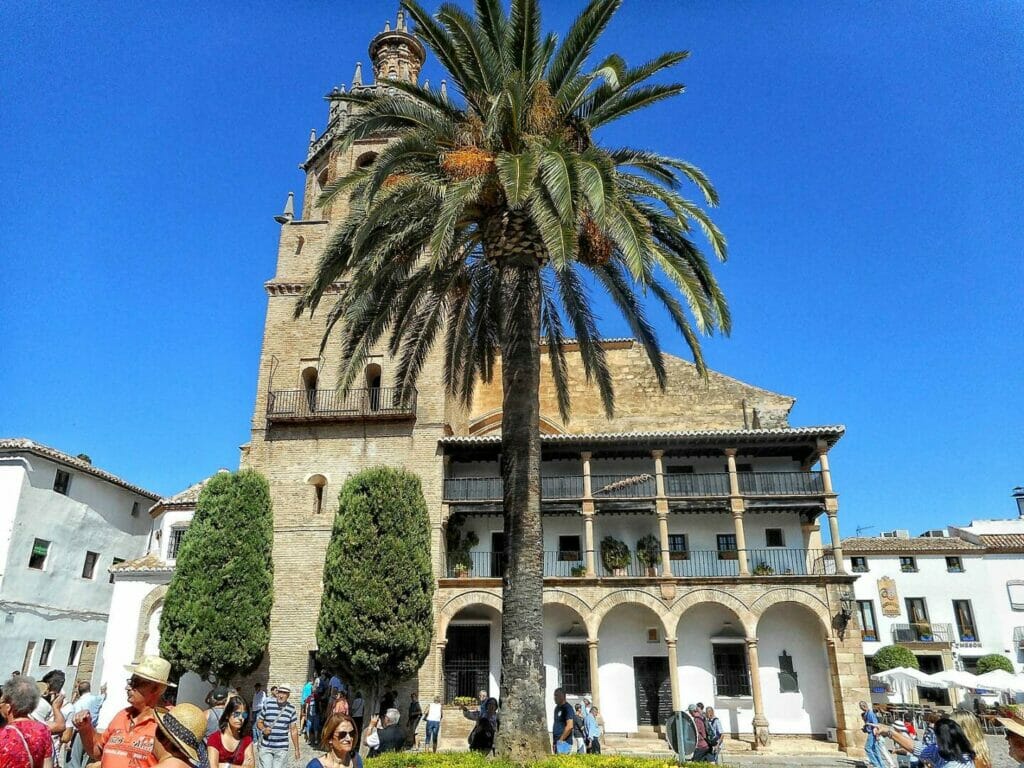
He gets up on the site of the former main mosque, in Plaza Duquesa de Parcent, and its construction began following the conquest of 1485. A blend of Late Gothic and Renaissance, and still retains traces of the mihrab and the addition of the Islamic minaret, so that the building itself bears witness to the changing times.
Inside, the high altarpiece and the side chapels, featuring religious paintings and sculptures, are particularly worth seeing. The climb up to the upper galleries offers a panoramic view of the historic centre.
A 14th-century Almohad minaret which survived the demolition of the mosque to which it belonged, and was later reused as the bell tower of a church that has now also been demolished.
It’s a brief stop, but it allows you to see the Andalusian influence in the layout of the streets in the old town: a solitary minaret standing alone amidst the urban fabric.
The Alameda del Tajo is Ronda’s tree-lined promenade, opened at the beginning of the 19th century. At one end, several balconies look out directly over the cliff, offering views of the mountains and, on clear days, of the Grazalema Mountains.
The Aldehuela viewpoint, next to the Parador, is another great spot from which to view the Puente Nuevo from a higher vantage point, and is considered one of the best places in the province to watch the sunset.
They descend in terraces down the slope of the Tagus, on the side facing the old town, and from their various levels one can see one of the best views of the Puente Nuevo and the gorge.
Its name pays tribute to the city of Cuenca, with which Ronda shares the same landscape of houses perched on the cliffside. It’s a quick stop and a very photogenic spot.

Carrera Espinel Street, known to everyone as La Bola Street, is Ronda’s main pedestrian and shopping street. It links the market area with the Alameda and is home to shops, traditional businesses, craft stalls and restaurants.
It’s the perfect spot to take a break between visiting monuments or to have lunch. And if your visit coincides with the Ronda Fair, this is where you can best experience its traditions and folklore.
It is the heart of the old town. Surrounding it are the Church of Santa María la Mayor, the town hall and several former convent buildings, and it features orange trees and benches that invite you to stop and rest.
It is a peaceful spot, with a few restaurants, ideal for taking a break before heading on to the city walls or the Arab Baths, or for rounding off the tour by watching the local life go by.
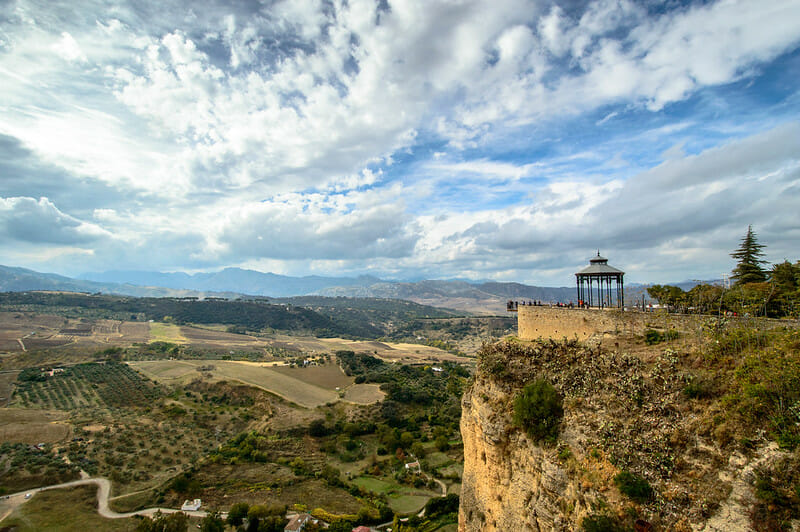
It runs along the edge of the Tagus, next to the bullring and the Parador, and from its balcony there is one of the most sweeping panoramic views of the mountain range and the ravine.
It is a tree-lined path, perfect for a leisurely stroll, and a lovely spot to round off the morning or wait for dusk to fall, when the light hits the canyon walls at its brightest.
It is worth clearing up a common misunderstanding here: Ronda la Vieja is not a viewpoint in the town centre, but the Acinipo archaeological site, a Roman city situated about 20 kilometres from the city centre, in the open countryside. You need a car to get there.
It preserves the remains of the city, with its Roman theatre as its most striking feature, and the location offers sweeping views of the mountains. The day ends on a striking contrast: the historic city walls of Ronda set against its Roman past. If you have the time and transport, it’s well worth the detour.
Ronda is just under one hundred kilometres in the city of Málaga. There are three ways to get there:
Whether you’re coming from Torremolinos, Benalmádena, Fuengirola, Marbella or Estepona, the distances are similar and all three options are available. Always check the timetables before setting off to ensure you can fit your visit into a single day.
If you’d rather not drive on mountain roads or worry about parking or the opening times of each attraction, you can visit Ronda on a Day trip to Ronda and Setenil from Málaga. We are a local operator based in Málaga with over 50 years’ experience organising tours around Andalusia, with our own guides and hotel pick-up service.
The tour includes:
The cancellation policy varies depending on the product; this is stated on each product page.
Ronda is a good base from which to explore the Serranía and the White Villages route:
To plan your visit to the surrounding area in more detail, take a look at our guide to What to see near Ronda.
The route covers fourteen sites, as the historic centre is compact and can be explored on foot: it’s only a few minutes’ walk from the Puente Nuevo to the furthest points from the centre. The exception is Acinipo, 20 kilometres away, which requires a car. Allow between six and seven hours; set off early and book tickets in advance for monuments with interior viewing areas, such as the Plaza de Toros or the Arab Baths.
By car via the A-357 and A-367, around an hour and a half; by regional train from María Zambrano station, about two hours; or by direct bus. If you’re coming from Marbella or San Pedro de Alcántara, take the A-397. The most convenient option if you don’t want to drive on mountain roads is the train or an organised tour.
It is the archaeological site of Acinipo, an ancient Roman city situated about 20 kilometres from the centre of Ronda, not a viewpoint in the town centre as is sometimes thought. The site preserves the remains of the city, with its Roman theatre as the most notable feature, and you need a car to get there.
Yes, they’re about 20 kilometres apart and go well together. Many organised day trips from Málaga include both towns in the same day. If you’re going on your own, it’s common to spend the morning in Ronda and the afternoon in Setenil, which is known for its houses built beneath the rock overhangs.
Six to seven hours should be enough to explore the historic centre at a leisurely pace, including visits to the interiors and a stop for lunch. If you also want to go down the Casa del Rey Moro water shaft or walk the Tajo trail, it’s best to set aside the whole day. Acinipo requires an additional half-day.
It saves you from having to drive along mountain roads, search for a parking space in the town centre and plan your schedule for each sight. With a local tour operator providing its own guides and a hotel pick-up service, you’ll visit the main attractions whilst learning about their history, and the tour combines Ronda with Setenil in a single day. It’s convenient if you’re coming from Málaga or the Costa del Sol.