Marbella is an excellent base from which to explore white villages: they’re over there on the Sierra de las Nieves, perched on the mountainside, and on the other, the old towns along the coast. The nearest one is 10 kilometres away and almost all of them are less than half an hour’s drive away, so you can set off in the morning, visit one or two, and then come back for lunch or to the beach.
Here they are nine villages including the actual distance, journey time by car and what to see at each destination. If you’re looking for more distant day trips — Ronda, the Caminito del Rey or Gibraltar — you’ll find them in what to see near Marbella; this guide is all about villages.
If you are short of time and don't want to worry:
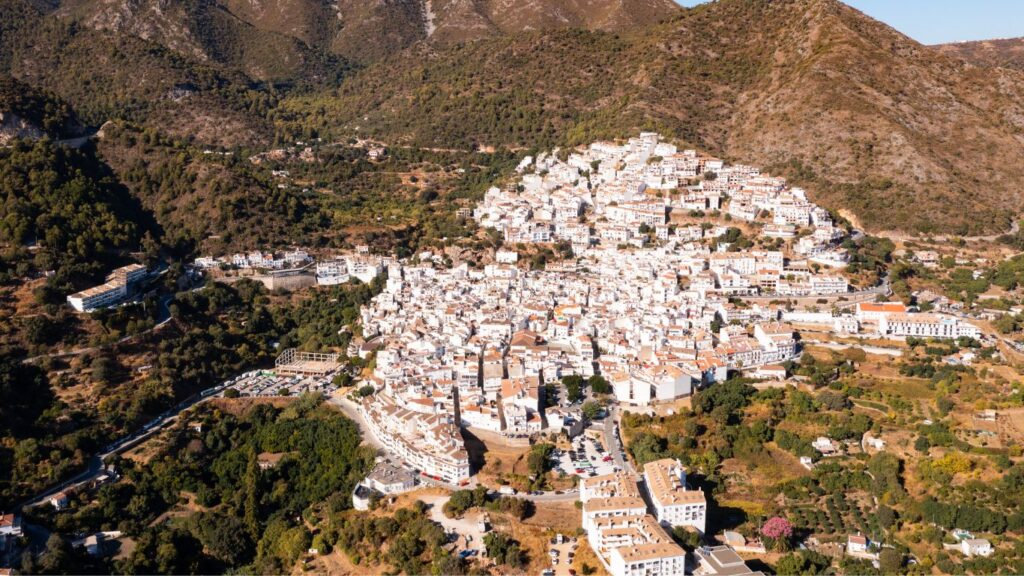
10 km · 10–15 minutes. The closest of them all, on the way up to the Sierra de las Nieves. Narrow, sloping streets around the Plaza de Andalucía and the Church of La Encarnación.
The main attraction is the El Molino Museum, on Charcas Street: an oil mill in 1800 with the original machinery, which is brought into operation for the demonstrations. And in the upper floor, the Sprit Museum, dedicated to the spirit that made the village famous. It had been distilled since 1830, travelled to London, Paris and New Orleans, and production ceased in 1974; the museum houses one of the few remaining original bottles.
When it comes to views, be careful what you read out there. The Corzo Viewpoint It’s spectacular, but he’s not in the village: it is situated next to the Juanar mountain refuge, at an altitude of 881 metres, and is about A 5-kilometre steady climb with a 600-metre elevation gain. If you’re travelling by car and are short on time, you’ve got the Ojén Viewpoint on the Marbella road itself, and the the village caves, equipped to host events and concerts, with views of the mountains and the coast.
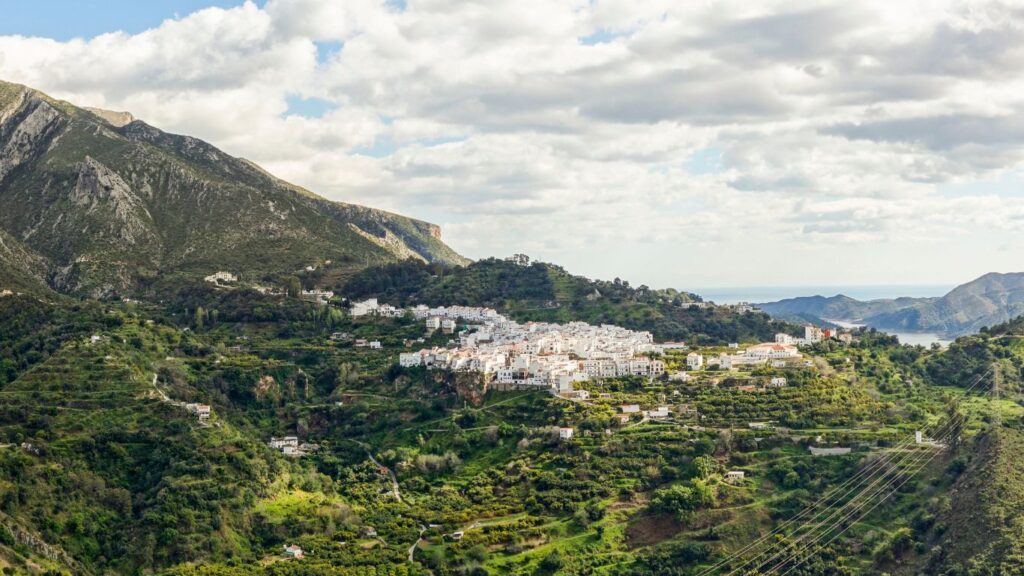
15 km · about 20 minutes along a winding road beside the La Concepción Reservoir. They call it the ‘spring of the Costa del Sol’ because water flows throughout the village: fountains, washing places and a a drainage channel running through the streets.
Don’t miss the source of the River Molinos nor the viewpoint overlooking the reservoir. It retains its Moorish layout and can be walked in an hour, so it fits in well with a visit to Ojén on the same morning.
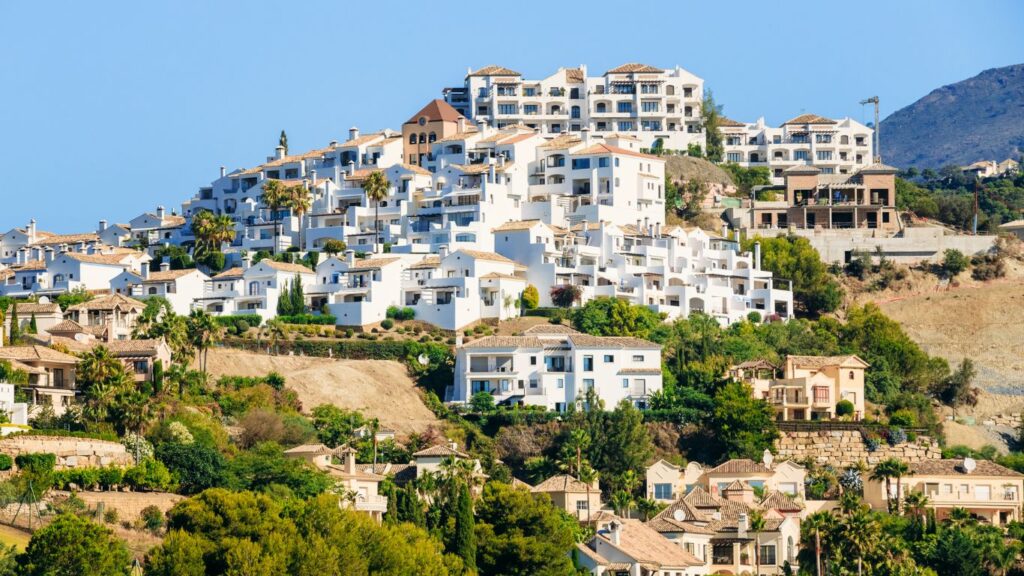
20 km · about 25 minutes. It is renowned for gastronomic capital in the area because of the number of restaurants it boasts in a small, well-maintained town centre. Hence its nickname, «the dining room of the Costa del Sol».
Beyond the table, it’s well worth a visit to the Las Angosturas Canyon, the gorge carved out by the River Guadalmina, and the remains of the Montemayor Castle, with views over the valley. It’s the perfect way to combine a walk with a meal.
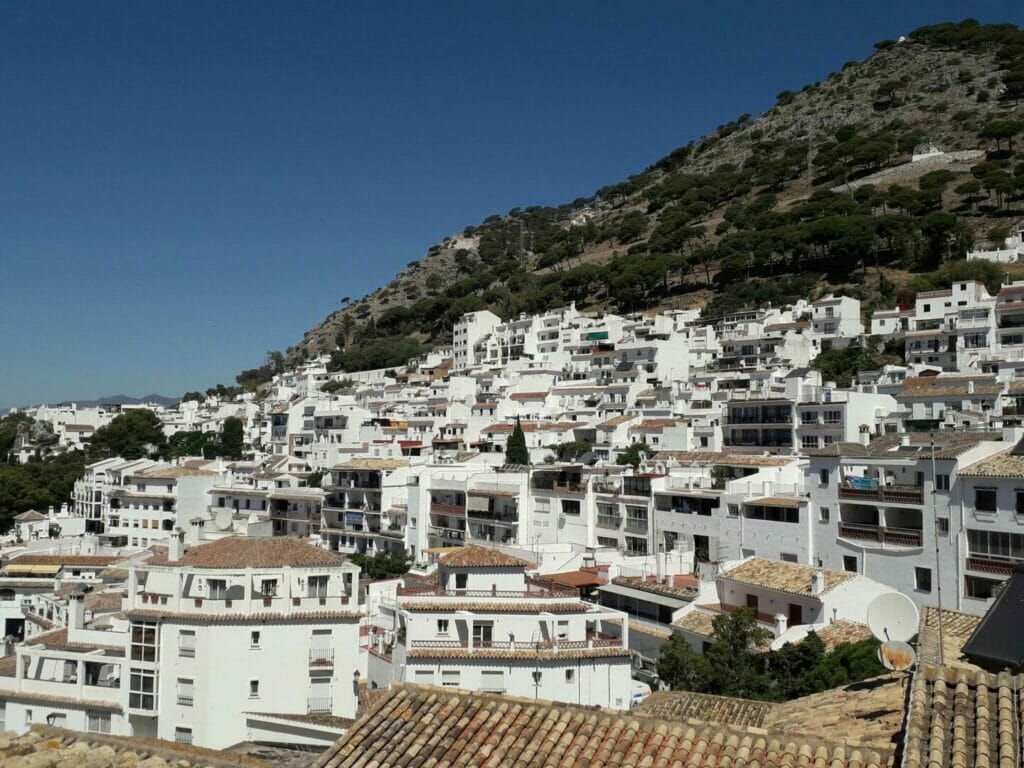
30 km · 30–35 minutes along the motorway. The best-known one on the list, perched on the hillside with the sea in the background.
What you need to see: the bullring, with an oval floor plan because there wasn’t enough space to make it round; the the chapel of the Virgin of La Peña, carved out of the rock; the viewpoints of the Compás and the city wall; and the CAC Mijas, which houses ceramics by Picasso and works by Dalí.
Here are also the donkey-taxis, a local tradition that you should find out about before getting on. You can find all the details at what to see in Mijas.
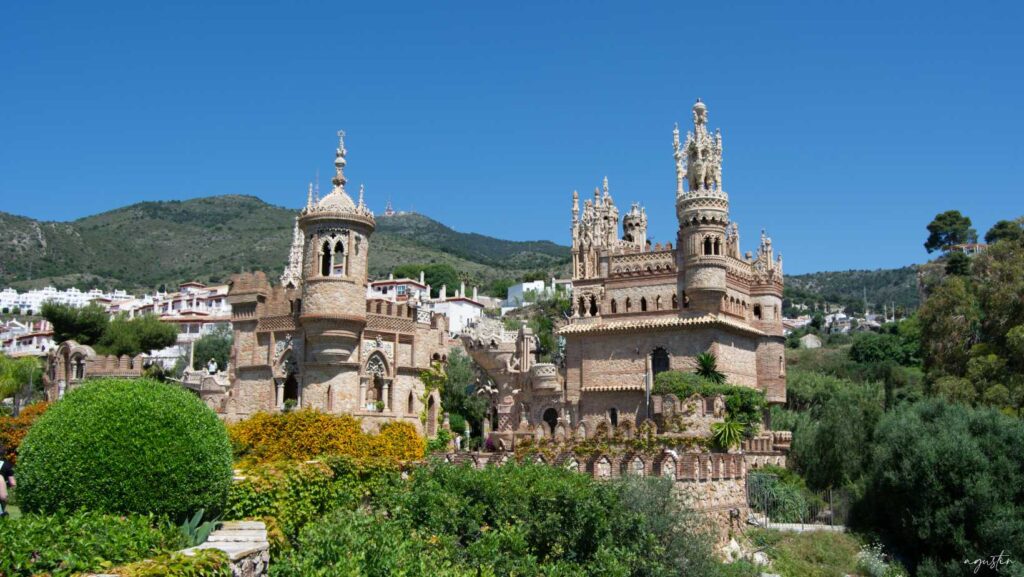
40 km · about 40 minutes. Don’t get confused: we’re talking about the OLD TOWN, in the mountains, not in Benalmádena Costa. It’s much quieter and still has its narrow, white-washed streets lined with bougainvillea.
It has two unusual visitors: the Colomares Castle, a monument to Christopher Columbus built in the 20th century that blends different architectural styles, and the Illumination Stupa, a 33-metre-high Buddhist temple. It adds that the Felipe Orlando Pre-Columbian Museum, Plaza de España and the viewpoints overlooking the coast.
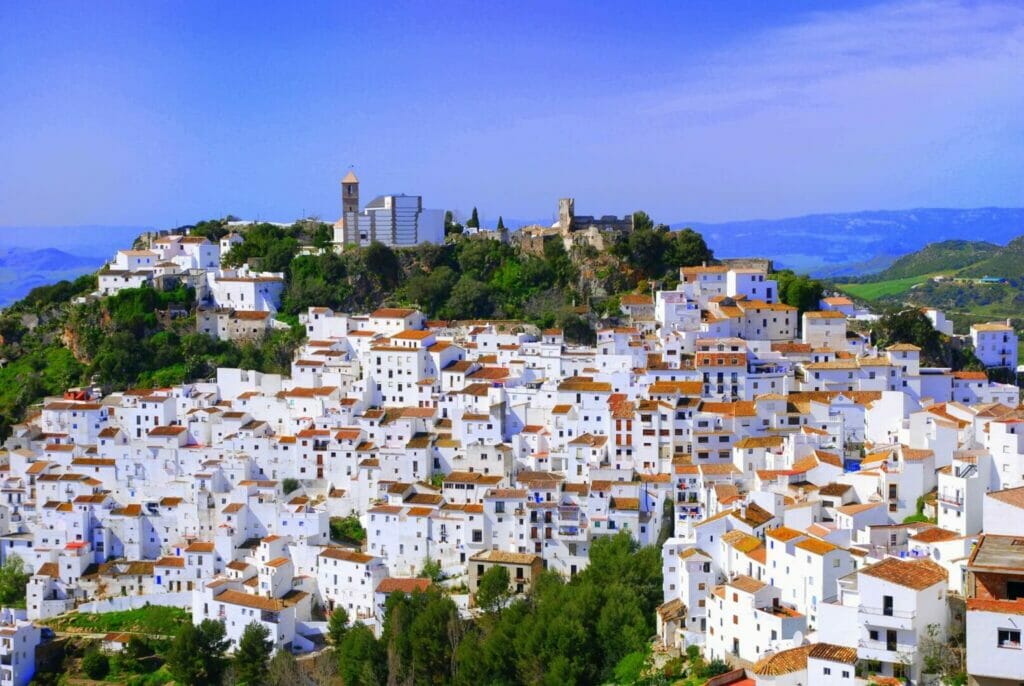
50 km · about 50 minutes. The furthest away on the list, but the view makes up for it: white houses are clustered on the hillside beneath the ruins of the Moorish castle.
Head up to the castle and the Church of the Incarnation for the classic view of the village. And here’s a fact that hardly anyone mentions: Blas Infante was born here, regarded as the father of the Andalusian nation. His birthplace is open to visitors. It is the quietest and least touristy of the six picture-postcard white villages.
If you’ve got more time or want to get off the beaten track, these three options add some variety without taking you too far afield.
15 km, very close to Ojén. It is crowned by the Monda Castle, a converted fortress of Arab origin from which you can see the whole valley. It’s the obvious place to stop if you’ve already made your way up to Ojén.
25 km, in the Guadalhorce Valley. A peaceful white village, known for its Mora Moon Festival, which in September fills the streets with thousands of candles and Andalusian music. A good starting point for walks through the mountains.
40 km, now deep in the Sierra de las Nieves. It retains a medicinal spa specialising in respiratory conditions and a stretch of steep roads. It is one of the entry points to the national park.
By car You’ve got complete freedom: almost all of them are less than 30 minutes away, and you can visit two or three in a single morning. Park at the entrance to the historic centres and walk in, as the streets are narrow and sloping.
Without a car, there are buses to coastal towns such as Mijas and Benalmádena, but services to inland towns — Ojén, Istán, Casares, Tolox — are very infrequent. In such cases, the most convenient option is an organised day trip with hotel pick-up, which also avoids the winding roads.
Plan by proximity: Ojén, Istán and Monda to the north; Mijas and Benalmádena along the coast; Benahavís and Casares to the west. And bear in mind that the The Sierra de las Nieves is a National Park since 2021, so a permit is required for some of the trails in the interior.
To finalise the plan: What to see in Marbella in a day, where to eat in Marbella y What to visit in Puerto Banús.
We are a local tour operator based in Málaga with over 50 years’ experience organising trips around Andalusia. Two of our excursions combine visits to the white villages with hotel pick-up:
Mijas, Marbella and Puerto Banús. Transport from Málaga and the Costa del Sol, with stops in Mijas Pueblo, Marbella’s old town and Puerto Banús, with free time at each location.
Nerja and Frigiliana. It’s a bit further from Marbella, but it connects one of Spain’s prettiest white villages with the Axarquía coast. You can find the details at What to see in Frigiliana and in the Nerja guide.
If you’re looking for white villages in the mountains, the place to go is Ronda with Setenil de las Bodegas: It’s a long way from Marbella and will take a whole day, but they are the two most spectacular villages in the province.
If you’ve already explored the villages and want to go further afield, these excursions offer a pick-up service in the Marbella area:
Ojén and Istán in the Sierra de las Nieves, Benahavís for its cuisine, and the white villages of Mijas Pueblo, Benalmádena Pueblo and Casares. All retain the narrow, white-washed streets typical of the area and are less than an hour’s drive away. Ojén and Istán are the closest and the least crowded.
Ojén, about 10 kilometres away and a 10- to 15-minute drive up towards the Sierra de las Nieves. Next come Istán and Monda, both about 15 kilometres away. They’re the best option if you’re short on time and want a short break without leaving the region.
There are buses to coastal towns such as Mijas or Benalmádena, but services to the inland villages — Ojén, Istán, Casares or Tolox — are very infrequent. In such cases, the most convenient option is an organised day trip with hotel pick-up, which also saves you from having to drive along winding roads and search for parking in narrow village centres.
Yes. As almost all of them are less than 30 minutes away, you can visit two or three in a single day. It’s best to group them by area: Ojén, Istán and Monda to the north; Mijas and Benalmádena along the coast; Benahavís and Casares to the west. It’s best not to try to fit in more than three, so you don’t spend the whole day in the car.
It is not in the town centre, as is sometimes implied. It is situated next to the Juanar Mountain Refuge, on Cerro del Pechón at an altitude of 881 metres, and getting there involves a steady 5-kilometre climb with an elevation gain of around 600 metres. For a quick view without having to walk, there’s the Ojén Viewpoint, on the road to Marbella, and the village caves.
The El Molino Museum, on Charcas Street, is an oil mill dating from 1800 with its original machinery, which is put into operation for demonstrations. On the upper floor is the Aguardiente Museum, dedicated to the spirit that was distilled in the village from 1830 until production ceased in 1974. It houses one of the few remaining original bottles.