Rincón de la Victoria is a quarter of an hour’s drive from Málaga and it has something that no one else on the continent has.
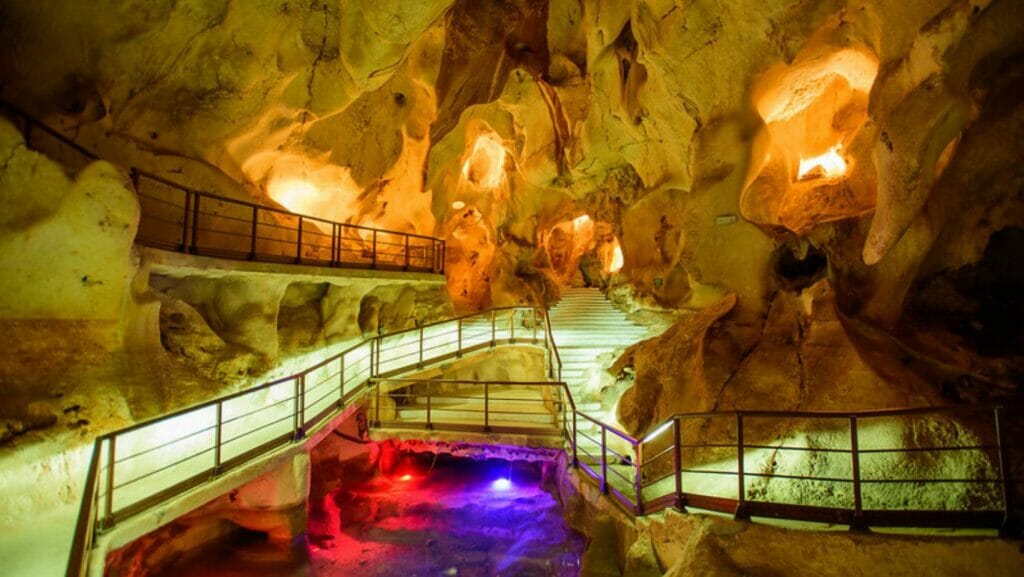
The Cueva del Tesoro is the only cave of marine origin in Europe that is open to the public, and there’s a way to get in for free.
21 Avenida de Picasso, in the El Cantal area. 4.6 out of 9,233 reviews, the highest valuation in the municipality.
And this exclusivity is genuine, not just for publicity’s sake: only the following are known three marine caves in the world. The other two are in Asia and Central America. This is the only one open to the public in Europe.
Their galleries were carved out by the waves and currents, not the dripping of fresh water as in normal caves. Hence the strange shapes.
Admission is around 6 euros, but if you book in advance on the official website, the visit is free. This is the best piece of advice on this page.
Timetable: Every day, from 10.30 am to 2.00 pm and from 4.30 pm to 8.00 pm.
It is closed on 24, 25 and 31 December and on 1 and 6 January.
Legend has it that the treasure of five Almoravid kings was hidden here, and is recorded in 17th-century writings by Fray Antonio Agustín de Milla y Suazo.
And there were those who took it seriously: Antonio de la Nari explored it in the first half of the 19th century and He spent thirty years searching for the treasure, until he died without finding it.
One of the rooms is named after him: the Pozo del Suizo.
And the cave actually has a different name: Higuerón Cave. The bit about «the Treasury» is just what everyone calls it.
And a different plan: On the last Sunday of every month, there is a dramatised tour, with two screenings at 11.00 and 12.30.
The adjacent Cueva de la Victoria is visited separately and on a guided tour. That is where the deer paintings are.
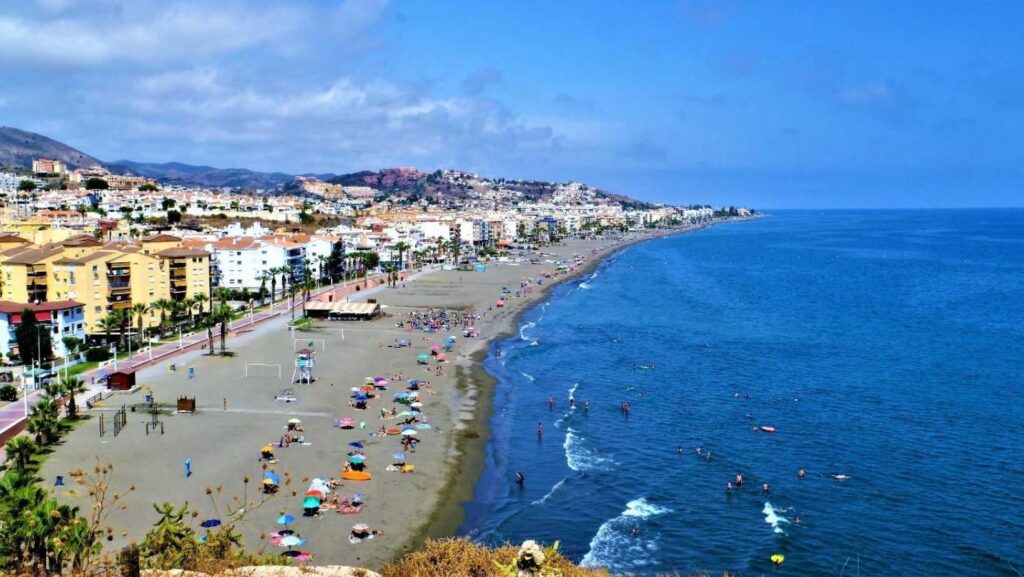
First of all, what’s confusing: Rincón de la Victoria beach and Tajo beach are one and the same. They appear as two in some guidebooks, but there is only one: more than three and a half kilometres of sand.
It is the main one, with showers, sun lounger hire, accessible access points and the seafront promenade with beach bars nearby.
And the other three:
The sand is dark, as is the case along this whole stretch of the Malaga coastline. With the August sun beating down, it’s flip-flops all the way to the water’s edge.
The promenade runs along almost the entire seafront, is flat and has a lane for pedestrians and cyclists. It links the town’s beaches from one end to the other.
Paseo Marítimo Virgen del Carmen, 129. 4.6 out of 698 reviews, the highest mark of the three.
A small shop right on the promenade, with views of the beach. Mediterranean cuisine and menu of the day Highly rated. Reasonable prices.
It is closed on Tuesdays.
1 Córdoba Street, on a quiet street next to the Town Hall square. 4.5 out of 1,554 reviews.
It’s tapas time: patatas bravas, kebabs, burrata, goat’s cheese timbale. It is advisable to book a day in advance, according to the reviews.
Closed on Mondays, and on Tuesdays it’s only open for dinner.
Good to know: It is recommended as a beach bar on the Rincón promenade and It is in Torre de Benagalbón, at the other end of the municipality.
4.2 out of 1,715 reviews, fresh fish and views. Open every day, which is its advantage.
Two notes regarding the reviews: The fish is chosen from the display and charged by weight, so it’s best to ask about the price beforehand; and in the off-season, part of the menu isn’t available.
Sardine skewers, which is the local speciality of this coast and is cooked over hot coals on a boat; fried fish; and Málaga-style potato salad, the one with potatoes, orange and cod.
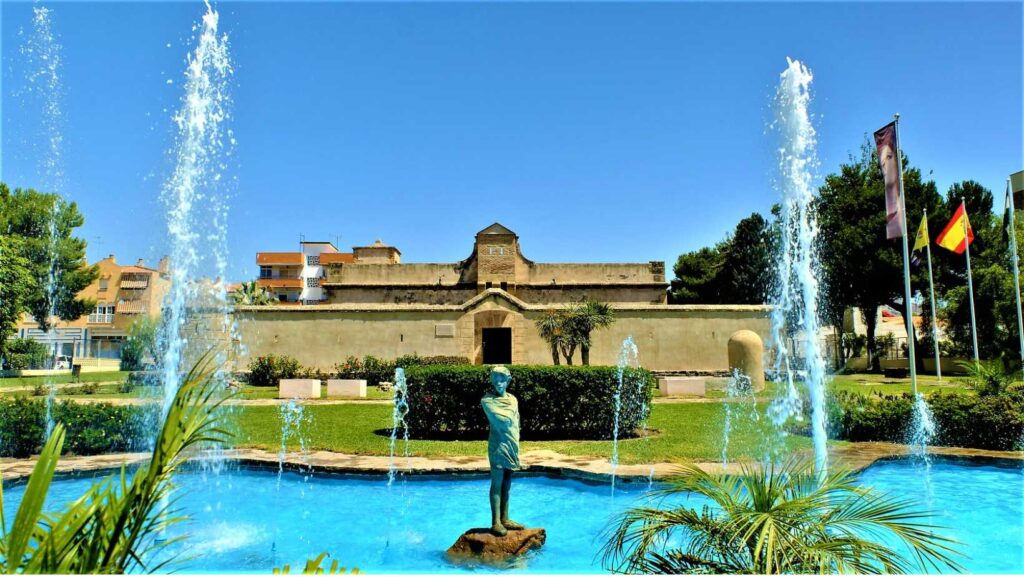
Avenida del Mediterráneo, 149. It dates from 1766, and it was established to protect the coast from piracy and smuggling.
It has been a cultural centre since 1992: exhibition hall, museum and concert venue. Admission is usually free.
What we appreciate most are the gardens, featuring the sculpture of the The Abduction of Europa and benches to sit on. It’s a short, peaceful stop.
It’s closed on Mondays. The rest are open from 10.30 am to 1.30 pm and from 5.00 pm to 8.00 pm, and on Sundays only in the morning.
Honest assessment: it’s small. If you’re passing by, it’s worth the twenty minutes; it’s not worth making a special trip for.
On a hillside overlooking the sea, brings together artefacts that document the occupation of the area since ancient times, including Roman and Visigothic remains and nearby necropolises.
It ties in well with the fortified house: put the two together and you’ve got a half-morning cultural tour.
This is the best thing the town has to offer after the cave.
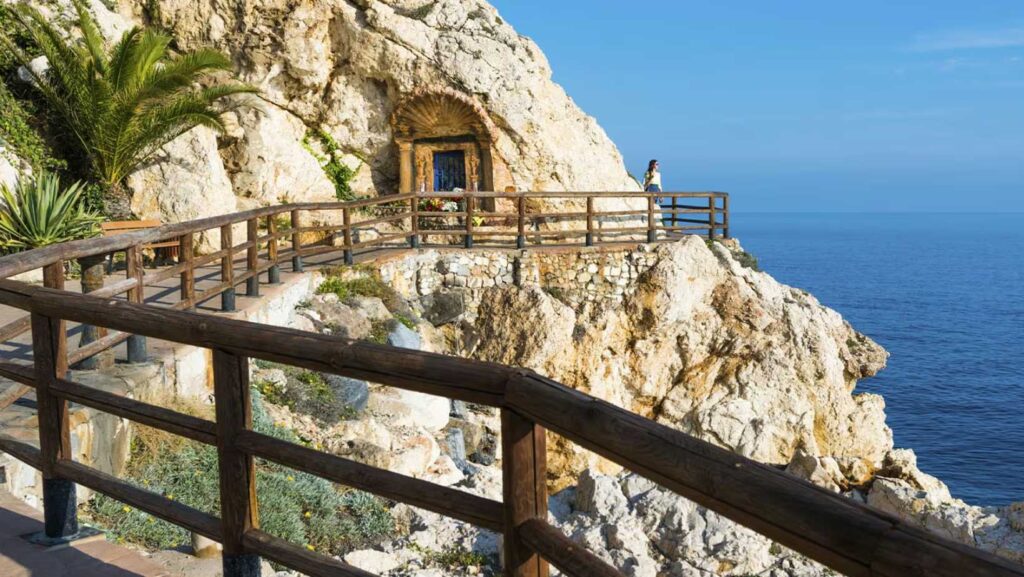
The Cliffs Promenade follows the route of the old railway line which linked Málaga with Vélez, between El Cantal and La Cala del Moral. A walk through the railway tunnels and in sections suspended over the sea.
And it’s practically flat, because a railway track cannot have a gradient: that makes it suitable for almost anyone, including those with a pushchair.
It forms part of the Coastal Path, which runs the entire length of the Malaga coastline, and from here you can continue eastwards or westwards.
For those travelling inland, the municipality serves as the gateway to the villages of the Axarquía.
And a note about the cave: is high up, not along the promenade. If you’re staying right by the beach, it’s quite a steep climb and Google Maps doesn’t show it properly. By car, it’s no problem.
We are a local tour operator based in Málaga with over 50 years’ experience organising trips around Andalusia. Rincón is on a half-day shift, so it fits in well with a day out in the county:
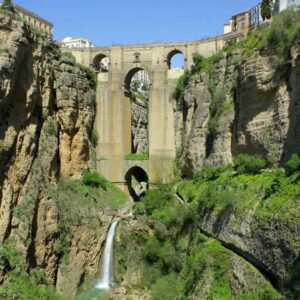
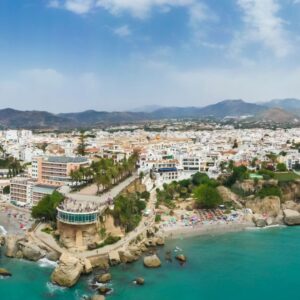
Nerja and Frigiliana They follow the same coastline eastwards, so it’s a natural combination. And the Caminito del Rey o Ronda remain inland.
More ideas: what to see in Nerja y 10 things to know before tackling the Caminito del Rey.
Yes. Admission is around 6 euros, but if you book in advance via the official website, entry is free. It’s open every day from 10.30 am to 2.00 pm and from 4.30 pm to 8.00 pm, and is closed on 24, 25 and 31 December and on 1 and 6 January.
Because there are only three known caves of marine origin in the world, and the other two are in Asia and Central America: this is the only one open to visitors in Europe. Its passages were carved out by waves and currents, not by the dripping of fresh water as is the case in conventional caves, which explains their highly distinctive shapes. Its real name is Cueva del Higuerón.
Between twenty and thirty minutes on your own. It is not a particularly large cave, with around five hundred metres of galleries open to the public, so it’s best to go with that in mind. There is a lift to the first chamber, although the rest of the route includes sections of stairs, so it is not fully accessible.
Yes. It is a single beach stretching for more than three and a half kilometres, which appears under both names in various guidebooks. It is the main beach in the municipality and features showers, sun lounger hire, accessible access points and a seafront promenade with beach bars. The other beaches in the municipality are La Cala del Moral, Torre de Benagalbón and Los Rubios.
Cala del Moral, because it has children’s play areas and a promenade with restaurants and ice-cream parlours, as well as all the necessary amenities. The main beach is also a good choice due to its size and its accessible facilities. Torre de Benagalbón and Los Rubios are quieter but offer more basic amenities.
A section of the Senda Litoral coastal path that follows the route of the old railway line between Málaga and Vélez, running through the railway tunnels and along sections suspended over the sea between El Cantal and La Cala del Moral. As it follows a railway line, it is practically flat, making it accessible to almost anyone, even with a pushchair.
It is about fifteen kilometres east of the capital along the A-7 motorway, which takes around a quarter of an hour by car. There is also an intercity bus service, with the journey taking just over half an hour. It is worth noting that the Cueva del Tesoro is situated on high ground, not next to the seafront promenade.