August is the hottest month of the year in Morocco, and whether it’s worth it depends entirely on whichever area you go to.
The disparity within the same country is staggering: whilst Marrakech hits over 38 °C, in Tangier or Essaouira is 28 away with a sea breeze. Here’s what to expect and how to get organised.
This is the most common planning mistake and the one that causes the most frustration.
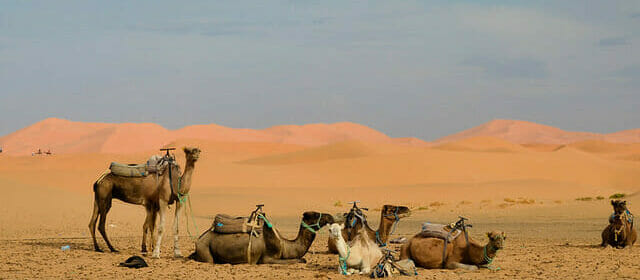
At In Merzouga and the Sahara, temperatures exceed 48 °C in August. The classic Marrakech–Merzouga route at that time of year It’s not just uncomfortable: it’s risky, particularly with children or the elderly.
If your trip includes a desert, reschedule it for another month. October to April is the best time to enjoy the Sahara, and indeed the only time it really makes sense to visit: mild days and cool nights under the stars.
Morocco doesn’t have just one climate – it has four. These are the average figures for August:
| Area | Maximum average | Average minimum |
|---|---|---|
| North coast (Tangier, Tetouan) | 28–30 °C | 20–21 °C |
| Atlantic coast (Casablanca, Rabat, Essaouira) | 26–29 °C | 20 °C |
| Mountain (Chefchaouen, Rif, Middle Atlas) | 30–32 °C | 18 °C |
| Interior (Marrakech, Fez) | 36–38 °C, with peaks of 42–45 | 19–21 °C |
| Desert (Merzouga, Erg Chebbi) | Over 45 °C, with highs of 48 | 25–26 °C |
Two points that change the whole picture:
A point of reference: The record for the past decade in Morocco in August was 47 °C, recorded in 2021.
The two-stripe rule: among the 10.00 and 17.00, the covered souks of Marrakech or Fez are a wall of heat. Don’t fight it.
The UV index in Marrakech reaches 11 or 12 in August, the top of the scale. At that level, unprotected skin gets burnt in just over ten minutes.
Lightweight, loose-fitting and made from natural fibres: cotton or linen, which are breathable. And in light colours.
Even if it’s hot, cover your arms and shoulders with light clothing. For two reasons: it protects you from direct sunlight and respects local customs, particularly outside tourist areas and at religious sites.
August is the month of the north and the coast. These are the places where you can really enjoy the summer:
What about Marrakech and Fez? You can see them perfectly well, but just using the two-strip rule and knowing that the middle of the day is not put to good use.
The kitchen tidies itself up: salads, seasonal fruit —melon, watermelon, figs— and fresh juices at the stalls in the souks, which save the day in the middle of the afternoon.
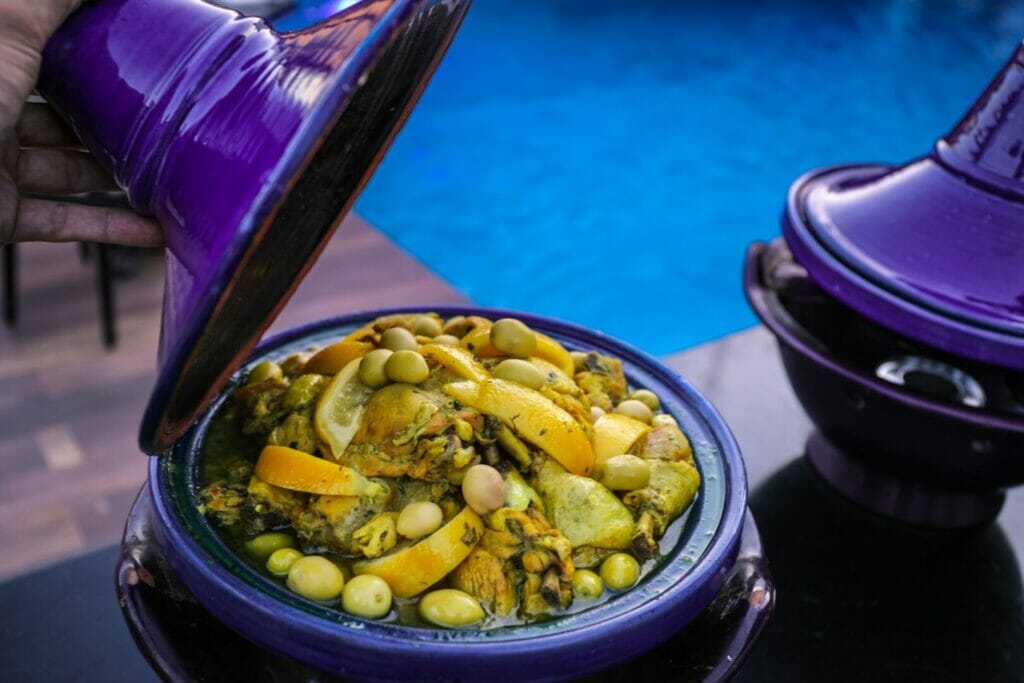
The tajine You’re less likely to fancy dishes that take a long time to cook when it’s 38 °C; save the hearty meals for the evening, which is when everyone eats. And the mint tea It’s drunk hot even in August: it sounds strange, but it works.
You can find more at traditional drinks y Moroccan sweets.
Before you go, how to travel to Morocco from Spain y Is it safe to travel at the moment?.
We are a local tour operator based in Málaga with over 50 years’ experience organising trips around Andalusia and northern Morocco. In August, the best option is to cross the Strait and come back: you get to see the whole country without the heat of the interior or the hassle of long journeys.
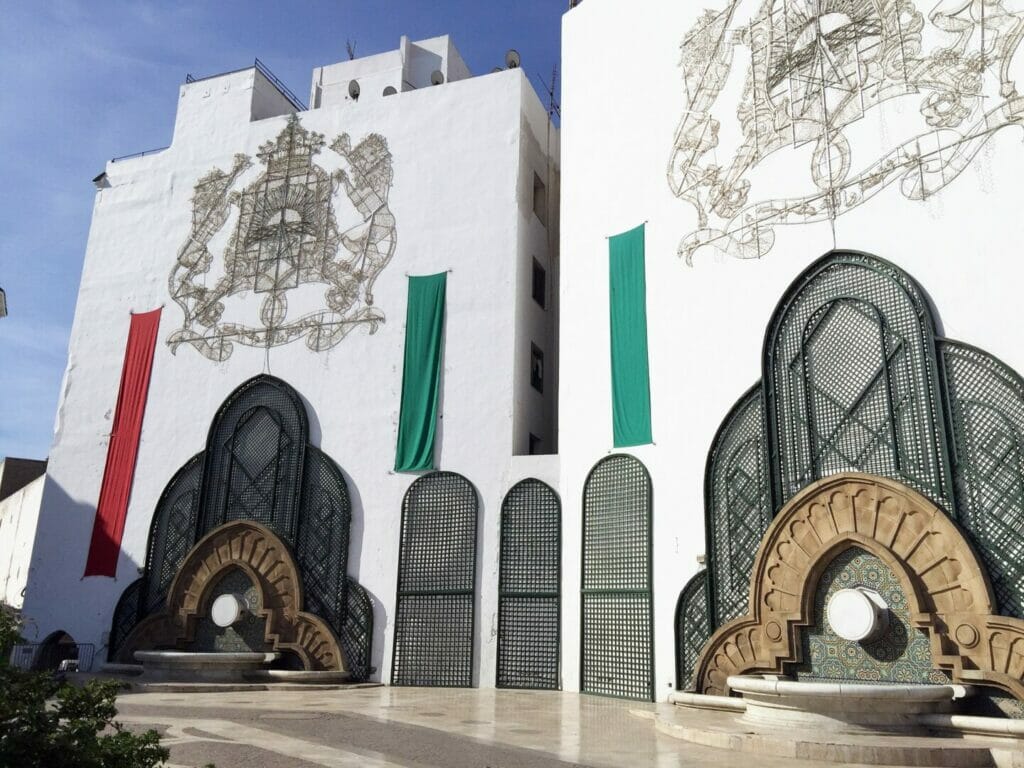
And to prepare for the trip, what to buy y the gates of the medina of Tetouan. The entire destination, in The Morocco Guide.
Yes, if you choose the right area. The north coast, the Atlantic and the Rif Mountains have temperatures of between 26 and 32 degrees, making them perfect for a visit. The interior, including Marrakech and Fez, requires you to plan for two different time zones, and it’s best to avoid the desert. With that in mind, August is a brilliant month for the north of the country.
It is strongly discouraged. In Merzouga and Erg Chebbi, temperatures exceed 48 degrees in August, which makes the classic tour from Marrakech a risky undertaking, not just an uncomfortable one, especially with children or elderly people. It makes sense to reschedule the desert part of the trip to the months of October to April.
Average maximum temperatures hover around 36 to 38 degrees, with peaks of 42 to 45 during heatwaves, whilst minimum temperatures remain around 21, so the nights offer little relief. It is a dry heat, which makes it somewhat more bearable in the shade than the humidity of the coast, but the UV index reaches 11 or 12, the maximum on the scale.
The north coast, with Tangier and Tetouan recording temperatures of between 28 and 30 degrees; the Atlantic coast, particularly Essaouira, famous for its constant winds; and the mountains, with Chefchaouen and the Rif or the Middle Atlas, and the cedar forests of Ifrane, where the altitude brings temperatures down by several degrees. These are the areas where Moroccans themselves head in summer.
Lightweight, loose-fitting clothing made from natural fibres such as cotton or linen, in light colours. It is advisable to cover your arms and shoulders with light garments, as this protects you from direct sunlight and respects local customs. Wear a hat, sunglasses, closed-toe, comfortable shoes for the medinas, and a light long-sleeved top for air-conditioned indoor spaces.
From seven to ten in the morning and from six in the evening. Between 10 am and 5 pm, the covered souks of Marrakech or Fez become an oven. The best approach is to split the day into two parts and spend the middle hours eating and resting, preferably in a riad with an inner courtyard.