Triana is one of those neighbourhoods that you understand best once you’ve crossed the river. Situated on the right bank of the Guadalquivir, opposite Seville’s historic centre, it retains its own distinct identity, forged over the centuries by three traditions that still define its character: pottery, flamenco and seafaring. Generations of potters, flamenco singers and sailors were born here, and that blend is still evident in its streets, its tiles and its chapels.
Exploring Triana is, to a large extent, exploring the more everyday, less monumental side of Seville – the part of the city that lies off the beaten track of the major tourist routes, yet is just a few minutes’ walk from the Cathedral. In this guide, we highlight the key stops that best capture the essence of the neighbourhood, from the Triana Bridge to its tradition of pottery-making. If you’re planning to explore the city in a single day, you can organise your visit with a organised trip to Seville and then set aside some time for a leisurely stroll along the Triana waterfront.
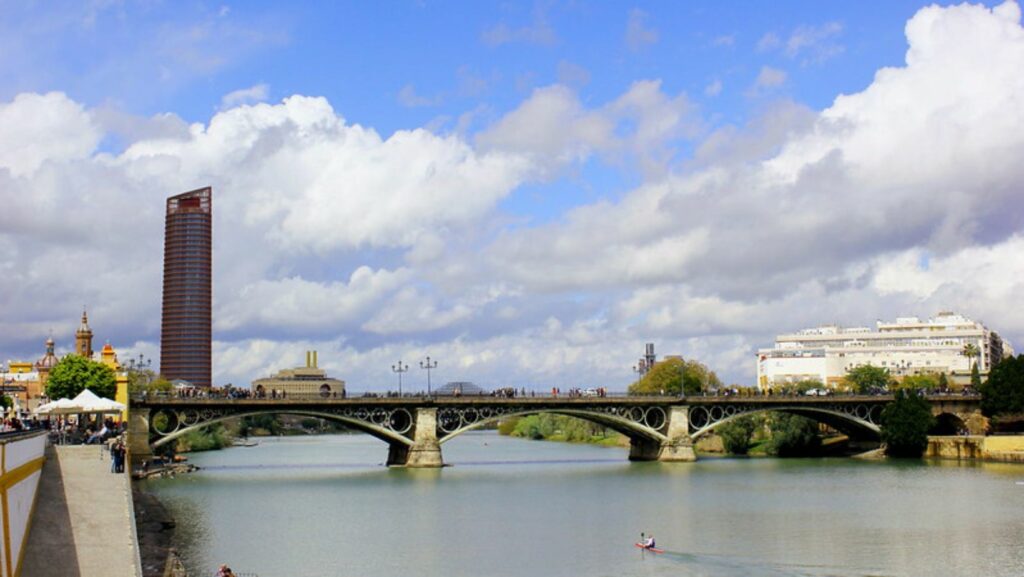
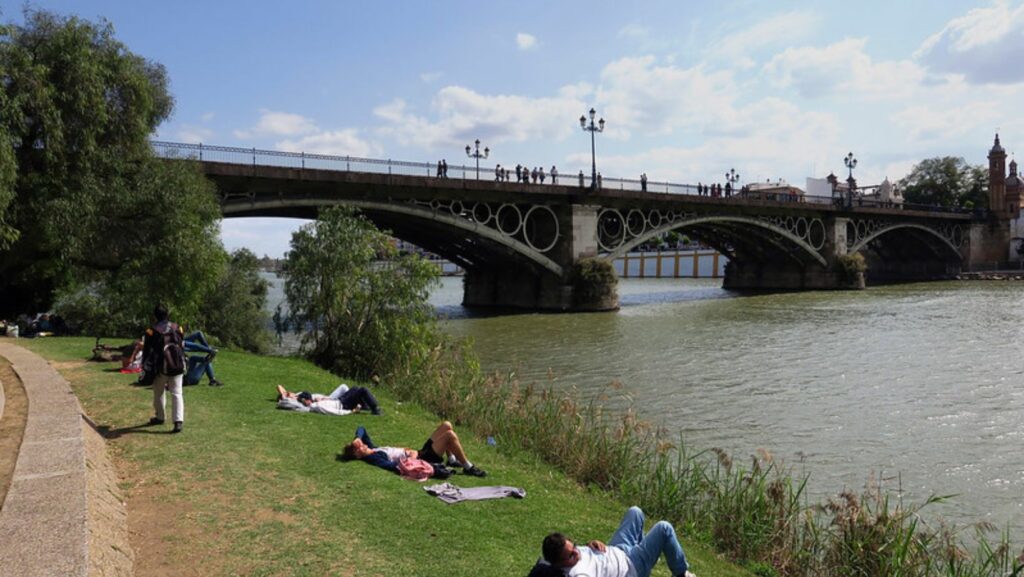
The Triana Bridge, officially Isabel II Bridge —named in honour of the queen who reigned at the time—is the gateway to the neighbourhood and the best place to start the tour. It was inaugurated in 1852 and became the first fixed bridge to be built over the Guadalquivir in Seville, replacing the historic Puente de las Barcas (Bridge of the Boats), a makeshift and rickety wooden footbridge which, despite everything, remained in use for centuries.
It was designed by the engineers Gustavo Steinacher and Ferdinand Bennetot, drawing inspiration from the now-demolished Carrousel Bridge in Paris. This is where the belief that the two are identical comes from: in reality, they are not entirely the same, but the reference is clear.
The figures: 154.50 metres long, 15.9 metres wide and a maximum height of 12 metres. Its structure, comprising cast-iron arches resting on stone pillars, is a fine example of 19th-century iron architecture in Spain. In 1976 The tram tracks that crossed it were removed, which increased the space available for pedestrians and traffic, and that same year it was declared a National Historic Monument, a status which today is equivalent to that of a Site of Cultural Interest.
Crossing it on foot offers one of the city’s most iconic views: on one side, the silhouette of the Torre del Oro and the old town; on the other, the façade of colourful houses that welcomes visitors to Triana. As evening falls, with the neighbourhood’s reflection on the water, it is one of the most photographed spots in Seville and a regular meeting place for locals and visitors alike.
As soon as you cross the bridge, right at the entrance to the neighbourhood, stands the Triana Market, a bustling food market where traditional fish, fruit and spice stalls sit alongside tapas bars. It’s the perfect place to get a feel for everyday life in the neighbourhood and sample local produce without straying from the route: fried fish, tapas and stews are all part of the experience.
Beneath the market itself lie the remains of the St George’s Castle, a medieval fortress that served as the seat of the Inquisition Tribunal in Seville for over three centuries. Today it houses a free-to-enter visitor centre that explains the history of the building and of those who were held in its dungeons. Visiting the market’s basement is one of the most surprising stops in Triana, as it encapsulates, within just a few metres, the dual nature of the neighbourhood: daily life set against the ruins of its past.
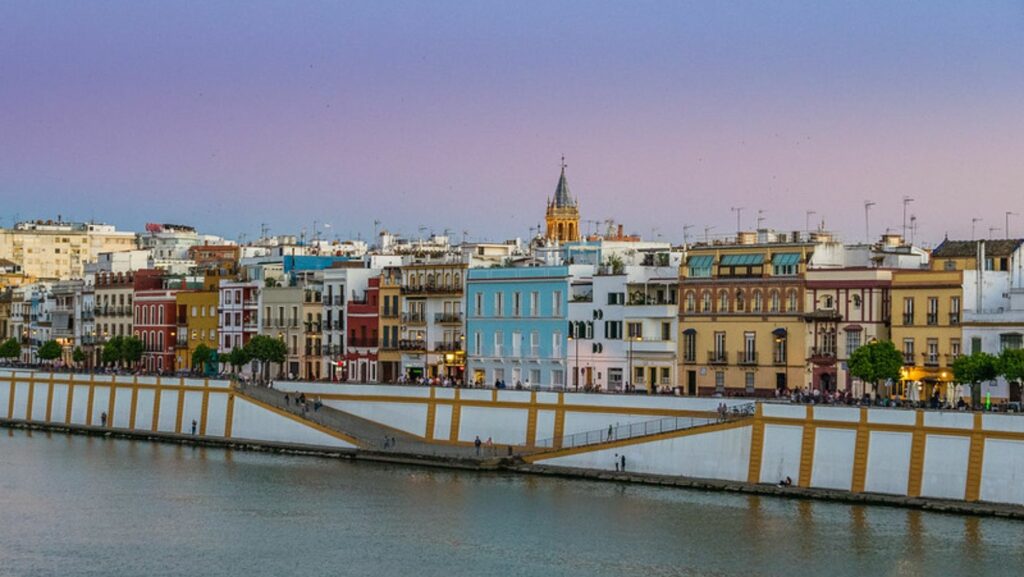
The Betis Street It runs along the riverbank opposite the historic centre and is the classic view of Triana: a row of houses with colourful façades overlooking the Guadalquivir. It’s a short but very pleasant walk, with terraces, traditional bars and some of the best views of the Torre del Oro and the Giralda on the other side of the river.
From here, you can clearly see Triana’s connection with the river and the rest of the city. Directly opposite is the Arenal neighbourhood, on the other side of the river, historically linked to the port and river traffic. Calle Betis is also one of the best places to experience the neighbourhood’s atmosphere at dusk, when the light bathes the façades in a golden glow.
If you’d like to extend your walk along the water’s edge, the Paseo de la O The riverside path continues northwards and is a lovely stretch for walking, cycling or simply sitting down to admire the river and the bridge from a different angle.
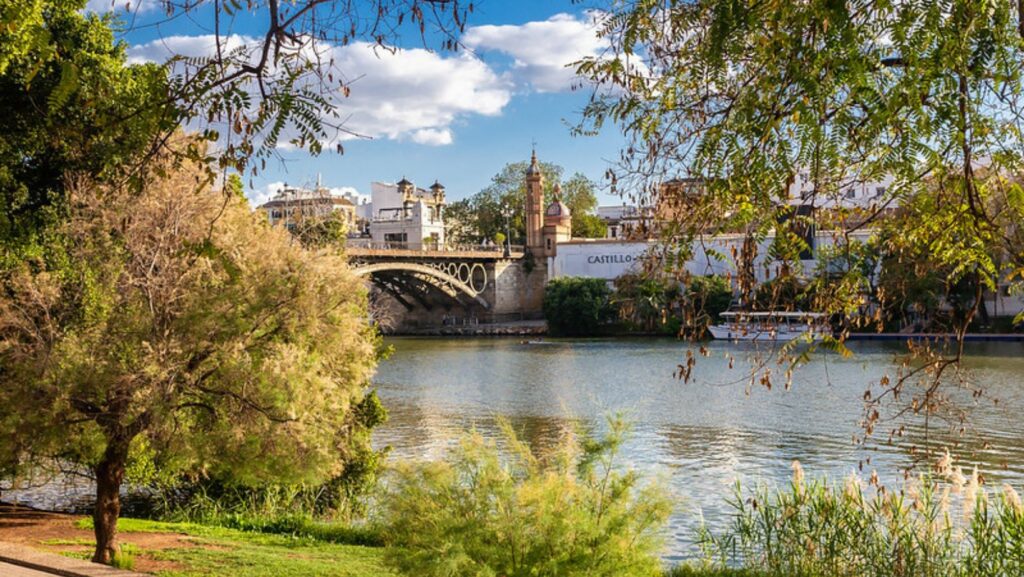
At the far end of the bridge, guarding the entrance to Triana, stands the small Chapel of Our Lady of Mount Carmel, designed by the architect Aníbal González, the architect behind the Plaza de España. Its tiled dome and tower have become a visual symbol of the neighbourhood, despite its modest size.
A little further inland stands the Church of St Anne, popularly known as Triana Cathedral. Founded in the 13th century on the orders of Alfonso X the Wise, it is the oldest church in Seville still in use and a magnificent example of Gothic-Mudejar architecture. Its interior features altarpieces, tiles and works of art that reflect the neighbourhood’s devotion over the centuries.
Santa Ana is also the patron saint of Triana, and at the end of July the neighbourhood celebrates the Velá de Santa Ana, Triana’s biggest festival: several days of processions, music, dancing, street activities and the traditional ‘cucaña’ competition on the river. If your visit coincides with these dates, it’s the best time of year to experience the neighbourhood in full swing.
Few devotions define a neighbourhood’s identity quite as much as the Hope of Triana. This image of the Virgin, one of the most venerated ‘Dolorosas’ in Seville, is kept in the Sailors’ Chapel, on Pureza Street. The chapel’s name recalls the neighbourhood’s historical ties to the river and to seafarers.
The chapel remains open for much of the day and allows visitors to view the shrine of La Esperanza on days other than Easter, when the neighbourhood turns out in force for the procession. Beyond its religious significance, the visit helps one to understand the importance that the brotherhood and tradition hold in Triana’s social life throughout the year.
Pottery, alongside flamenco, is the craft that has brought Triana worldwide fame. For centuries, the neighbourhood’s workshops supplied half of Spain and the Americas with tiles and tableware, making use of the clay from the banks of the Guadalquivir. The Triana Ceramics Centre, housed above the old kilns of a pottery factory, revives and explains this tradition through artefacts, tools and the kilns themselves, which have been preserved in situ.
The tour of the museum is complemented by a stroll through the Alfarería Street and the Antillano Campos Street, where a few pottery workshops and shops still remain. Buying a hand-painted tile remains one of the most authentic ways to take home a souvenir from the neighbourhood.
Triana is one of the historic birthplaces of flamenco. The neighbourhood has produced some of the most influential figures in flamenco singing and dancing, and that legacy lives on in the peñas, tablaos and in the memory of its streets, particularly around the old Cava. Throughout the year, shows and festivals are held, and attending a tablao in the neighbourhood is one of the best ways to understand why Triana and flamenco are inseparable.
The Altozano Square It is the heart of Triana and the point where the bridge leads. Here stand the monuments to the flamenco singer and the art of bullfighting, two tributes that honour the figures born in the neighbourhood. The San Jacinto Street, Triana’s main shopping and pedestrian street, the perfect place to round off your stroll amongst the shops, bars and the hustle and bustle of everyday life.
This area is home to a large proportion of the neighbourhood’s culinary offerings, so it’s a good time to take a break: here are a few ideas on Where to eat and enjoy tapas in Triana without straying from the route. Between Altozano and San Jacinto, you can soak up the down-to-earth atmosphere that makes Triana a neighbourhood with a life of its own, beyond the world of tourism.
Triana is easy to explore on foot in a morning or an afternoon, and fits perfectly into a wider tour of the city. If you’re coming from the Costa del Sol and want to make the most of the day, an organised day trip allows you to combine the historic centre with the Triana neighbourhood without having to worry about transport or timetables.
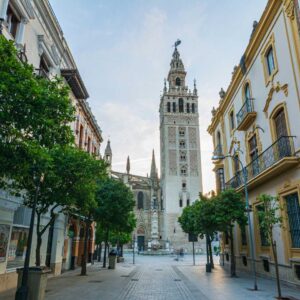
Before crossing the river, it’s worth setting aside some time to see the major monuments in the city centre: the Cathedral, the Royal Alcázar, the Giraldathe Plaza de España and the Santa Cruz neighbourhood. To plan the rest of your day, you can check out our guide to what to see in Seville and to design a route that connects the two banks of the Guadalquivir.
And if you’re already in the city, you can enjoy a guided tour of Seville
The must-see sights in Triana are the Isabel II Bridge, the Triana Market with the ruins of San Jorge Castle, Calle Betis overlooking the river, the Church of Santa Ana, the Sailors’ Chapel with the ‘Esperanza de Triana’ statue, and the Triana Ceramics Centre. The tour ends at Plaza del Altozano and Calle San Jacinto, the commercial heart of the neighbourhood.
Triana is famous for its unique identity on the other side of the Guadalquivir, forged over the centuries by three traditions: pottery, flamenco and seafaring. Generations of potters, flamenco singers and sailors were born here, and that tradition lives on in its tiles, its chapels and its devotion to the Esperanza de Triana.
Triana is just a few minutes’ walk from the historic centre: simply cross the Isabel II Bridge from the area around the Torre del Oro and the Arenal to reach the Plaza del Altozano directly. It is also accessible by public transport and forms part of the city’s everyday landscape, very close to the Cathedral.
The Triana Bridge, officially known as the Isabel II Bridge, was opened in 1852 and was the first permanent bridge over the Guadalquivir in Seville, replacing the old Puente de las Barcas. It is 154.50 metres long and 15.9 metres wide. It was designed by the engineers Steinacher and Bennetot, who drew inspiration from the Carrousel Bridge in Paris, and in 1976 it was declared a National Historic Monument.
The Velá de Santa Ana is Triana’s biggest festival and is held at the end of July in honour of the neighbourhood’s patron saint. It features processions, music, dancing, street activities and the traditional ‘cucaña’ contest on the River Guadalquivir. It is the time of year when the neighbourhood’s down-to-earth character is most evident.