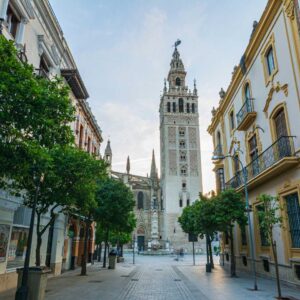
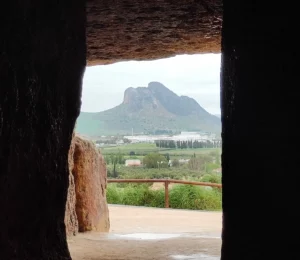
Seville at Christmas is one of the best times to visit: mild temperatures, the illuminated city centre and almost everything concentrated in the old town.
What’s on each year, where it takes place and what you can do for free.
From early December to 6 January. The switching on of the Christmas lights is usually celebrated in the days leading up to the Immaculate Conception bank holiday weekend, with an event in a square in the town centre.
The exact dates change every year, so it’s a good idea to check them on the council’s website before planning your trip. Everything else remains the same: the areas, the places and the activities are practically the same season after season.
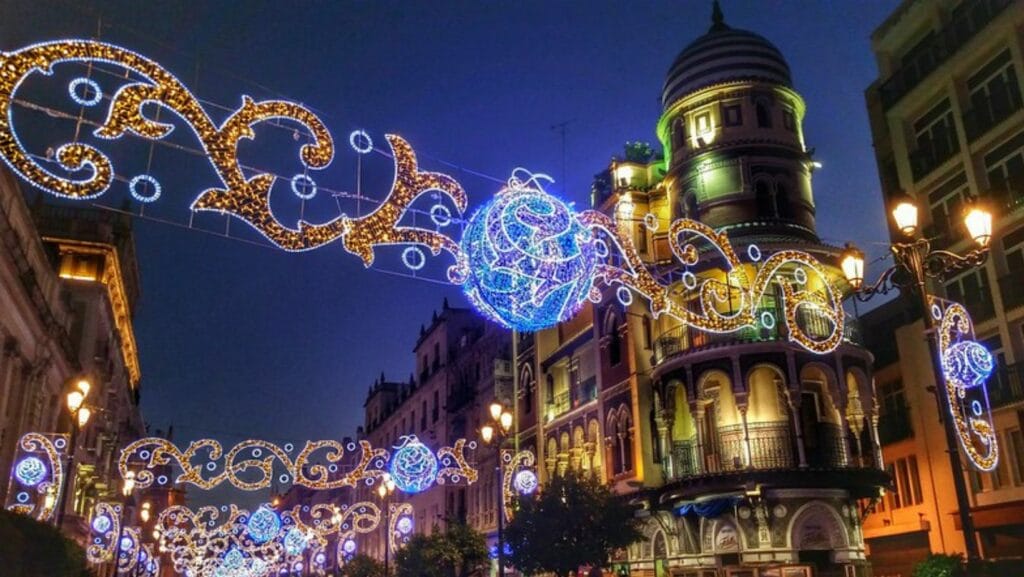
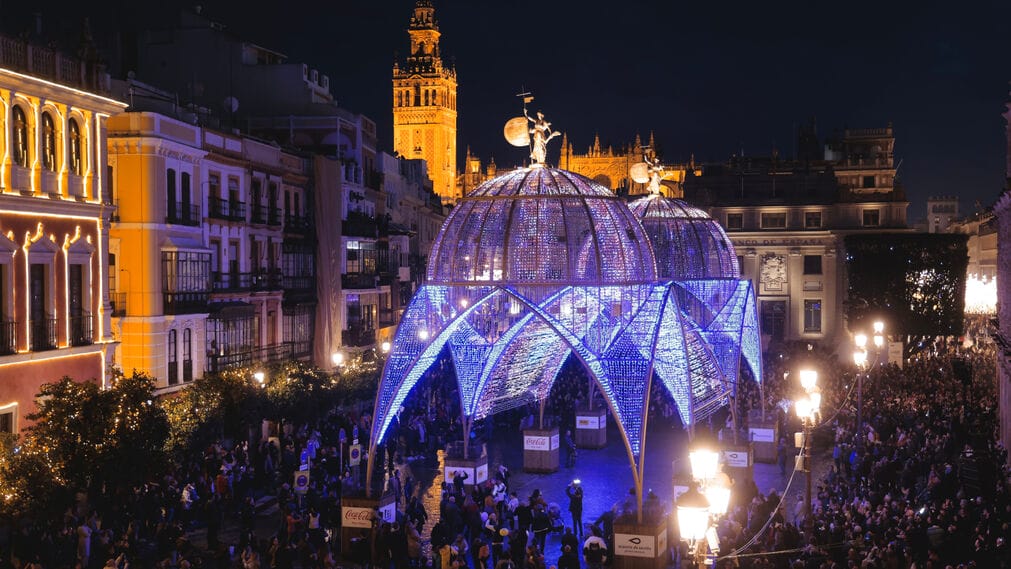
Virtually the whole city is lit up, spread across the eleven districts, but the walk that’s really worth taking is the one through the city centre.
The route that works, and it’s free:
And two more areas that often go unnoticed: the Alameda de Hércules, with its own atmosphere, and the bridges —Triana, San Telmo and Los Remedios—, which are lit up overlooking the river.
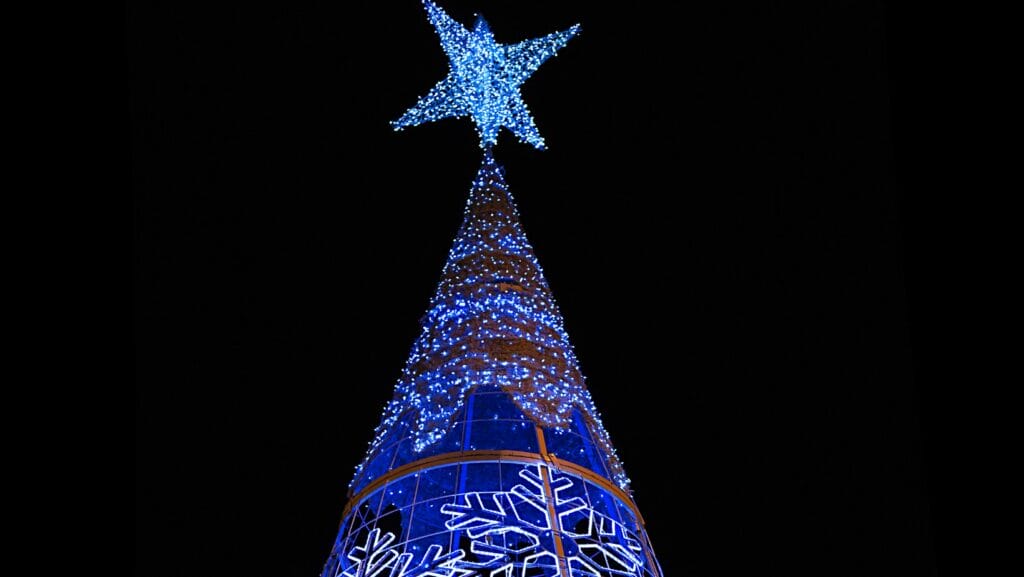
The large tree is usually put up at Puerta de Jerez, and there are others in Cuba Squarethe Santa Justa station and several roundabouts in the neighbourhoods.
And the show that few people know about: the video-mapping projections onto buildings in the city centre and along the riverbank, in the Triana Bridge area. There are several departures each night, usually from 8.00 pm.
Check out this year’s passes: they’re free and are one of the best value options for your visit.
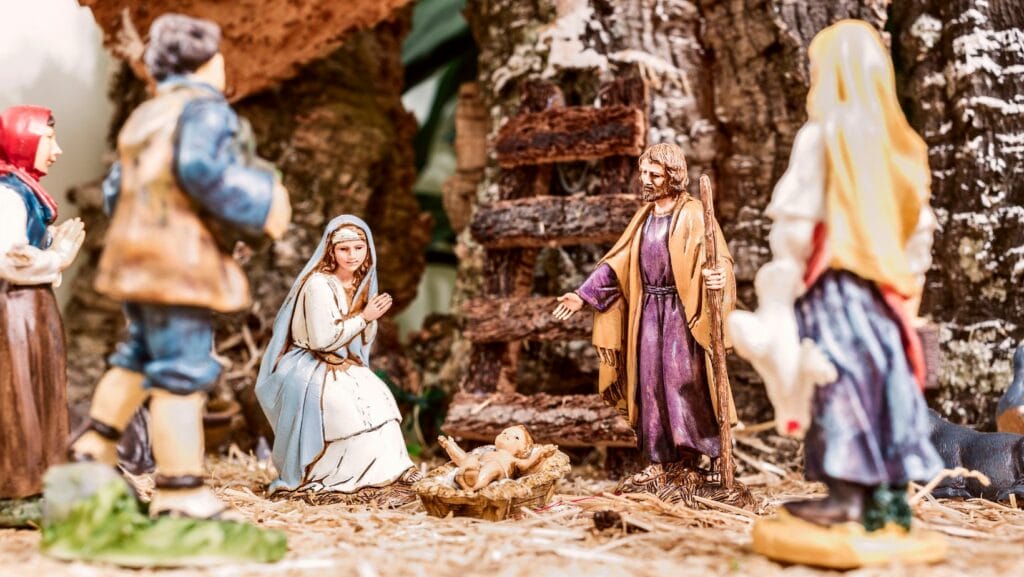
This is the plan that sets Seville apart and which hardly any guide emphasises enough: the Nativity Scene Fair is the most important in Spain.
It is situated next to the Archivo de Indias and the Cathedral, right in the heart of the historic centre, and there you’ll find doorways, figurines, moss, cork, accessories, books and sweets.
Even if you’re not going to buy anything, it’s well worth a visit: the standard of the sculptures is remarkable and it’s just a stone’s throw from the Cathedral.
They are assembled in their dozens in churches, religious brotherhoods, institutional buildings and shops, and Most of them are freely accessible.
Most visited: the one from Town Hall, the one from the Church of the Saviour, the one from the Royal Alcazar and those from the brotherhoods in their chapels.
The practical side: Every season, the nativity scene associations publish a programme listing venues and times. Almost all of them are within a small radius, so they can be done in a single trip.
In the centre, just a stone’s throw from one another:
And outside the city centre, with more of a local feel and fewer people: the Delicias Quay, the Prado de San Sebastiánthe Luis de Morales Street in Nervión and the surrounding area of the Conference Centre in Seville East.
The locations are the same every year, although some markets change venues. They usually run from early December until after Epiphany.
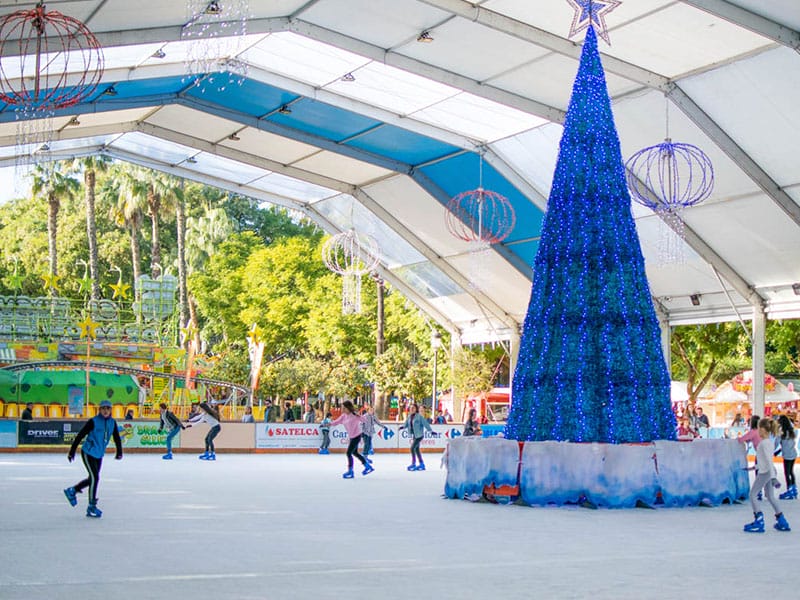
Next to the Torre del Oro, on the banks of the Guadalquivir. He’s the big one, and his claim is a serious one: Spain’s largest indoor ice rink.
It also has a Christmas circus with its own big top, a concert hall, merry-go-round, Father Christmas’s house and a children’s play area.
And an added bonus that makes the most of the location: on Seville Aquarium It’s right next to it, so you can do them both in one go.
In the Plaza de la Encarnación The Christmas theme park is being set up, with the Lapland Village and its Father Christmas’s cottage, another ice rink, workshops, a flea market and fairground rides.
It’s right in the centre, so it’s best if you’re just passing through. More family-friendly activities at what to see in Seville.
The afternoon of 5 January, and it is the highlight of the festivities. It winds its way through the city centre and draws crowds of thousands along its route.
Two tips if you’re going:
In the days leading up to the festivities, there are visits from the Three Kings and children’s workshops at cultural centres and local shops.
Plaza de San Francisco is the main venue from the programme: choirs, bell ringers and cultural events throughout the festivities.
And the most typically Sevillian thing of all: the zambombas. These are meetings of Christmas carols sung in the flamenco style, accompanied by guitar and clapping, which take place in courtyards, social clubs and venues in the city centre. They’re nothing like a conventional Christmas carol, and they are the best way to understand what Christmas is like here.
They’re announced at short notice and many have limited capacity: it’s worth checking the programme when you arrive.
Local sweets, which aren’t the ones from the supermarket:
And here’s a tip: The cloistered convents in Seville sell handmade sweets at this time of year, and they make for a far more interesting purchase than those found at the street market.
Everything within walking distance and without long journeys. And if you’re going with children, spend the afternoon at Las Setas or the Muelle de las Delicias instead.
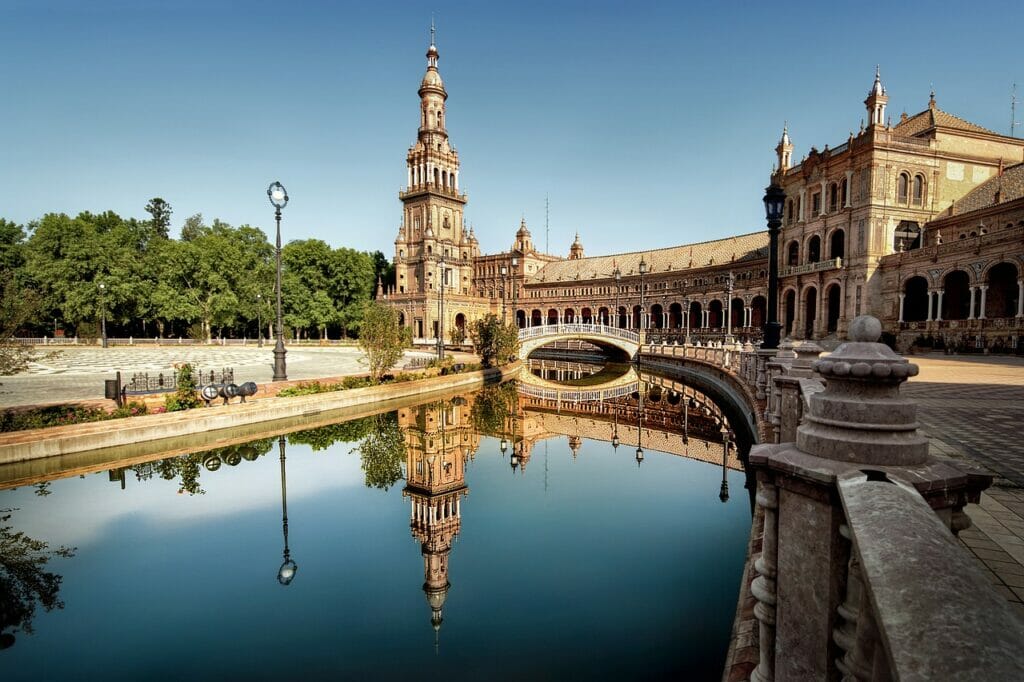
We are a local tour operator based in Málaga with over 50 years’ experience organising trips around Andalusia. Seville is best explored in a day:
A reminder for December: The day trip takes place during the day, so It provides good coverage of the Nativity Scene Fair, the nativity scenes and the street markets, but Come back before the lights really come on. If you’re planning to see the lights, you’ll need to stay overnight.
More about the destination: Seville in a day, the Cathedral, the Royal Alcázar y its places.
In the days leading up to the Immaculate Conception bank holiday, there is a ceremony in a square in the town centre, and the lights remain on until 6 January. The exact date varies each year, so it is advisable to check the Town Council’s website before organising your trip.
Spain’s leading market for nativity figures and accessories. It is held next to the Archivo de Indias and the Cathedral, opens in early November and closes around 23 December, with normal opening hours from 10.30 am to 2.00 pm and from 5.00 pm to 9.00 pm. It’s well worth a visit even if you don’t intend to buy anything.
Gatherings where Christmas carols are sung in the flamenco style, accompanied by guitar and clapping, held in courtyards, social clubs and venues in the city centre. They bear little resemblance to conventional Christmas carols and represent the most authentic way to experience an Andalusian Christmas. They are announced at short notice and usually have limited capacity.
At two venues. Sevilla On Ice, at the Muelle de las Delicias next to the Torre del Oro, boasts Spain’s largest indoor ice rink, as well as a circus, a concert hall and a children’s area. And in the Plaza de la Encarnación, at Las Setas, another rink is set up within the Christmas theme park, alongside the Lapland Village.
On the afternoon of 5 January, walking through the city centre. The route is published each season and the sections in the city centre tend to fill up well before the scheduled time, so it is advisable to choose your spot in advance and bear in mind that the final sections are likely to run behind schedule.
As for the nativity scenes, the Nativity Scene Fair and the street markets, yes: everything is concentrated in the city centre and can be explored on foot. As for the illuminations, not so much, because a day trip means you’ll be back before the lights are really lit up. Anyone who wants to see the city lit up will need to stay overnight.