Estepona has turned its building façades into an open-air museum. More than sixty murals, free of charge, scattered throughout the town centre and the neighbourhoods of blocks of flats.
Fourteen plays, with their titles, authors and directors, and how to explore them without going round in circles.
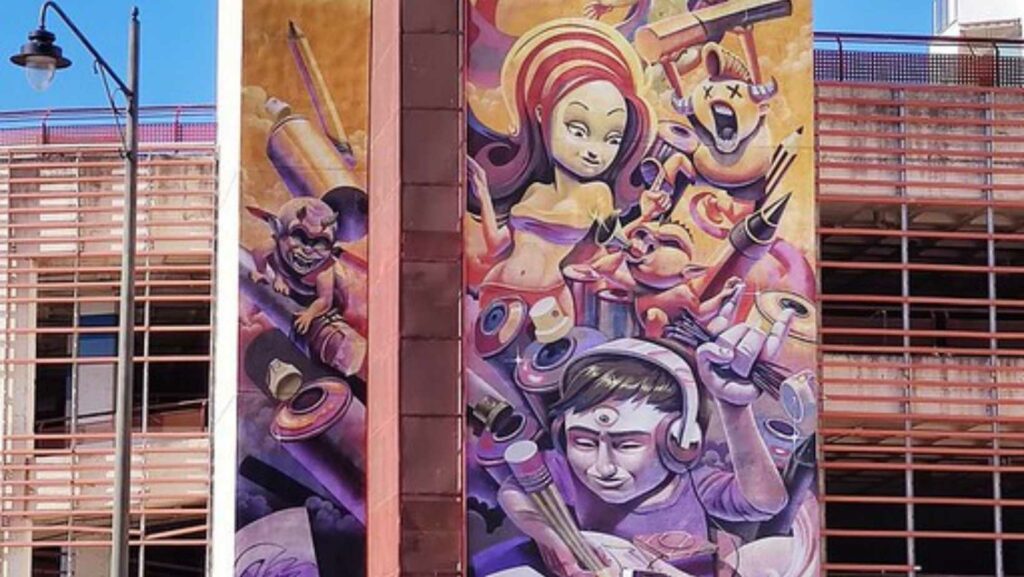
First of all: it’s not a circuit. They are scattered throughout the city, and anyone who tries to see them all in one go ends up walking a long way. Some visitors cover 13 kilometres in one day.
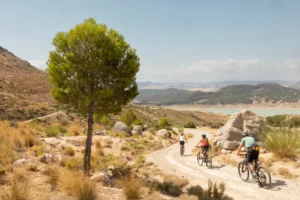
The strategy that works: divide it into three or four areas, park at each one, have a look around that area and move on to the next one. And if you want to cover a lot of ground, electric bike or scooter.
Get the official map. The City Council has published a downloadable leaflet including the location of each work and its artist, and is also included in the Tourist Information Office, in Plaza de las Flores —Tel. 952 80 20 02—.
And there are two more routes that hardly anyone knows about: Estepona also has sculpture trail y poetry trail, with poems displayed in various languages along the streets.
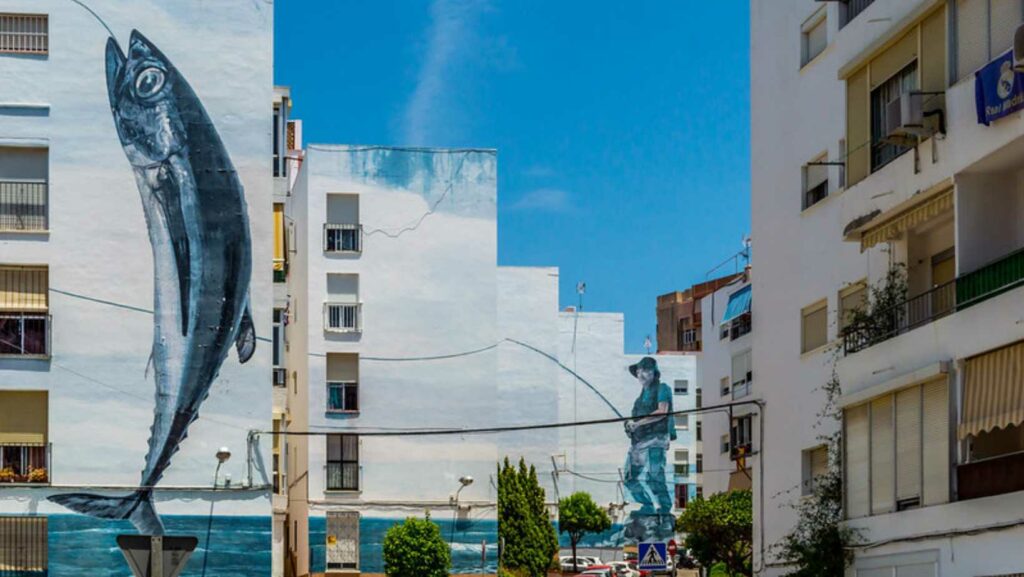
The largest mural in Estepona: almost 1,000 square metres spread across six façades. From January 2014, in the Isabel Simón Neighbourhood, at the top of Calle de la Terraza.
And here’s the trick you need to know: is a trompe l’oeil. The six walls are separate, but from a specific point, they line up and they form a single image: a fisherman casting his line and reeling in the fish.
There is an arrow painted on the floor which marks that spot. It’s quite worn from all the people who’ve stood there, but you can still make it out. If you don’t stand right on top of it, you won’t see the effect.
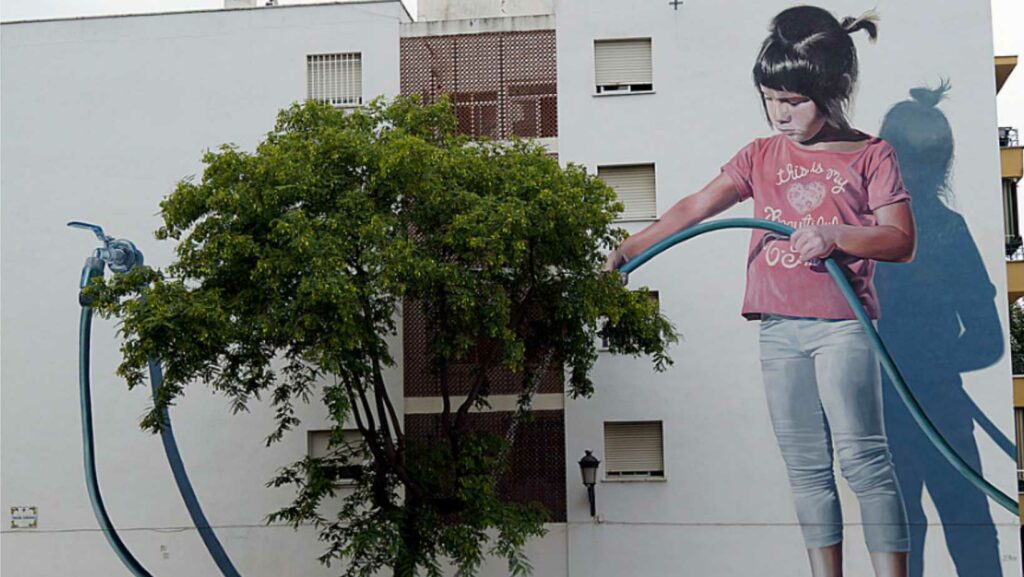
Andalucía Avenue, from 2013. One of the ten murals from that year and one of the most photographed.
What makes it special is the way it plays with reality: A girl with her face painted is watering the garden with a hose a real tree, standing in the street. The painting and its surroundings complement one another.
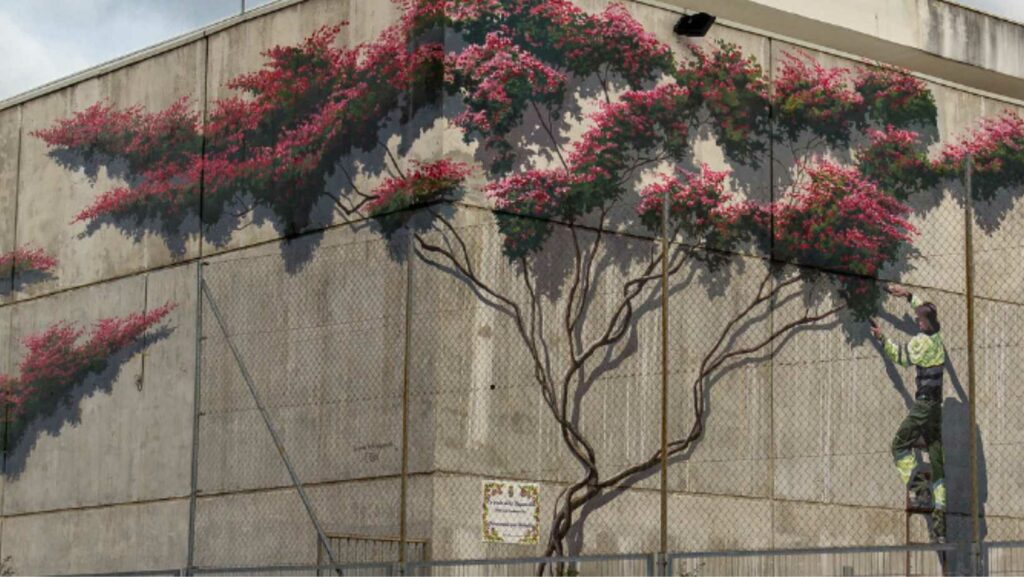
300 square metres with four façades from Víctor de la Serna School, on Avenida Lorenzo. April 2015.
Hyperrealistic: A gardener pruning a bougainvillea, so skilfully rendered that from a distance he looks like a real person. It was painted in two weeks and was presented to the children at the school on whose walls it hangs.
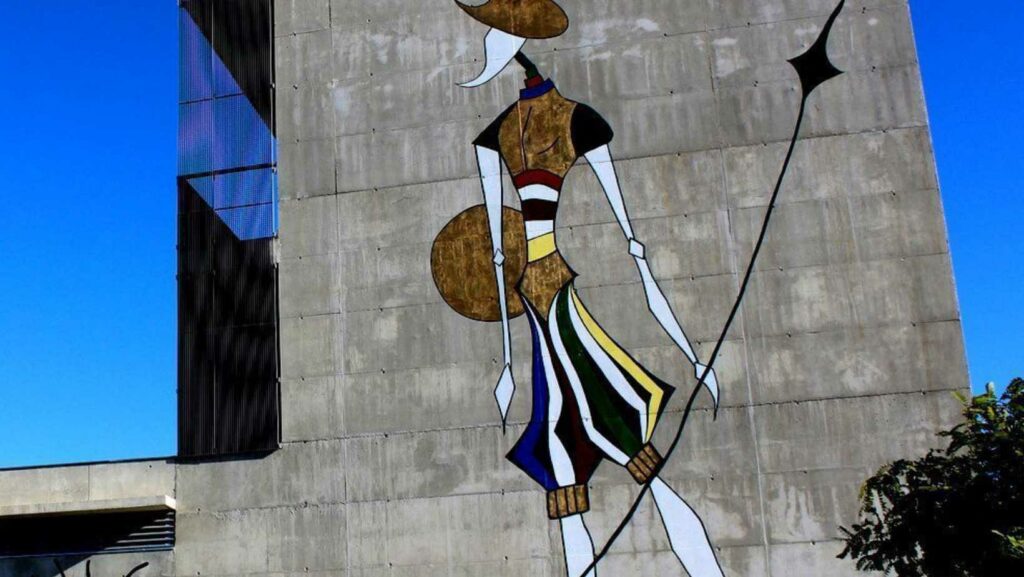
264 square metres and a 16-metre-tall statue, on a façade of the Puerta del Mar Secondary School, opposite Las Mesas Park.
It was opened in January 2016, and there’s a reason for this: commemorates the the 400th anniversary of Cervantes’ death. A Don Quixote brought into the present day by the Málaga-based artist Curro Leyton.
There is another mural by the same artist in the city, a version of The Last Supper, near Calle Madrid.
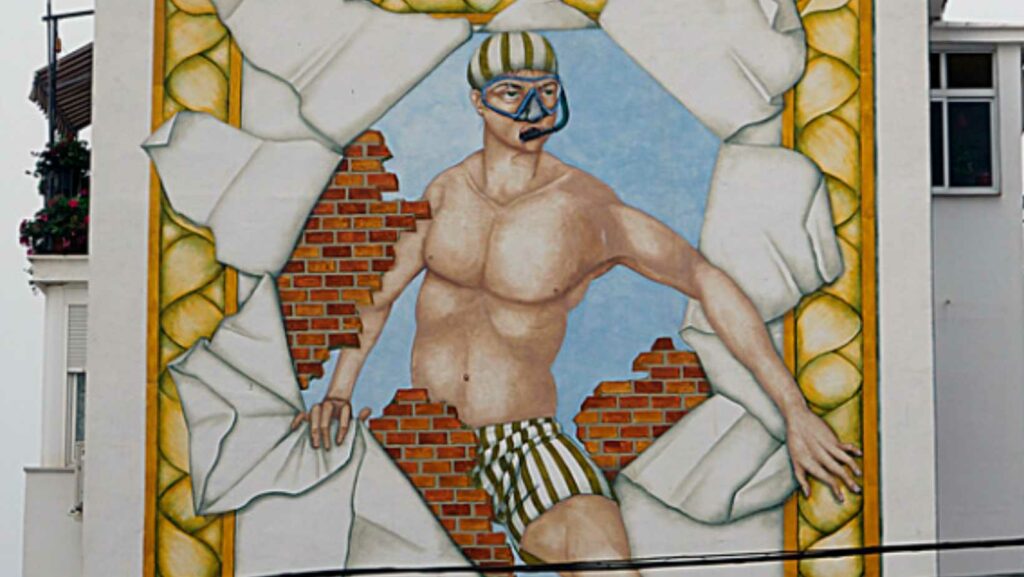
Tres Banderas neighbourhood, August 2014. A young man wearing glasses and a snorkel which seems to pass through the wall of the building.
The artist is French and has an unusual background in street art: Eric Aman has worked at the St Peter’s Basilica in the Vatican.
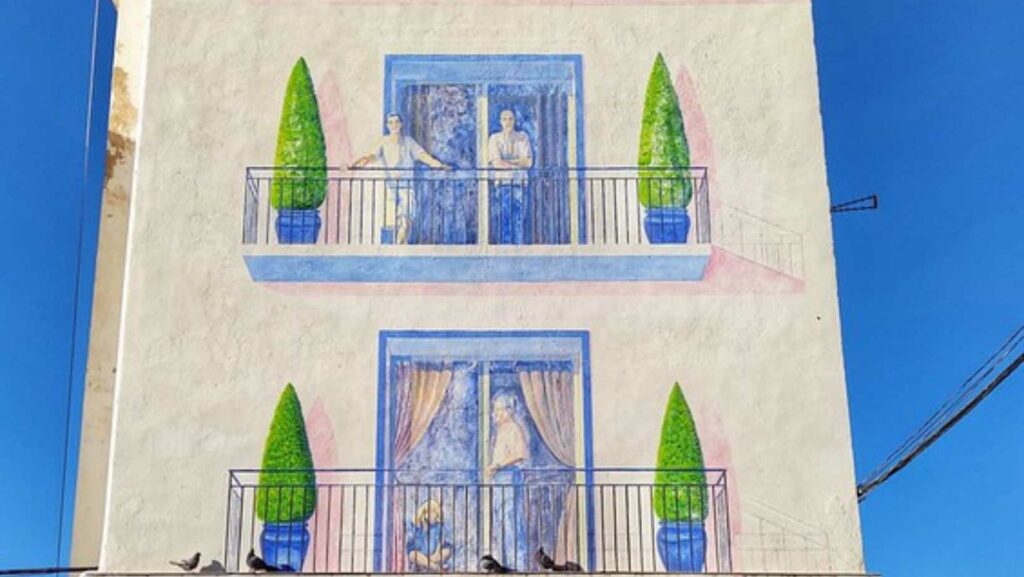
Tres Banderas neighbourhood, January 2013, 80 square metres spread over four floors of a block of flats.
And the detail that makes it unique: the painted figures they are actual residents of the block. It is a trompe l’oeil designed so that passers-by can to pose in front of it and look as though you’re part of the scene.
The artist has her own gallery, STOA, in the Puertosol Building, just a stone’s throw from the mural. She has also published a book about the process.
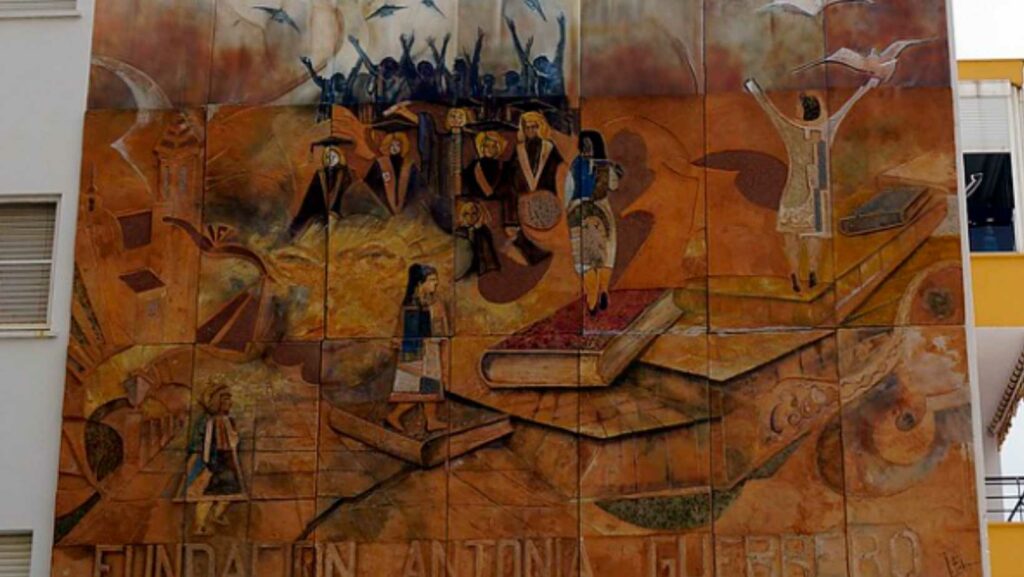
Fuerzas Armadas Street, October 2013. A tribute to Antonia Guerrero and her work to promote women’s education in Estepona.
The composition tells a story: A little girl climbs the steps leading up to the church of Los Remedios, and each step represents a stage of education. The pigeons at the top symbolise freedom.
Technically, it is the most elaborate: mixed media (acrylic and oil), with embossed elements made from resin on polyurethane sheets.
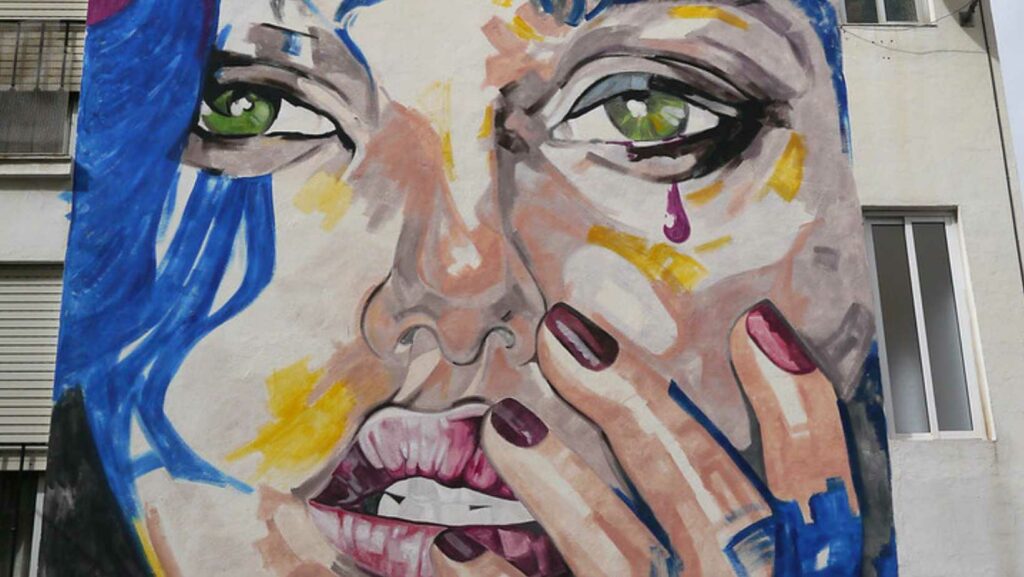
Los Claveles Building, Cristo del Amor Street. It was opened on 12 June 2015 and was Work No. 26 of the route.
A ten-metre-high portrait, in the Impressionist style, based on a project the artist had undertaken in 2010. Miguel González is a portrait artist by trade, and What really stand out up close are the eyes and the lips.
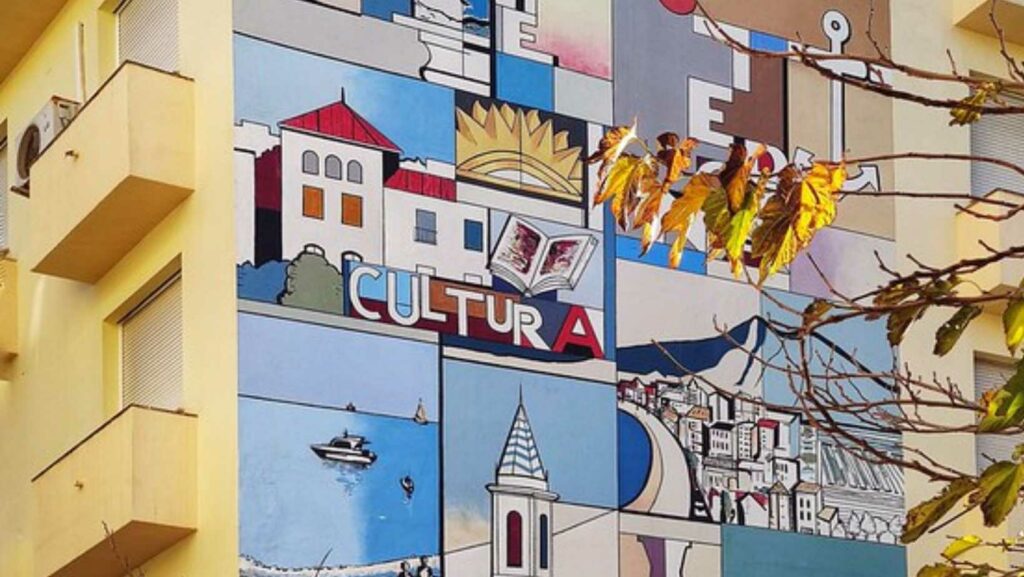
ABC Square, from 2013. It is the mural that best encapsulates the city: it brings together the church of Nuestra Señora de los Remedios, Sierra Bermeja, the sea and the fruits of the earth, with the words ‘art’, ‘culture’ and ‘Estepona’ incorporated into the design.
If you’re only going to see one to get a feel for the town, this one.
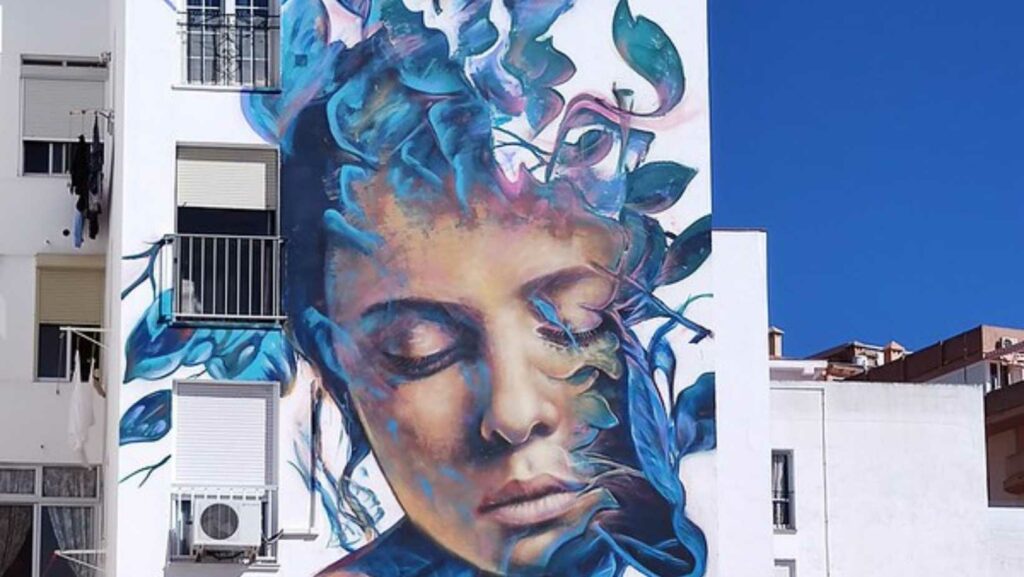
Isabel Simón 6, Peineta Street. July 2020, and winner of the 2nd International Mural Competition of that year.
The author is Russian and sign as Sav45. The play presents, in a dreamlike manner, a woman who dreams of nature.
That competition is still held today and is the driving force behind new works: the third edition received 116 proposals from more than a dozen countrieswith 27,000 euros in prizes.
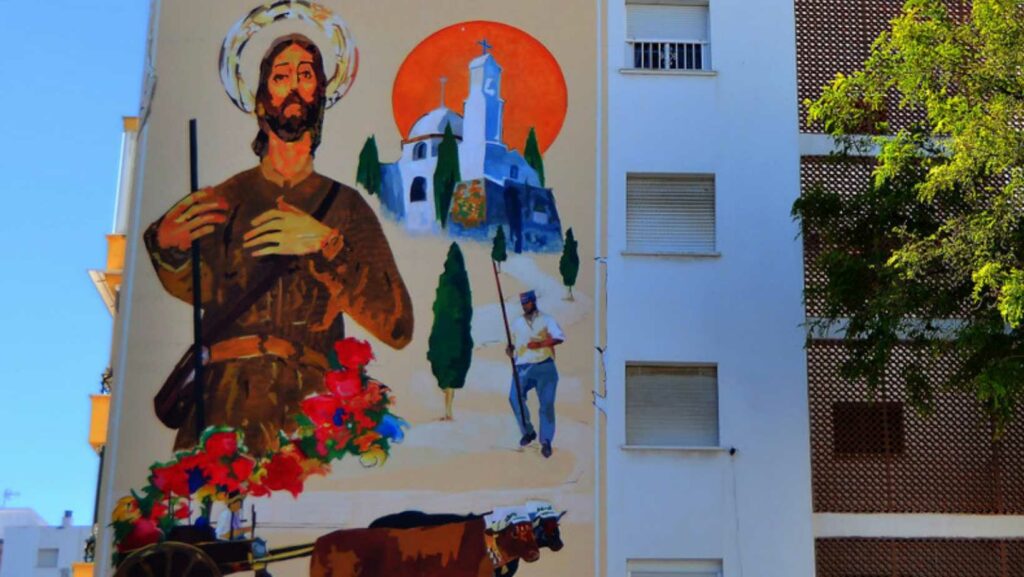
Fuerzas Armadas neighbourhood, María Magdalena Street. Opened on 30 June 2015, 60 square metres in acrylic, featuring a half-length portrait of the Patron Saint of Estepona.
It was funded entirely through private sponsorship, at no cost to the local authority. This is a recurring feature of the programme: several projects have been funded by companies.
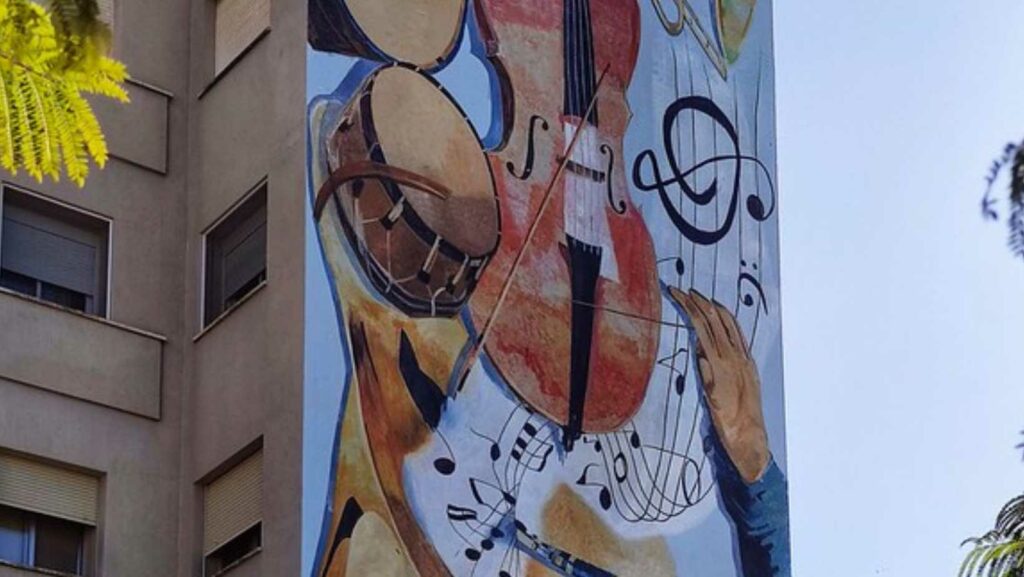
Plaza San Fernando. By the same author, and pays tribute to the Estepona Municipal Band celebrates its 75th anniversary: instruments and musical notes scattered across the façade.
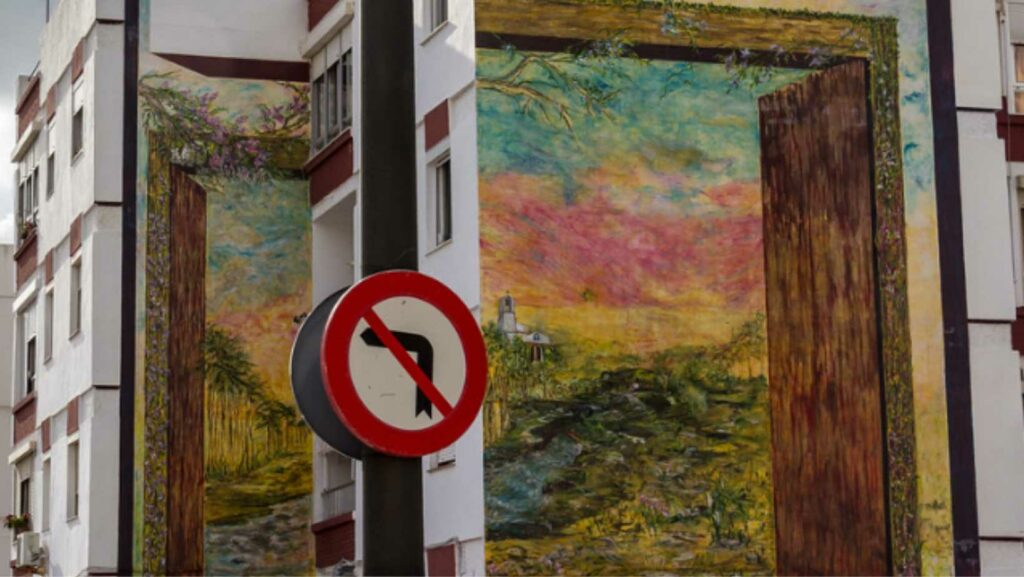
May 2013, and it has a technical feature: It is constructed from two perspectives, so it looks different depending on where you’re standing. A tribute to the natural landscape of Estepona.
A tribute to agriculture and local produce: a vegetable garden brimming with fruit and vegetables, with the figure of Irene at its centre, symbolising the fertility of the earth.
It is one of the most colourful works on the tour.
It’s worth mentioning this because it keeps appearing in guidebooks: the mural of The Venus of Estepona, by Ana Cecilia Salinas, in the Mar y Sierra neighbourhood, was removed from the official list from the Tourist Office. Don’t bother looking for it.
What you can see, however, is the piece that inspired it: the Venus of Estepona is a a clay figurine dating back some 5,000 years discovered in the municipality in 2011. It is one of the most important archaeological finds on the Costa del Sol.
And vice versa: every year, new artworks are created as part of the international competition, such as «Echoes of the Sea», 2024. The official map is always more reliable than any list.
The whole destination, in what to see in Estepona.
We are a local tour operator based in Málaga with over 50 years’ experience organising trips around Andalusia. Marbella is 30 kilometres away, and from the Costa del Sol you can reach quite a few more:
And as for what’s nearby: what to see near Marbella, the best beaches y the villages in the area.
There are more than sixty, and the number is growing every year because the City Council organises an international competition to include new works. That is why it is a good idea to download the official brochure from the Tourism Department before your visit: any fixed list quickly becomes out of date.
«Días de Pesca», by José Fernández Ríos, covering nearly 1,000 square metres spread across six façades in the Isabel Simón neighbourhood. It is a trompe-l’œil: the walls only appear to line up when viewed from a specific point on the street, marked by an arrow painted on the ground.
No. Ana Cecilia Salinas’s artwork in the Barriada Mar y Sierra neighbourhood has been removed from the Tourist Office’s official map, although it is still mentioned in out-of-date guidebooks. What can be seen, however, is the piece that inspired it: the Venus of Estepona, a clay figurine dating back some 5,000 years, discovered in the town in 2011.
Between two and three hours for a selection of fourteen works. The full route takes a good half a day, and some visitors cover thirteen kilometres on foot in a single day. The most practical approach is to divide it into three or four sections and travel between them by car, or explore it by bike or scooter.
No. They are on the façades of buildings and can be seen from the street, so the tour is free and can be done at any time. The City Council also classifies the route as accessible, as the urban route is flat.
Yes, there are two more that often go unnoticed: the sculpture trail, featuring works by nationally and internationally renowned artists dotted along the streets, and the poetry trail, with poems displayed in various languages. Both are listed on the local tourism website.