Picasso was born on 25 October 1881 at number 15, Plaza de la Merced, and that house is open to visitors.
Opening hours, price, what’s included and what to expect, because you can only really appreciate this museum if you know what it is.
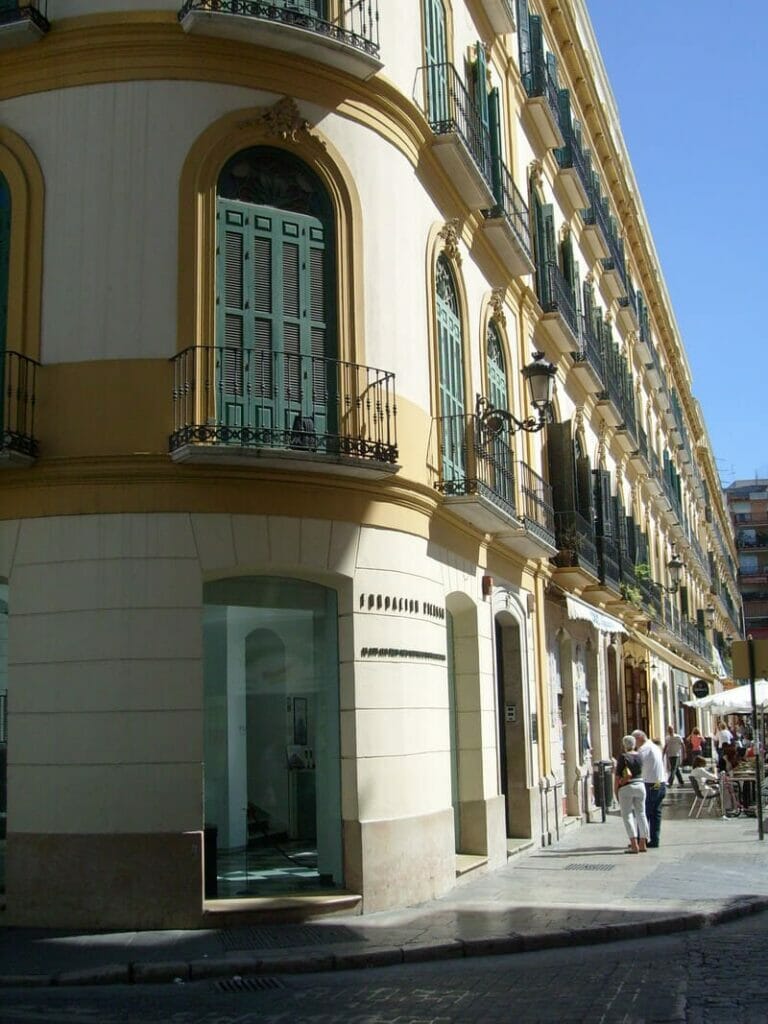
Plaza de la Merced, 15, right in the heart of Málaga. A 19th-century bourgeois townhouse where the Ruiz Picasso family lived during the painter’s early years.
And there’s one thing people look for when they arrive: It can be seen from the square the window of the flat where he was born. It’s on the façade, above the museum entrance.
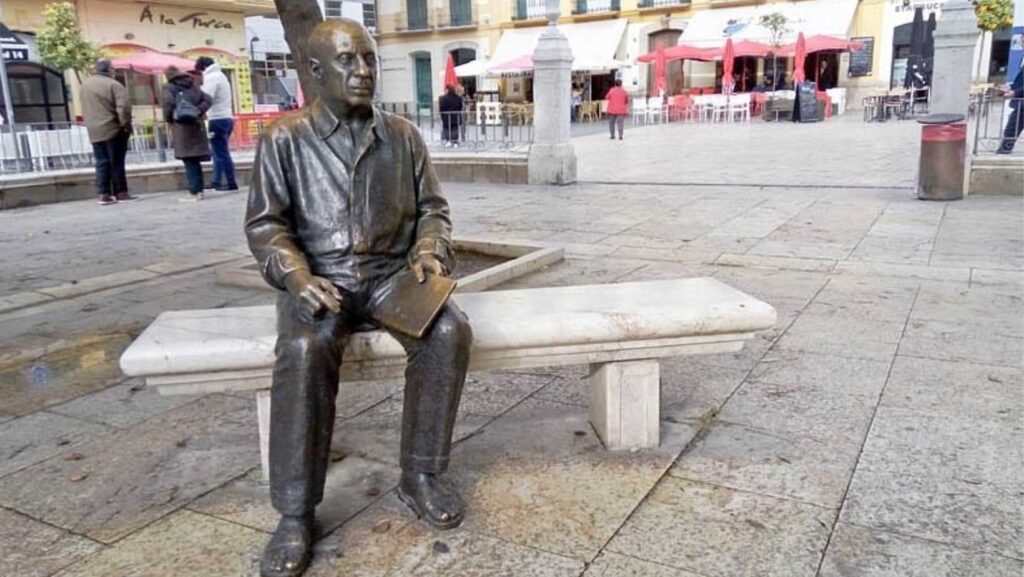
The statue of Picasso sitting on a bench It’s just a few metres from that window, in the same square. It’s the sort of photo almost everyone takes, and it all fits: the child who was born up there, sitting down below, looking at his own home.
Best early in the morning: The rooms are small, and it gets a bit cramped when there’s a group inside.
It’s worth being honest here, as it explains the lukewarm reviews.
This isn’t the Picasso Museum. The major works and the overview of Cubism aren’t here: those are in the Picasso Museum Malaga, a ten-minute walk away.
What the Birthplace is: the place to find out more where did it come from?. A small house, filled with light, family heirlooms and my first sketches.
With that in mind, it works very well. The other one, however, is a let-down.
José Ruiz Blasco, Picasso’s father, was a painter and art teacher. It’s not just an anecdote: it means that Picasso grew up surrounded by easels, paintbrushes and models in his own home, and who was taught the trade from a very young age by someone in the business.
That is what you realise when you visit this house rather than the other museum: That precocious talent didn’t come out of nowhere. It came from here.
The family moved away from Málaga when Pablo was ten years old, first to A Coruña and then to Barcelona. He never lived in the city again.
Picasso’s two sites in Málaga are a ten-minute walk apart, and the order matters:
Doing it the other way round doesn’t work as well: From the big museum to the small house – the house falls short. In this order, each person explains it to the next.
And whilst we’re at it, Plaza de la Merced is one of the liveliest squares in the city centre, with outdoor cafés where you can stop off between visits.
We are a local tour operator based in Málaga with over 50 years’ experience organising trips around Andalusia.
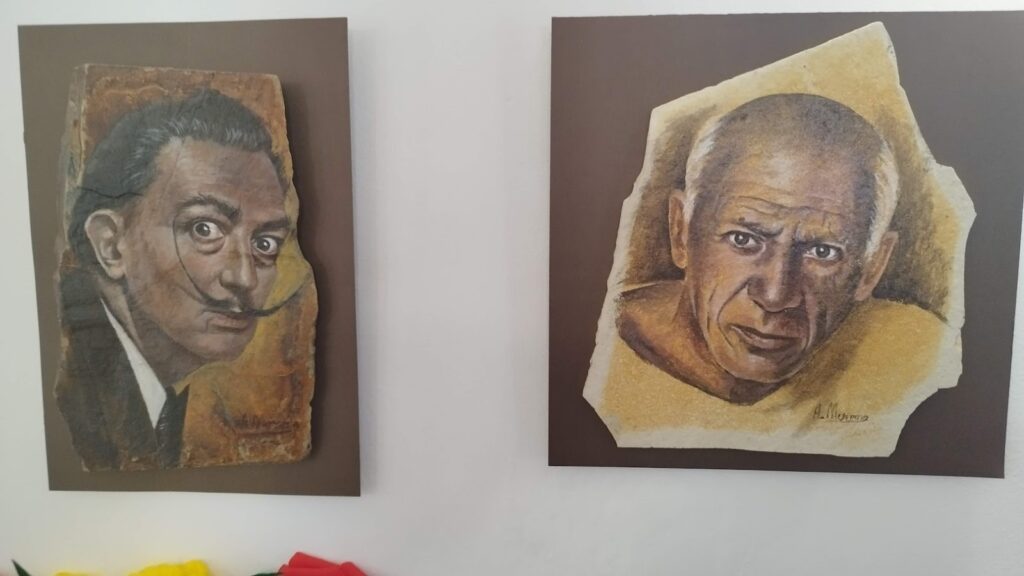
In Mijas, the CAC is exhibiting original graphic works by Picasso and Dalí, in a white village half an hour away. Take the exit for Mijas and Marbella:
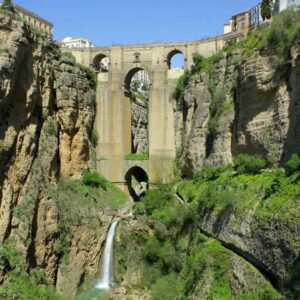
And in Ronda, the Don Bosco Museum, a Modernist house with gardens overlooking the Tagus, as part of the day trip to Ronda and Setenil.
In Málaga, at number 15 Plaza de la Merced, on 25 October 1881. The house is now the Picasso Birthplace Museum and is open to visitors. From the square, you can make out the window of the family’s flat, above the museum’s current entrance.
It is open every day from 9.30 am to 8.00 pm, with no weekly closing day, which sets it apart from other museums in the city: the Carmen Thyssen Museum and the Málaga Museum are closed on Mondays, and the Centre Pompidou on Tuesdays. It’s best to go first thing in the morning, as the galleries are quite small.
These are two separate visits. The Birthplace, in the Plaza de la Merced, is the family home and displays personal items, photographs, prints and ceramics, with a focus on the painter’s early life. The Museo Picasso Málaga, in the Palacio de Buenavista, brings together over two hundred works spanning all his creative periods. It is recommended that you visit the house first and then the museum.
Yes, provided you go with the right expectations. It’s not where his major works are, but rather the place where you can understand the environment in which he was raised: his father, José Ruiz Blasco, was a painter and art teacher, so Picasso grew up surrounded by art supplies and received instruction from a very young age. It’s a short and inexpensive visit.
Not generally speaking, although admission is among the cheapest of all the museums in Málaga and there are days and time slots each month when entry is free. It’s a good idea to check the official calendar before your visit, as it changes.
Since 1983, it has been home to the Picasso Foundation, established by Málaga City Council, and in that same year it was declared a Historic-Artistic Monument of National Interest. The family had left the city when the painter was ten years old, moving first to A Coruña and then to Barcelona.