The Palace of Las Dueñas is the Seville-based branch of the Alba’s House, and it remains the family home. It was the favourite of Cayetana Fitz-James Stuart.
And this is where Antonio Machado was born. Including the price, opening hours and the day when entry is free.
And the most searched-for piece of information: On Mondays that are not public holidays, admission is free from 4.00 pm up to one hour before closing time. Tickets are available from the box office on the day itself, without a prior booking, so it’s best to arrive with plenty of time to spare.
The rest of the week General admission is around 12-15 €, with concessions for Seville residents, students, the over-65s, the unemployed and people with disabilities. Children under the age of 6 get in for free.
We’ve given a range because the prices have been revised in recent years: please check the official website or call 954 214 828 before you go.
Two more notices: the Children under the age of 14 must be accompanied that of an adult, and Capacity is limited because it is still a lived-in house. Private family matters may affect the timetable.
5 Calle Dueñas, in the old town. It is 170 metres from the Setas in Seville, in the San Juan de la Palma area, and it is within walking distance from anywhere in the town centre.
It’s a bit off the beaten track compared to the Cathedral-Alcázar route, which works in its favour: there are far fewer people.
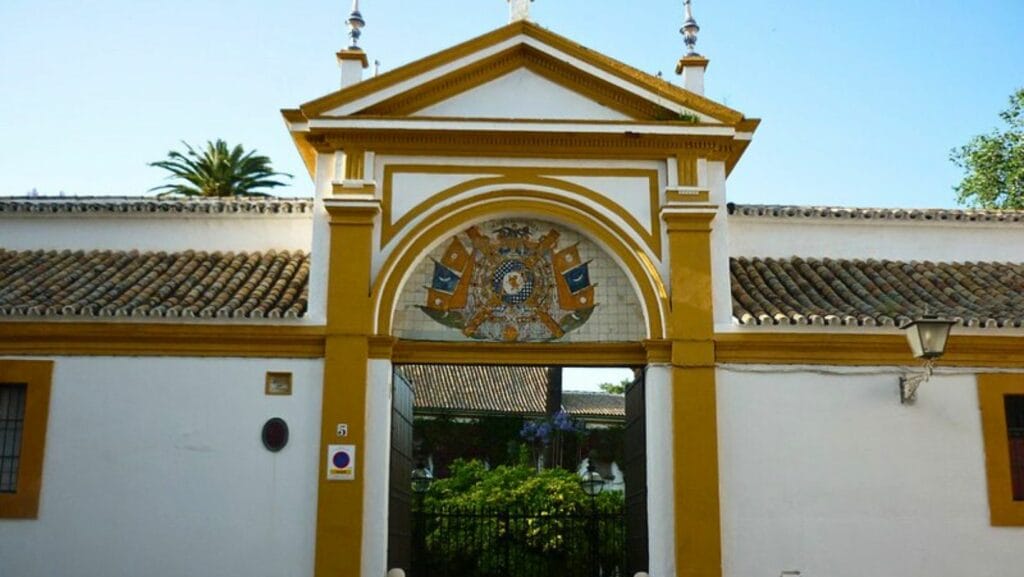
In memory of a monastery that no longer exists. The Monastery of Santa María de las Dueñas I was on the neighbouring plot and was demolished in the 19th century. He gave his name to the street and, by extension, to the palace.
This is the story that hardly anyone tells. The palace was built by the the Pineda family between the 15th and 16th centuries.
They sold him off in connection with a kidnapping: Juan de Pineda was arrested and the family urgently needed to raise a very large sum to pay their ransom. He had to get rid of the palace.
He arrived at the House of Alba in 1612, and not by purchase but by marriage: the heiress, Antonia Enríquez de Ribera, the Marquise of Villanueva del Río, married 9 February 1612 with Fernando Álvarez de Toledo, 4th Duke of Alba. It has remained in the family ever since.
It has been a Site of Cultural Interest since 1931, y opened to the public on 17 March 2016.
He was born on 26 July 1875, and the explanation answers the obvious question of how a poet came to be born in a ducal palace.
His father was the estate manager. At that time part of the palace was divided into rental flats —during the 19th century it served as a block of flats— and the Machado family lived in one of the flats.
It was from those gardens that his most frequently quoted verse emerged, that of the sunny orchard where the lemon tree—with which he opens his autobiographical portrait—thrives. The Lemon Tree Garden is still there, and it is one of the four on the site.
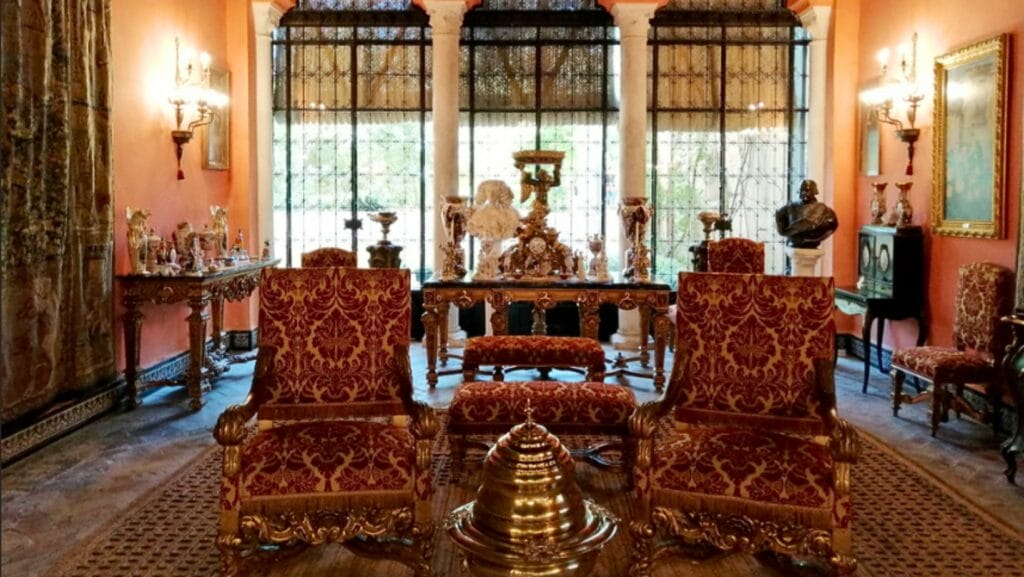
It covers 9,000 square metres, two-thirds of which have been built, and the collection comprises more than 1,400 items scattered throughout the rooms. It is not set up as a museum: the items are still where the family left them.
And amongst the family memories, the equestrian portraits of Eugenia de Montijo, the Empress Consort of Napoleon III.
Spanish paintings from the 19th and 20th centuries, ceramics, tapestries, porcelain, furniture and archaeological artefacts round off the exhibition. Among the Spanish artists featured are Juan Miguel Sánchez, Gustavo Bacarisas and Enrique Marín Higuero.
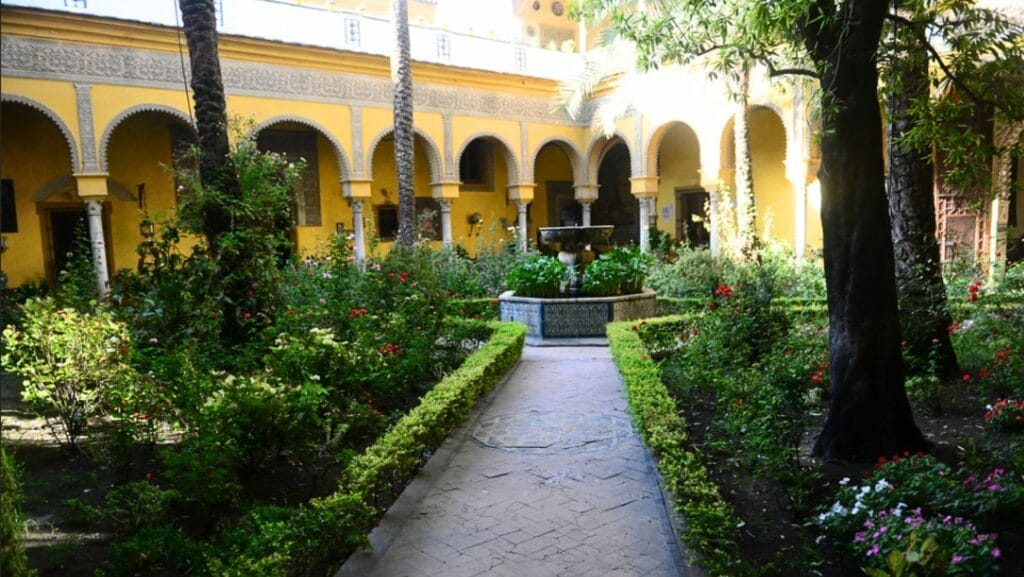
The main courtyard is the centrepiece of the palace: galleries with marble columns, tiled plinths and coffered ceilings, from which the reception rooms are accessed.
The four gardens are what people remember most About the visit:
Bougainvilleas, orange trees and fountains everywhere you look. It’s the part that makes the visit take longer.
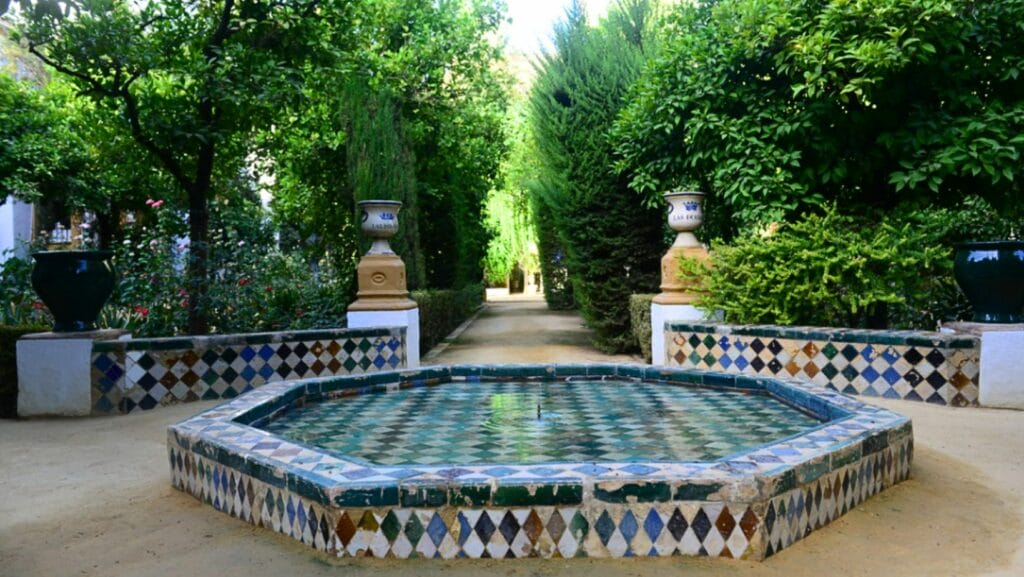
It was Cayetana’s favourite house, the 18th Duchess of Alba, who died in 2014. She had several homes, and this was her favourite.
And this is where she held the receptions for her two weddings, the one from 1947 and the one from 2011, with a gap of sixty-four years between them.
Between forty-five minutes and an hour with an audio guide, exploring the rooms, courtyards and gardens.
It’s just the thing for a late-afternoon visit, especially on Mondays when entry is free, and it’s a great place to visit alongside Las Setas, which is right next door.
We are a local tour operator based in Málaga with over 50 years’ experience organising trips around Andalusia. Seville is best explored in a day:
A planning notice: The day trip focuses on the Cathedral–Alcázar–Santa Cruz axis. The palace is a bit out of the way, so if that’s your priority, you’ll need enough free time or you’ll have to go on your own.
More about the destination: what to see in Seville, the Cathedral, the Royal Alcázar y its places.
On Mondays that are not public holidays, from 4.00 pm until one hour before closing time. Tickets are issued at the ticket office on the day itself and cannot be booked in advance, so it is advisable to arrive early as capacity is limited. Children under 6 years of age are admitted free of charge on any day.
From April to September, it is open every day from 10.00 to 20.00, and from October to March from 10.00 to 18.00. Opening hours may be subject to change due to private events at the Casa de Alba, as it remains a working residence.
Because his father was the estate manager. During the 19th century, part of the palace served as a block of flats, with rental properties, and the Machado family occupied one of them. The poet was born there on 26 July 1875.
Named after the Monastery of Santa María de las Dueñas, which stood on the neighbouring plot and was demolished in the 19th century. The monastery gave its name to the street, and the street, in turn, to the palace.
It has been in the family since 1612, having come into the family through marriage rather than purchase: the heiress, Antonia Enríquez de Ribera, Marquise of Villanueva del Río, married Fernando Álvarez de Toledo, 4th Duke of Alba, on 9 February of that year. It had previously been built by the Pineda family, who were forced to sell it to raise the ransom for Juan de Pineda.
Between forty-five minutes and an hour, including the audio guide, exploring the halls, courtyards and four gardens. It’s a short visit that goes well with a trip to the Setas in Seville, which are less than two hundred metres away.