Marbella You can see it all in a day without feeling rushed: the old town is small and everything else is within walking distance. It’s on the Costa del Sol, between Fuengirola and Estepona, about 50 km from Málaga Airport y 57 in the capital.
Here is the itinerary for morning, afternoon and evening, including the places that are genuinely worth a visit and a couple of spots that hardly anyone visits.
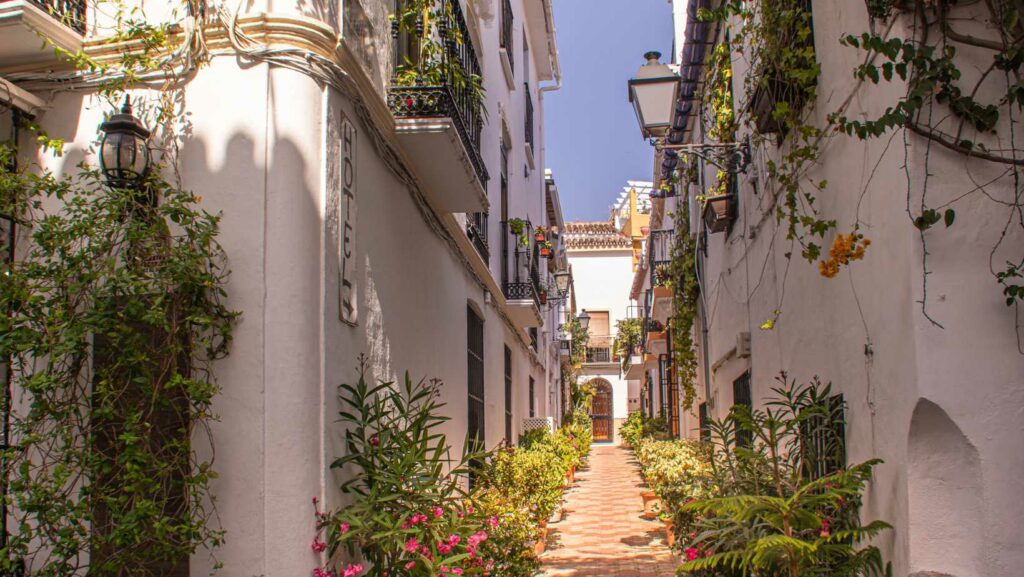
Set off early and walk in: there’s no driving allowed within the town centre.
The centre of everything. It was drawn in 1485, following the Christian conquest, and is a Castilian square nestled within an Al-Andalus village, something rather unusual in the province. It is surrounded by three buildings: the Town Hallthe Casa del Corregidor and the Santiago Chapel.
It’s the place to have breakfast, although the terraces in the square are the most expensive in the city centre. Two streets away, you can get the same food for considerably less.
The main temple, in the Church Square. He got up at the 17th century above the old mosque, it has three naves and a tower over 50 metres.
There are two things to bear in mind: the ochre stone façade, which is not Baroque but Rococo and was added to the 18th century; and, if it is open, the Organ of the Greater Sun, about 5,000 tubes and one of the most important of its kind still in existence in Spain.
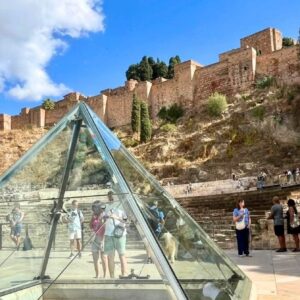
Don’t expect a grand venue: they’re canvases set amongst the houses. But they’re worth seeing, because the The towers of the Moorish castle date from the 9th century and the 11th- and 12th-century walls.
The good bit: you can see them in one of the towers recessed Roman capitals. They reused building materials from earlier constructions, which suggests that there was a town here long before.
This is the visit that hardly anyone goes on, and yet it’s the one that surprises you the most. It’s in the Bazán Hospital, a Renaissance mansion in the old town, and it is Spain’s largest museum dedicated to printmaking.
Inside, there are graphic works by Goya, Picasso, Miró, Dalí, Tàpies and Chillida. It takes less than an hour to see and is one of the most highly rated attractions in Marbella amongst those who have visited it.
The Ancha Street is the main street of the town centre, the 19th century, with stately homes and balconies. It ends at the Plaza del Santo Cristo, where the the chapel of Santo Cristo de la Vera Cruz, from the 16th century.
And very close by, the Chapel of St John of God, which was part of the The Royal Hospital commissioned by the Catholic Monarchs following the capture of the city.
The pedestrian promenade leading down from the town centre to the beach, and the most distinctive stretch of Marbella: ten bronze sculptures by Salvador Dalí installed along the route, outdoors and free of charge.
It’s a short walk – just five minutes – and leads to the Alameda Park, a garden in the 19th century with ceramic benches and plenty of shade for when it gets hot.
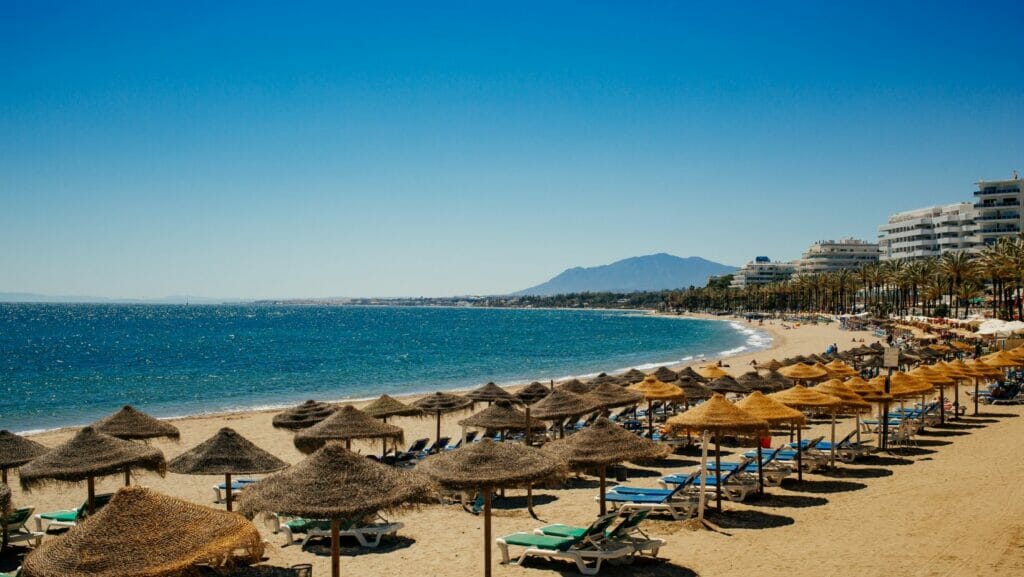
You go straight to the Fontanilla beach, the most central one, next to the Venus beach. The promenade is flat and wide, with beach bars where you can eat fish right on the sand.
To make an informed choice, you need to the best beaches in Marbella.
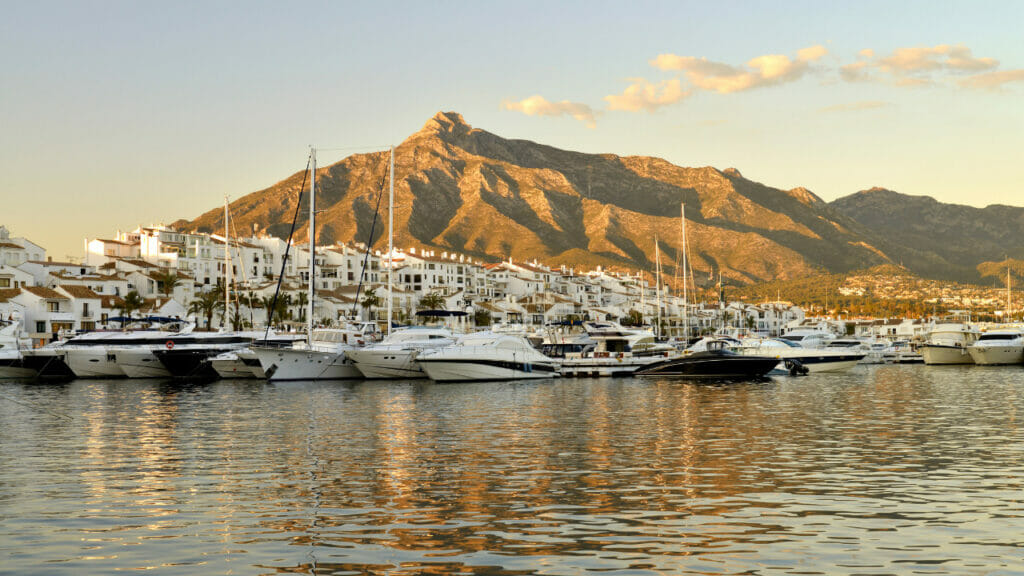
A 6 kilometres from the city centre, by car or by bus. It’s a complete contrast to what you saw this morning: yachts, boutiques and luxury cars.
It’s enough to keep you going for a whole afternoon, so it’s broken down into What to see in Puerto Banús.
On the way, weather permitting, stop at the Nagüeles Beach, which lies between the town centre and Banús and is considerably quieter than the town centres.
It sounds like a minor curiosity, but it isn’t: the Marbella Bonsai Museum, opened in 1992, brings together one of the most comprehensive collections in Europe of its kind. It’s right next to Arroyo de la Represa Park and is the perfect place to spend a hot afternoon.
Two options that work just as well:
To choose a site, you have where to eat in Marbella and, if you’re looking for something special, Marbella’s haute cuisine.
Marbella is among Fuengirola and Estepona, at the foot of Sierra Blanca, and it has 27 kilometres of coastline.
Actual distances, in case you’re planning a trip: Málaga Airport 50 km, Málaga city 57 km, Ronda 57 km, Gibraltar 82 km. And watch out for a piece of information that’s being misrepresented: Cádiz is about 197 km away, more than two hours – not just round the corner.
If you work fewer hours, stick to the old town and Avenida del Mar: that’s what makes Marbella special.
We are a local tour operator based in Málaga with over 50 years’ experience organising trips around Andalusia. The most popular combination is Marbella and Mijas Pueblo, one of the best-known white villages, on the same day.
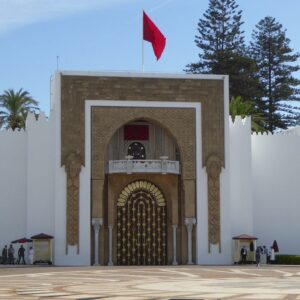
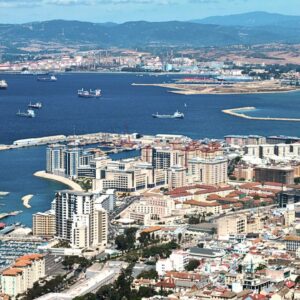
And from here you can also cross over to Gibraltar or even to Morocco during the day:
To continue exploring the area, you have what to see near Marbella, the villages of Marbella, Mijas y Estepona.
Spend the morning exploring the old town: the Plaza de los Naranjos, the Church of La Encarnación, the ruins of the Moorish castle, the Museum of Contemporary Spanish Printmaking and Calle Ancha. At midday, walk down Avenida del Mar, admiring Dalí’s sculptures as you make your way to the beach, and in the afternoon head to Puerto Banús, six kilometres away. For dinner, choose between the old town or the harbour itself.
The Museum of Contemporary Spanish Printmaking, housed in the Hospital Bazán, a Renaissance mansion in the old town. It is Spain’s largest museum dedicated to printmaking and features works by Goya, Picasso, Miró, Dalí, Tàpies and Chillida. It takes less than an hour to see. A unique alternative is the Bonsai Museum, which houses one of the most comprehensive collections of its kind in Europe.
It is about 57 kilometres from Málaga city centre and about 50 from Málaga-Costa del Sol Airport, which is closer than the city itself. Ronda is 57 kilometres away and Gibraltar 82. It’s worth noting that Cádiz is about 197 kilometres away – a journey of over two hours – as a much shorter distance is sometimes quoted.
No, Marbella does not have a railway station. The nearest commuter station is in Fuengirola, 27 kilometres away, and from there you have to continue by bus. The alternatives are by car, via the A-7 or the AP-7 toll motorway, and the regular bus services connecting to Málaga, the airport, Fuengirola and Estepona.
A collection of ten bronze sculptures by Salvador Dalí, installed along Avenida del Mar, the pedestrian promenade linking the town centre with the beach. They can be viewed freely, with no admission charge, whilst strolling along the promenade, which takes just five minutes to walk and leads to Alameda Park.
Yes, and that’s what sets Marbella apart from the rest of the Costa del Sol. It is a network of narrow streets of Arab origin with whitewashed façades, where the towers of the 9th-century castle, 11th- and 12th-century walls featuring reused Roman capitals, and the Plaza de los Naranjos – laid out in 1485 following the Christian conquest – have been preserved.