Jerez de la Frontera It has more stories than can fit into a guidebook on monuments: a Guinness World Record on a rooftop, an advert that has dominated the Madrid skyline for ninety years, a chapel covered in crutches, and a surname that originates from a medieval border.
These are Eight interesting facts in the city, starting with the most searched-for one: Why is it called «de la Frontera»?».
The surname dates back to the Middle Ages. Following the the Christian conquest of the city by Alfonso X in 1264, Jerez was situated right on the boundary between the Crown of Castile and the Nasrid Kingdom of Granada. For more than two centuries, until the capture of Granada in 1492, was a military frontier post, hence its nickname.
It is not the only one: the same reason explains the «de la Frontera» in Arcos, Vejer, Chiclana, Conil or Morón, all on the former border with Muslim territory.
As for the first part, «Jerez» derives from the Arabic place name Sherish, the name of the city during the period of al-Andalus, which in turn was built on the site of earlier settlements. From that same root came the French word Sherry and English sherry, the name by which sherry is known internationally. That is why the designation of origin is called Jerez-Xérès-Sherry: they are the same name in three languages.
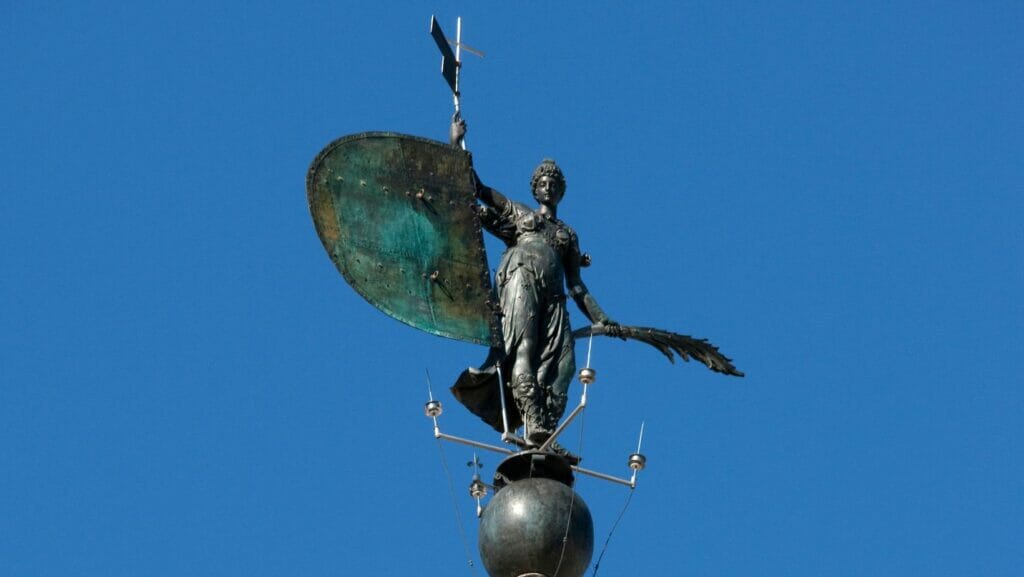
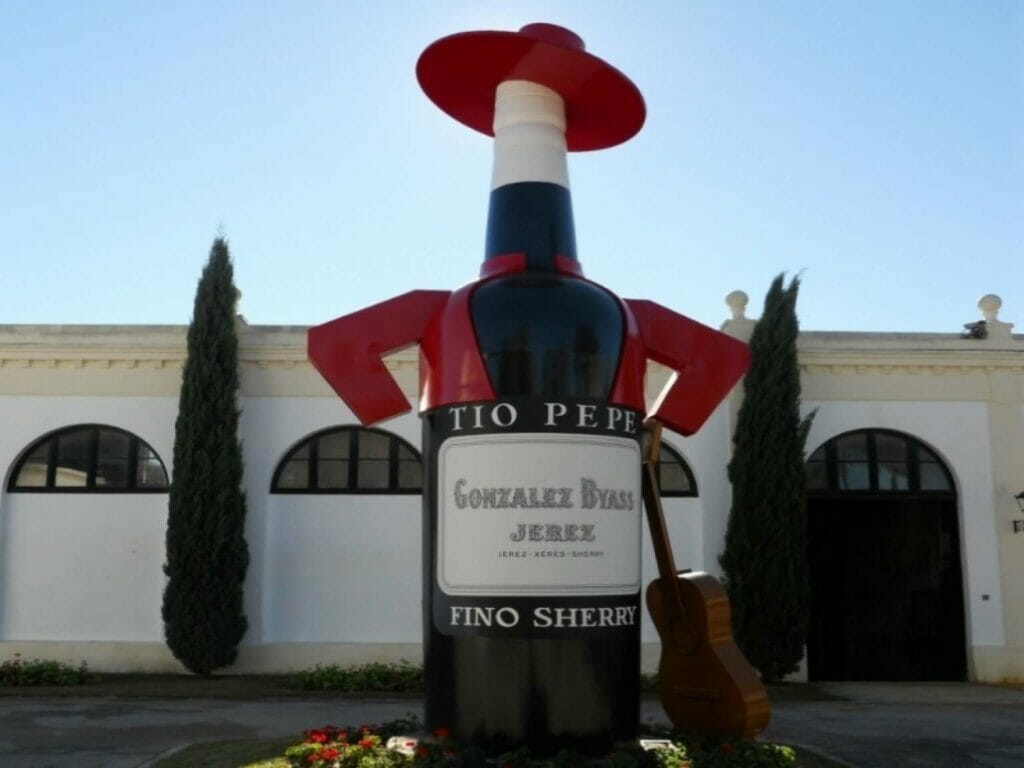
About the Tío Pepe Grand Cellar, in González Byass, turn the Gran Veleta Tío Pepe, recognised by the Guinness World Records as the world’s largest working weather vane.
The figures are impressive: 16 metres high, with a wingspan of 17 metres and weighing over 3,000 kilos of iron. It was designed by the architect Olegario del Junco and the locksmiths built it in four months Juan Vicente and Manuel Clavijo Jiménez, in a workshop in Mirabal Square. It depicts the figure of Uncle Pepe, the bottle wearing a jacket, an Andalusian hat and carrying a guitar.
And the best thing is that it really does work. It’s not just an advertising slogan: you can see it from half the city, and the people of Jerez look at it to see if the Levante wind is blowing – which is the difference between a good day at the beach and a bad one. It’s clearly visible from the Alameda Vieja, at dusk.
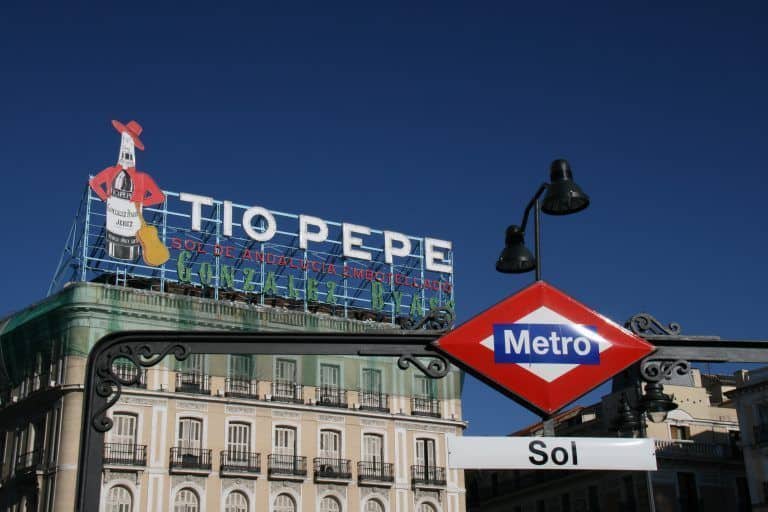
The best-known symbol of a sherry is not in Jerez: it is in Madrid’s Puerta del Sol.
The sign for Uncle Pepe settled in 1935, at the former Hotel París at number 1 in the square, to commemorate the González Byass’s centenary, founded in 1835. It was the era of the great neon signs, and that one remained.
One detail that hardly anyone mentions: The sign has not been there continuously. It was removed when the building changed use and remained taken down for several years, until it was reinstalled in another building in the same square, on the corner with Calle Alcalá. So it still overlooks the Puerta del Sol, but not from the same rooftop as in 1935.
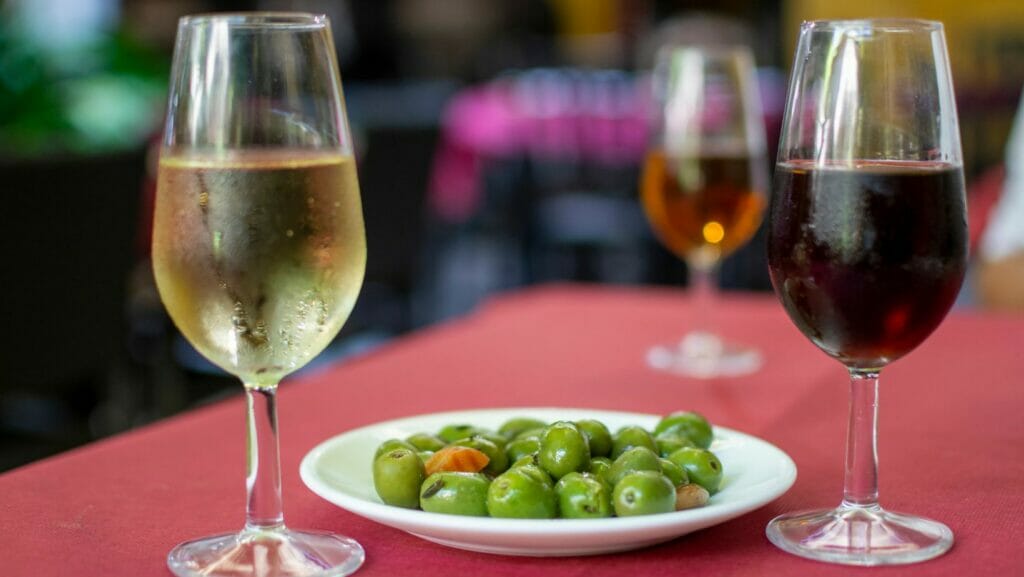
Few cities in the world lend their name to a wine. The D.O. Jerez-Xérès-Sherry covers wines made from grapes Palomino, Pedro Ximénez and Muscat, aged in oak casks using the criaderas and soleras: the wine is transferred from one cask to another, so that each bottle is a blend of different vintages.
The Marco de Jerez —the triangle formed by Jerez, El Puerto de Santa María and Sanlúcar de Barrameda— owes its character to the albariza, a whitish soil that retains winter moisture for the summer.
Two interesting facts about the winery that will surprise you during the tour: at the Bodega de los Apóstoles There are boots made of 12,000 litres, and a phone call «the Christ» that holds 33,000 litres. And the Real Bodega de la Concha, with a metal frame attributed to the workshop of Gustave Eiffel, was erected in honour of the visit by the Queen Elizabeth II in 1862.
You can find the five historic houses, along with their opening hours and closing days, at the best wineries in Jerez.
The five historic wineries in Jerez, with addresses, opening hours and the days on which each one is closed
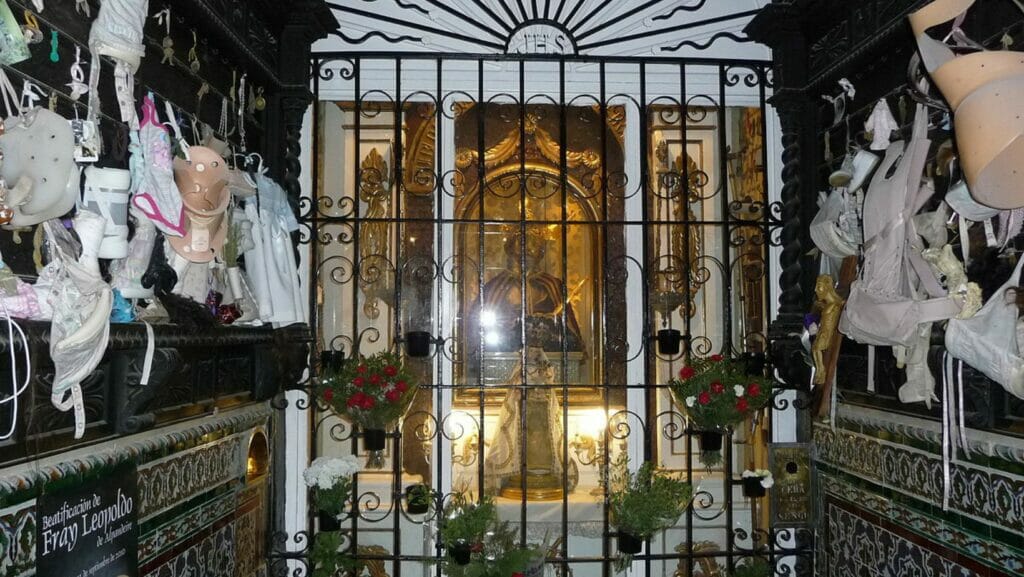
In the 2 Consistorio Street, annexed to the Church of Los Remedios, there is the Chapel of the Lord of the Royal Gate. It’s tiny and doesn’t feature on almost any tourist itinerary, but it’s where the people of Jerez go to pray for good health.
It is not the architecture that is impressive: it is the walls covered with votive offerings. Hundreds of objects left by worshippers as a token of gratitude or to make a request: orthopaedic prostheses, crutches, medical devices, photographs of patients and braids of hair.
It is one of the most striking examples of popular piety in Andalusia, and is just five minutes’ walk from the Alcázar.
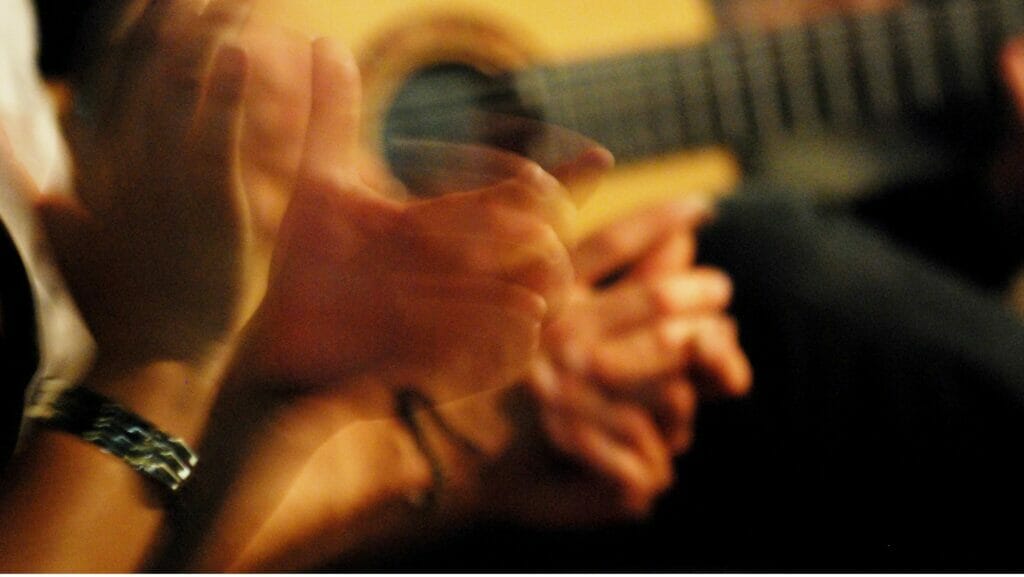
Jerez is regarded as one of the birthplaces of flamenco, and there is little room for dispute on this point: This is where the bulería originated, one of the genre’s most characteristic styles, rhythmic and festive, and directly associated with the city.
The neighbourhoods of Santiago y San Miguel, with strong Romani roots, have produced entire generations of singers, guitarists and dancers. The tradition lives on in the Andalusian Centre for Flamenco, in the Santiago neighbourhood, in the Jerez Festival, which attracts professionals from all over the world every year, and at the flamenco clubs scattered throughout the city.
And the places where you can really hear it without a stage or an entrance are the tabancos, the wine bars serving wine by the glass in the historic centre.
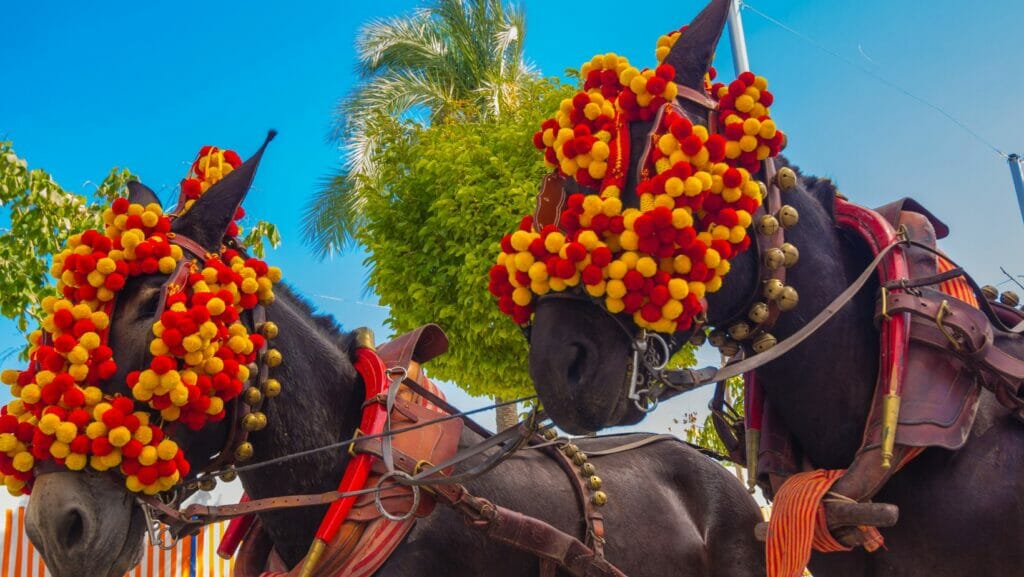
Jerez’s reputation for horse racing has a specific, little-known origin: the Carthusian monastery of Santa María de la Defensión. At the monastery’s livestock farm, on the outskirts of the city, the monks spent centuries selecting the breed now known as Cartujano horse, considered the purest of the pure Spanish breeds.
It is from this tradition that the Royal Andalusian School of Equestrian Art, based at the palace of the Recreo de las Cadenas, and his show «How the Andalusian horses dance», which combines classical dressage, cowboy dressage and hand-leading with 18th-century music and costumes.
And that is also where the Horse Fair, in May, in González Hontoria Park, declared of International Tourist Interest.
If you wish, you can enjoy an incredible walk with a guided tour of Jerez de la Frontera.
The Alcázar of Jerez is one of the few examples of Almohad fortress preserved in Andalusia, with its mosque converted into a chapel, the Arab baths and the gardens. Inside, there is also the camera obscura, which shows a live panoramic view of the historic centre.
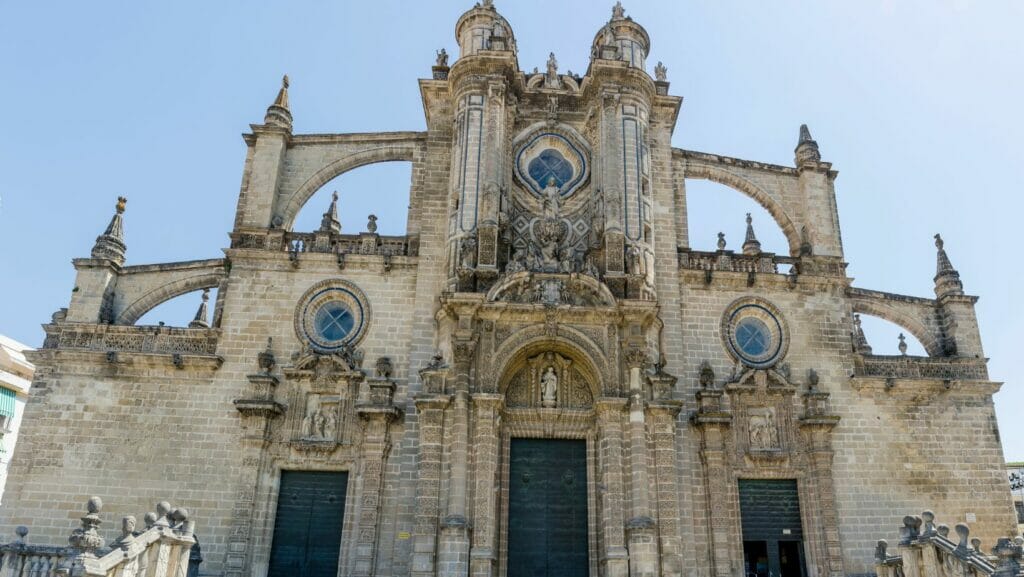
The Cathedral mixture Gothic, Baroque and Neoclassical, the result of two centuries of construction, and it has one unusual feature: its The bell tower stands separate from the church, built on the foundations of an old minaret.
All the The old town has been designated a historic and artistic site. We’ll go through it stop by stop in What to see and do in Jerez de la Frontera.

The Jerez-Ángel Nieto Circuit, opened in 1985 and renamed in 2018 in honour of the driver, it hosts the MotoGP Spanish Grand Prix. It is one of the most popular events on the calendar, and the city is absolutely packed that weekend.
The fact that a city renowned for its wine, horses and flamenco is also one of Europe’s motorcycling capitals is, in itself, the most intriguing aspect of Jerez.
If Jerez has left you wanting more, the province has plenty to offer:
We are a local tour operator based in Málaga with over 50 years’ experience organising trips around Andalusia. These trips include pick-up points in the Campo de Gibraltar and Tarifa, just a stone’s throw from Jerez:
This is because, following the Christian conquest of the city by Alfonso X in 1264, it came to lie on the border between the Crown of Castile and the Nasrid Kingdom of Granada. For more than two centuries, until the capture of Granada in 1492, it was a military frontier post, hence the surname. The same reason explains the «de la Frontera» in the names of Arcos, Vejer, Chiclana, Conil and Morón.
It derives from the Arabic place name Sherish, the name of the city during the al-Andalus period, which in turn stems from earlier settlements in the area. From this root came the French Xérès and the English sherry, the names by which Jerez wine is known internationally. That is why the designation of origin is called Jerez-Xérès-Sherry: it is the same name in three languages.
In Jerez de la Frontera, atop the Gran Bodega del Tío Pepe, owned by González Byass. The Tío Pepe Wind Vane is listed in the Guinness Book of Records as the world’s largest working wind vane: it is 16 metres high, has a wingspan of 17 metres and weighs over 3,000 kilos. It was designed by the architect Olegario del Junco and depicts the figure of Tío Pepe, the bottle with a hat and a guitar.
Because Jerez is the birthplace of the bulería, one of the genre’s most representative styles, and because its neighbourhoods of Santiago and San Miguel, with their strong Romani roots, have produced generations of singers, guitarists and dancers. The tradition lives on at the Andalusian Centre for Flamenco, at the Jerez Festival and in the city’s peñas and tabancos.
A small chapel on Calle Consistorio, adjoining the Church of Los Remedios, where the people of Jerez come to pray for good health. What catches the eye are its walls covered with votive offerings: orthopaedic prostheses, crutches, medical devices, photographs of the sick and plaited locks of hair left by the faithful in gratitude or as a prayer.
It is considered the purest lineage within the Purebred Spanish Horse breed. It takes its name from the Cartuja de Santa María de la Defensión, the monastery on the outskirts of Jerez, where the monks bred and selected the horses on their stud farm for centuries. It is from this tradition that the Royal Andalusian School of Equestrian Art and the Horse Fair have emerged.