The Church of Santiago Apostle is the oldest in Málaga. It was founded by the Catholic Monarchs on 25 July 1490, three years after the conquest of the city, and in it he was christened Picasso.
But that is not what makes it unique. This is where the brotherhood of Jesus the Rich, which retains a a royal privilege that exists nowhere else in Spain: every Holy Wednesday release a prisoner.
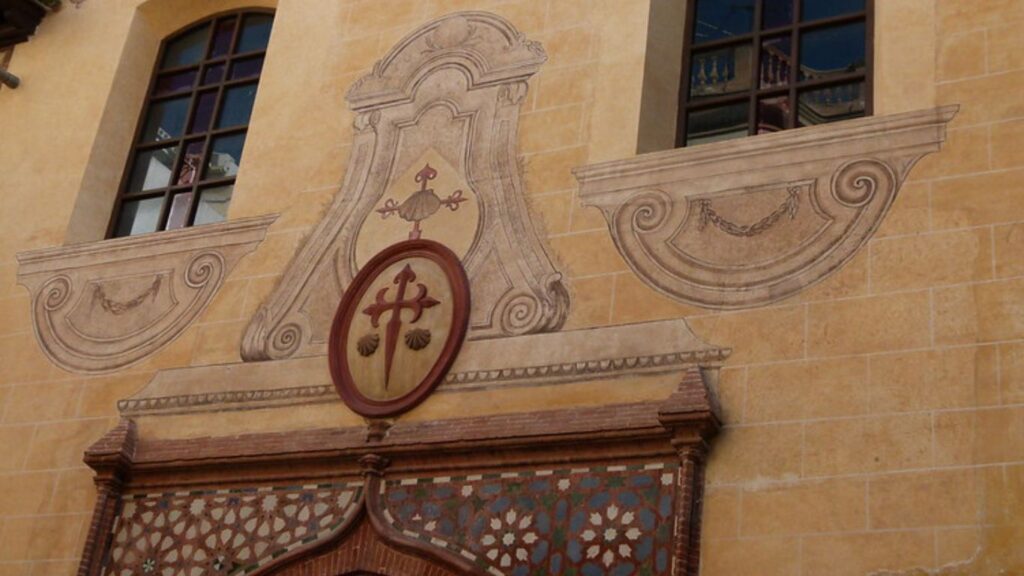
It’s in the Granada Street, right in the heart of the historic centre and just a short walk from the Picasso Museum and the Cathedral, so it’s the perfect stop on any stroll through the old town.
If you’re interested in the churches in the city centre, the other parish church dating from the city’s founding that you can visit is the Church of the Holy Martyrs, five minutes away.
This is the story you need to know before you go in.
In the 18th century, during an epidemic that was ravaging Málaga and with the city in lockdown, the prisoners rioted to carry the statue of Jesus of Nazareth, «the Rich One». When the epidemic subsided, they returned to prison of their own accord.
The King Charles III He then granted the brotherhood a royal privilege which continues to be met: Every Holy Wednesday, a prisoner is granted a pardon, who is released from prison and accompanies the image throughout the entire procession. It is the only pardon of this kind still in existence in Spain.
The Royal Brotherhood of El Rico has been based in this parish since 1836, and the statue of Our Lady of Love has been part of it since the early 20th century. You can see the rest of the celebrations in our guide to the Easter Week in Malaga.
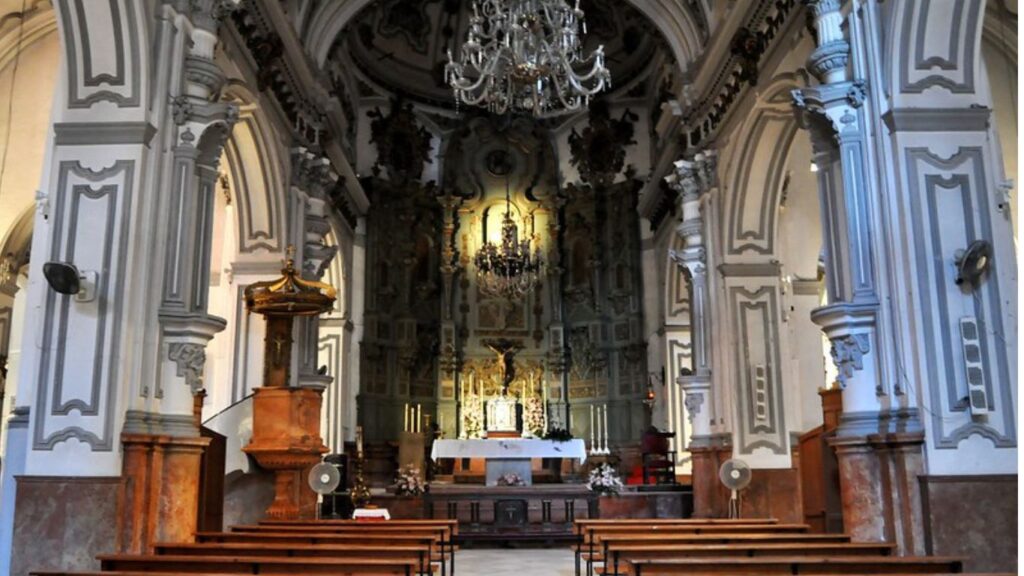
The temple has three naves, with the central nave covered by a barrel vault and the chancel by a hemispherical dome. This is what you shouldn’t overlook:
Santiago was the first of the four parishes built by the Catholic Monarchs following the conquest of 1487, together with the Tabernacle, St John and the Holy Martyrs. The building work continued from 1490 to 1545.
Many historians maintain that It was built on the site of a former mosque, hence the widespread belief that its tower was originally a minaret. What is certain is that the building was originally constructed Gothic-Mudejar, using the techniques of the master builders who continued to work in the city, whilst the 18th-century alterations added the Baroque vaults and altarpiece.
One detail that explains its significance in the city: Due to its proximity to the Cathedral, during certain periods whilst work was being carried out on the Cathedral, chapter services were held here. It has been declared Listed as a Site of Cultural Interest since 2006.
Pablo Ruiz Picasso was born on 25 October 1881 in Plaza de la Merced, five minutes from here, and the following was baptised in this parish: 10 November in the same year, because Santiago was the church serving his neighbourhood.
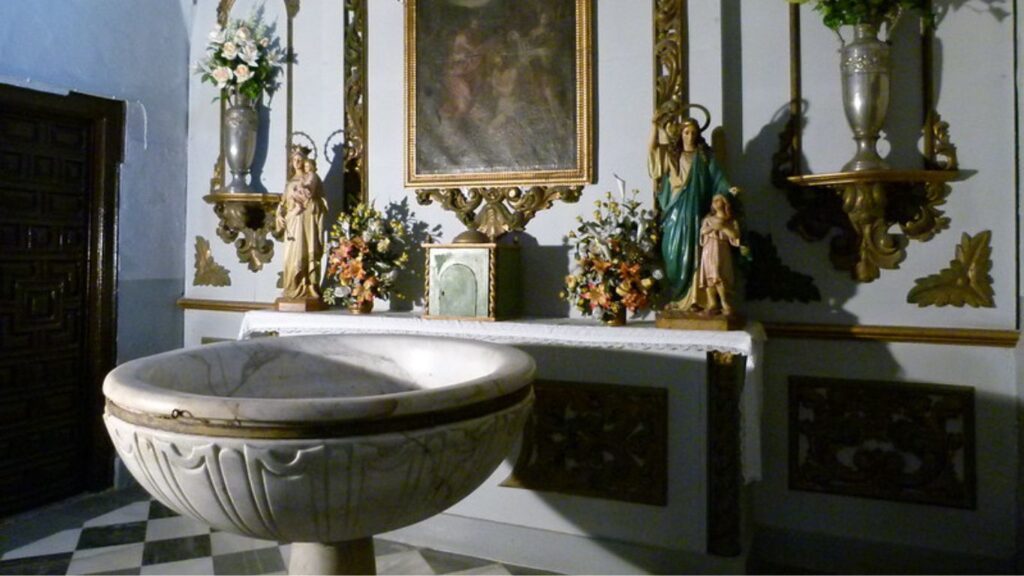
The the baptismal font is still preserved and it is an unmissable stop on any Picasso-themed tour of Málaga, which is rounded off by his birthplace in La Merced and the Picasso Museum, at the Buenavista Palace, in the San Agustín Street.
Another distinctive feature: this church the Mozarabic Way of St James, the Way of St James that follows in the footsteps of medieval Mozarabic Christians.
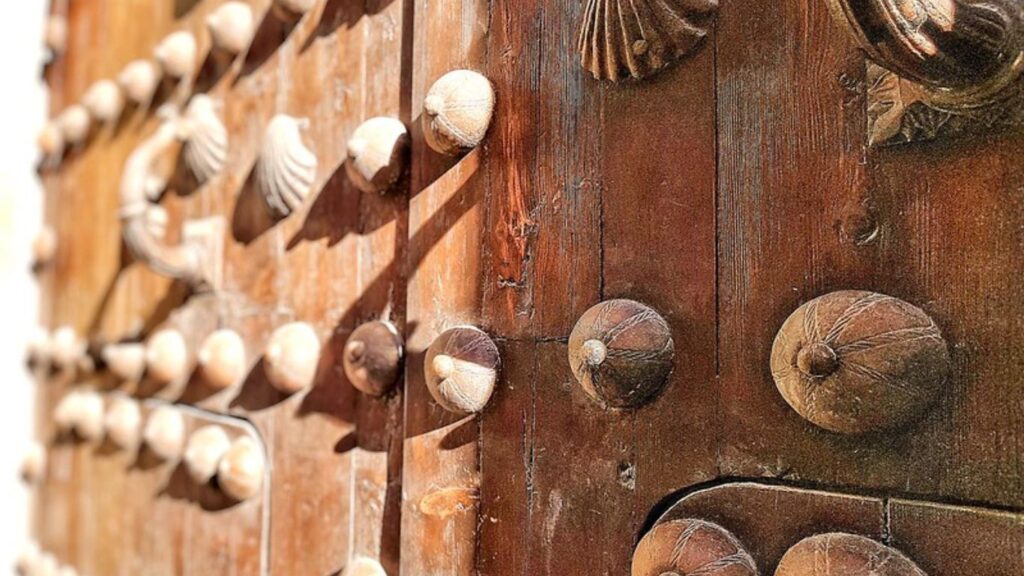
From Málaga, it passes through the provinces of Granada and Córdoba until it connects with the Vía de la Plata, and from there it reaches Santiago de Compostela. It’s one of the least-travelled routes, so if you’re looking for a pilgrimage route to Santiago that isn’t overcrowded, it literally begins at this gate. Hence the scallop shells carved into the wood.
All of this is less than a ten-minute walk away:
To organise everything, you have what to see in Malaga in one day o in three days' time if you stay a bit longer.
Fancy some more inspiration? Check out our guide to what to see in Málaga so you don’t miss a thing during your visit.
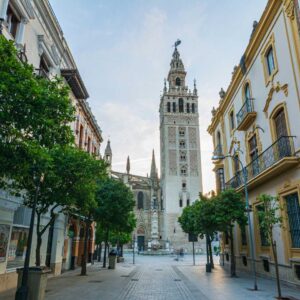
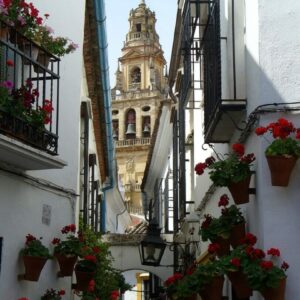
We are a local tour operator based in Málaga with over 50 years’ experience organising trips around Andalusia. If Santiago has left you wanting to see more religious architecture, these three cities are home to the south’s most impressive architectural complexes:
At the Church of St James the Apostle in Málaga, on 10 November 1881, two weeks after his birth on 25 October in the nearby Plaza de la Merced. St James’s was the parish church for his neighbourhood. The baptismal font is still preserved and is a regular stop on Picasso-themed tours of the city.
The Church of St James the Apostle, founded by the Catholic Monarchs on 25 July 1490, three years after the conquest of the city. It was the first of the four founding parishes, alongside El Sagrario, San Juan and Los Santos Mártires, and work on it continued until 1545. It has been designated a Site of Cultural Interest since 2006.
By virtue of a royal privilege granted by Charles III in the 18th century. During an epidemic, the prisoners in the jail rioted to carry the statue of Jesús el Rico in procession; once the disease had subsided, they returned to prison of their own accord. Ever since then, every Holy Wednesday, the brotherhood grants a pardon to one prisoner, who accompanies the statue throughout the procession. It is the only pardon of its kind still in existence in Spain.
It is open in the mornings and afternoons, around the times of Mass. As it is an active parish church, the opening hours follow the liturgical calendar and vary according to the season, so it is advisable to check in advance if your visit depends on them. Entry to the church is free.
Because it was built from 1490 onwards using the techniques and craftsmanship of the Mudéjar master builders who continued to work in Málaga following the conquest. The clearest evidence of this is the brick tower, with Almohad sebka panels visible from Calle Granada, which was originally designed as a freestanding structure separate from the church and was incorporated into the complex in the 16th century. The original Mudejar doorway is also preserved, although it has been bricked up.
In this church. The Way of St James sets off from the Church of St James the Apostle in Málaga, passes through the provinces of Granada and Córdoba, and joins the Vía de la Plata on its way to Santiago de Compostela. It is one of the least-travelled routes, which explains the scallop shells decorating the church’s wooden doors.