Five legends from the province of Málaga, complete with names, locations and coordinates. No vague stories: houses that are still standing, a rock that can be seen from the road, and a pool where you can go for a swim.
And finally, where do the All Souls’ Day celebrations come from?, which is when these stories are retold.
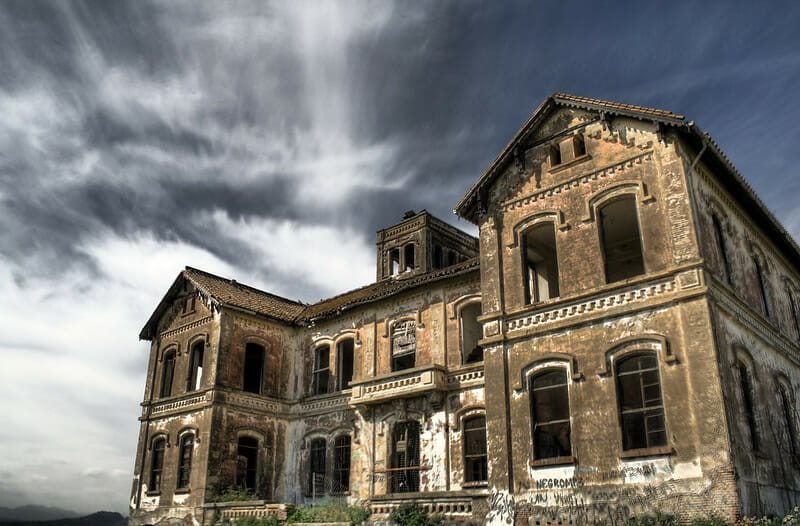
It’s next to the A-357, near Campanillas, and it is probably the building with the most notorious paranormal reputation in Spain. It is commonly known as «The Haunted House».
It has 365 windows: one for every day of the year. It’s what’s known as a ‘calendar house’, and for that reason alone it’s worth taking a closer look at.
It was built in the 19th century by the Heredia family, one of the richest in Andalusia, as the centre of a large agricultural estate. In 1925, it passed into the Jurado family’s possession, which is where its current name comes from.
It is said that young women were disappearing from the estate, aged between 18 and 21, and that their bodies were found on the banks of the River Campanillas bearing traces of rituals. The story identifies the owners and tells of cellars and passageways containing torture devices.
What has been proven, however, is: The underground passages do exist. What is not known is whether they make it as far as the farmhouse, because a concrete wall blocks the way.
The property is fenced off and access is restricted, with fencing and walls. You can see it from the road And that’s where the visit ends.
You pass it on the way to the Caminito del Rey, so if you’re travelling along that road, look to your right near Campanillas.
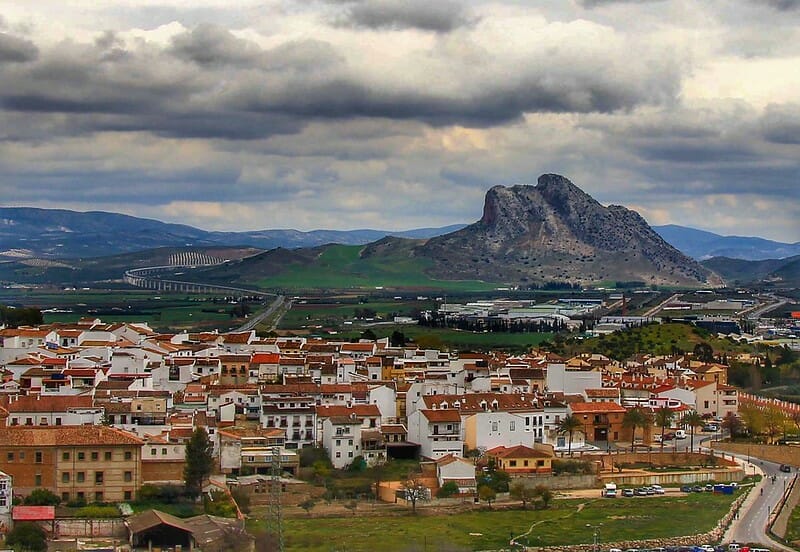
You see it without even looking for it: it is the rock that rises between Antequera and Archidona, and that it is shaped like a human face lying down. Once you’ve seen it, you can’t take your eyes off it.
The story: Tello, a Christian soldier, is taken prisoner in Archidona Castle. Tazgona, the daughter of the city’s governor, sets him free. Her father does not approve of the relationship — they belong to opposing factions and hold opposing beliefs — and the two run away together.
Pursued by the troops, they climb to the top of the rock and, with no way out, they throw themselves off the cliff, clinging to one another.
It is the legend that gives the mountain its name, and explains why, in Antequera, people point towards it when they speak of impossible love.
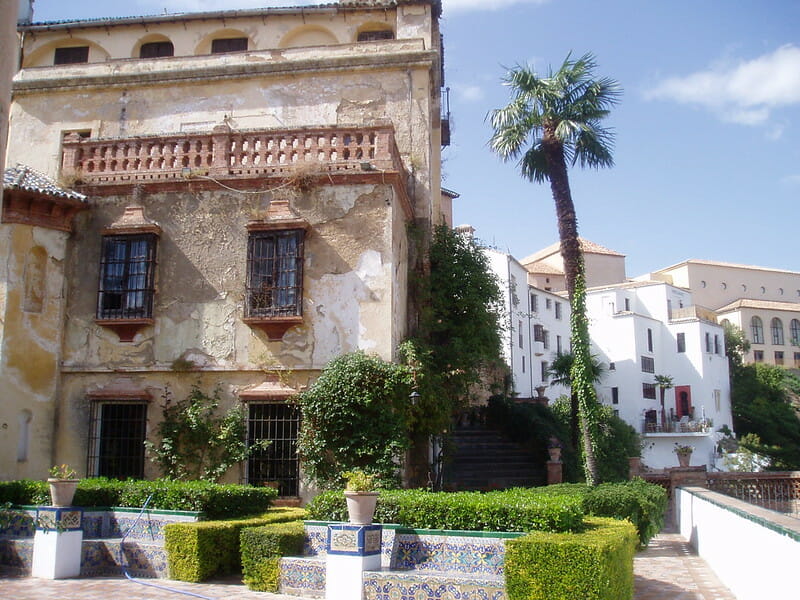
You can actually walk along this one, and it is the only one of the five that can be visited inside.
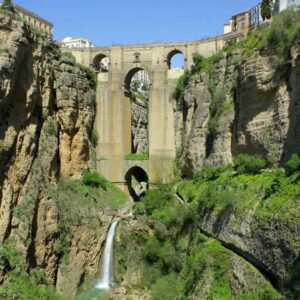
There are around 200 steps carved into a crevice in the Tajo de Ronda which lead down to the River Guadalevín, within the gardens of the Casa del Rey Moro.
The legend goes that the king Abomelic, one of the last Muslim rulers of Ronda, ordered it to be excavated so that his daughter could go down to the river to have a swim.
And the real explanation is far more interesting: the mine was a secret exit from the city and the system that ensured access to water during sieges. In a city perched on the edge of a ravine, that was the difference between holding out and giving in.
Going down is easy; climbing the 200 steps, not so much. Wear shoes with good soles and take your time.
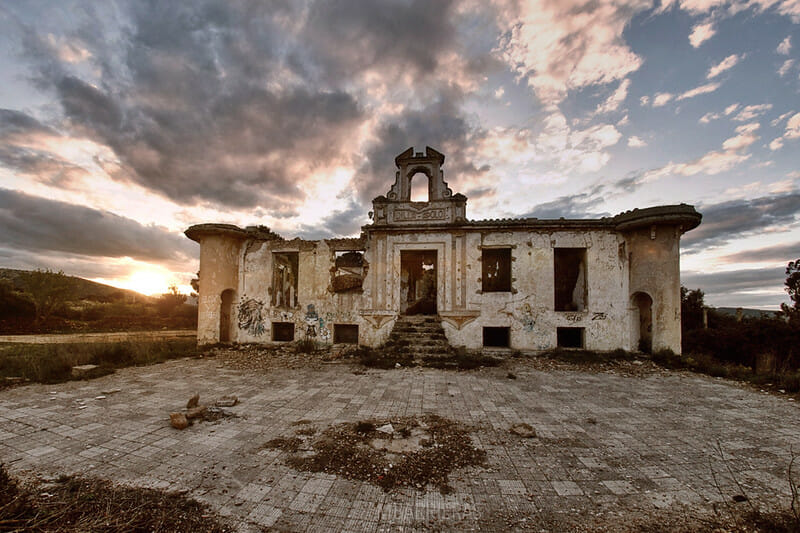
It is also known as Villa Apolo, and it is an abandoned manor house in the mountains. It is one of the legends of Málaga that it has made it onto television.
The story: A well-off family named Rúa lived there, with several children and staff employed to look after them. One of the girls disappeared without a trace.
Some time later, one of the nannies went missing as well. Her parents went to look for her in the tower outside the house, and there they found the little girl, dead. The person responsible was never found.
What is being reported today It’s that you can hear crying all round the house and that the figure of the little girl is still in the tower.
It’s in ruins and covered in graffiti. You can see it from the outside, and, like the Cortijo Jurado, it’s not a place you should go into.
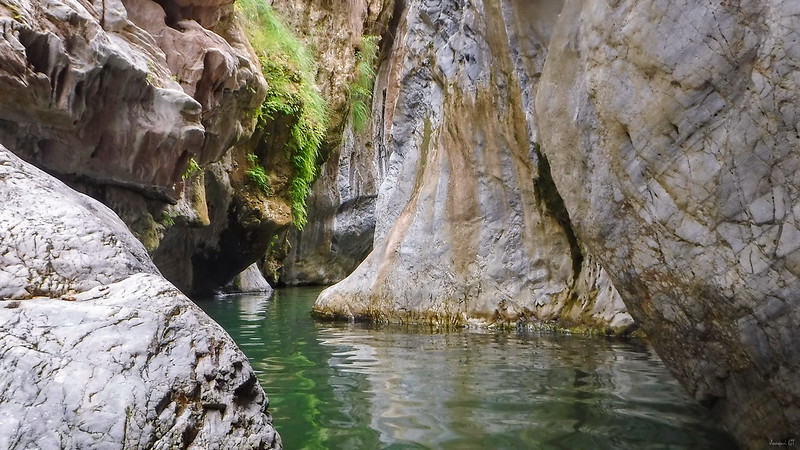
The only one on the list where you can go for a swim. The Guadalmina River has excavated a canyon in Benahavís featuring narrow passages and pools, one of which has its own name.
The story is short, and that’s why it works: A young woman who was swimming in the river disappeared beneath the water. Her partner set off to look for her and disappeared as well. Ever since then, that’s what the pool has been called.
In summer, it’s one of the best places on the Costa del Sol to cool off, and it’s still a real torrent: the pools are deep and the water is cold all year round.

There are three different dates, and they are constantly being mixed up:
And the detail of the carving: the hollowed-out vegetables — originally turnips, not pumpkins— they served as lanterns to ward off spirits and guide souls. The pumpkin was brought to the United States by immigrants, where it was bigger and easier to empty.
In Málaga, the occasion is marked in the cemeteries, with flowers and a family get-together, and seasonal treats. More at traditions of Málaga.
| Key | Where | Is it open to visitors? |
|---|---|---|
| Cortijo Jurado | Campanillas, next to the A-357 | Only from the outside |
| Lovers’ Rock | Between Antequera and Archidona | You can see it from the road |
| Tajo Mine | Casa del Rey Moro, Ronda | Yes, on the inside |
| Casa Rúa | Serranía de Ronda | Only from the outside |
| The Lovers’ Puddle | Guadalmina River, Benahavís | Yes, and with a bathroom |
Three of the five are in the Ronda area or on the way there, so they link up nicely on a ride.
We are a local tour operator based in Málaga with over 50 years’ experience organising trips around Andalusia:
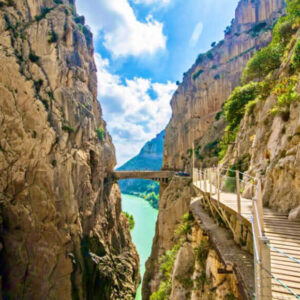
The one in Ronda You can visit the Mina del Tajo in your spare time. Just like the one at El Caminito, the Cortijo Jurado can be seen from the road as you pass through Campanillas.
More from the county: what to see in Malaga y the White Villages Route.
The Cortijo Jurado, near Campanillas, is also known as the ‘Haunted House’. It is a 19th-century mansion built by the Heredia family, featuring 365 windows – one for every day of the year – and is one of Spain’s most notorious buildings for paranormal activity. The estate is fenced off and can only be viewed from the outside.
Not inside. Access is restricted and the property is fenced off, with a perimeter fence and walls. It can be seen from the A-357 road, near Campanillas. The underground passages do exist, but a concrete wall prevents us from checking whether they lead all the way to the house.
According to the legend of Tello, a Christian soldier held captive in Archidona Castle, and Tazgona, daughter of the town’s governor, who freed him. Pursued by troops as they fled together, they climbed to the top of the crag and threw themselves off the cliff. The hill, situated between Antequera and Archidona, has the silhouette of a face lying on its side.
It was a secret exit from the city and ensured access to the waters of the Guadalevín during sieges, which was crucial for a town situated on the edge of a ravine. Legend attributes its construction to King Abomelic’s wish that his daughter might go down to the river to bathe, but its original purpose was defensive. There are around 200 steps, and the path runs through the gardens of the Casa del Rey Moro.
The Mina del Tajo, in the gardens of the Casa del Rey Moro in Ronda, and the Charco de los Novios in Benahavís, where you can also go for a swim. The Cortijo Jurado and the Casa Rúa can only be seen from the outside, whilst the Peña de los Enamorados can be viewed from the road between Antequera and Archidona.
There are three consecutive but distinct dates. Halloween, on 31 October, has its origins in the Celtic festival of Samhain, and its name derives from «All Hallows’ Eve». All Saints’ Day, on 1 November, is the Christian feast day which Pope Gregory IV established on that date to supplant the pagan celebration. And on 2 November, All Souls’ Day is commemorated with requiem masses, a day established by Saint Odilon of Cluny.