The Moroccan sweets They are small treats to enjoy with tea, not cakes to be sliced. Behind them lies a patisserie that blends tradition Berber, Andalusian and Mediterranean, and always the same ingredients: almonds, honey, sesame, dates and orange blossom water.
These are twelve different sweets —including their names in Arabic, how to recognise them and when they’re eaten— so you know how to order them.
Three things characterise this pastry:
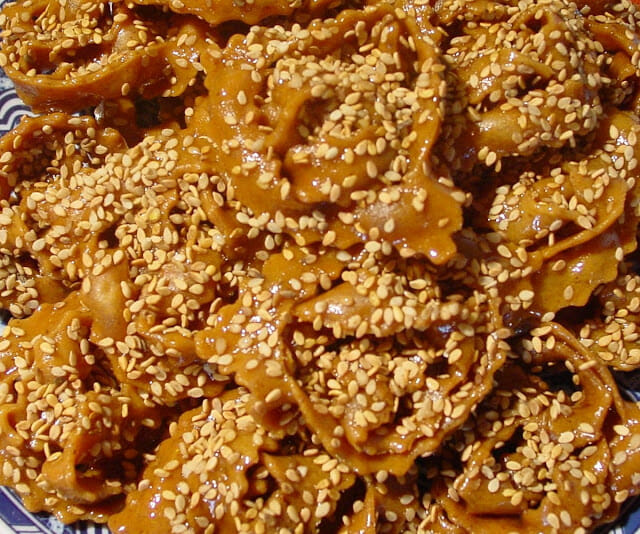
The quintessential Moroccan sweet. A spiced dough made with aniseed, cinnamon, saffron and sesame which is plaited into the shape of a flower, deep-fried and coated in hot honey before coating it in sesame seeds.
When: is the sweet from the Ramadan. It is taken when breaking the fast, together with the harira soup, and in many towns there are shops dedicated solely to it during that month. Fez She has a reputation for making the best.
It must remain on the inside crispy yet tender: if it’s hard, it’s not cooked properly.
Very thin crescents of pastry filled with almond paste scented with orange blossom and cinnamon. The name comes from its curved shape.
It is the most prestigious item in Moroccan pastry-making: Serving it to guests is a sign of hospitality and good manners. It is a staple at weddings and other important celebrations.
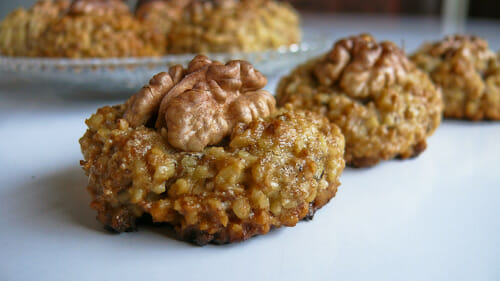
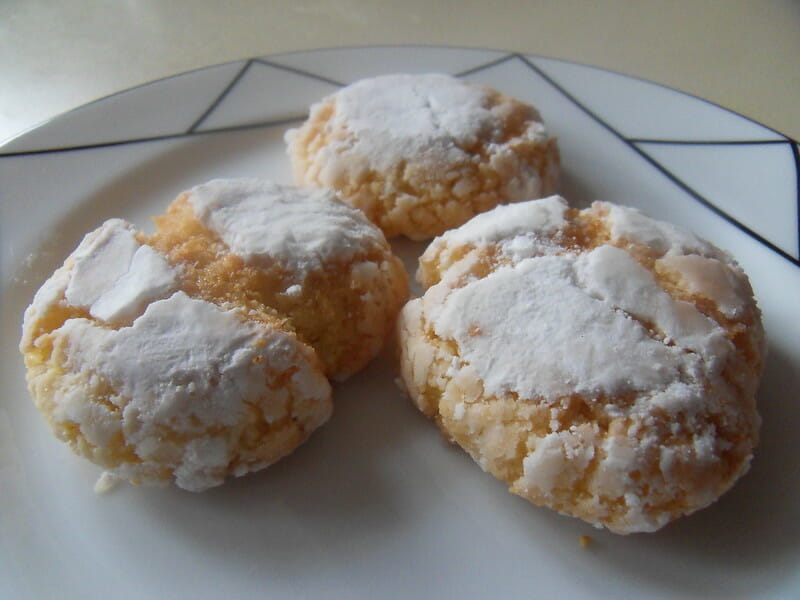
Round, crumbly biscuits, with the cracked surface, which melt in the mouth. It’s the everyday sweet treat, the one you bring out when you have visitors.
It has three main variants, and it is important to be able to tell them apart:
Triangles or cylinders of warqa pastry —Moroccan pastela— filled with almond paste flavoured with cinnamon and orange blossom, deep-fried until golden brown and drizzled with honey as soon as it comes out of the frying pan.
The contrast between the crispy outer layer and the soft filling is what makes them so addictive. They’re commonly found in weddings and at Ramadan tables, next to the chebakia. Note: Briouats are also available in a savoury version, usually made with chicken or minced meat.
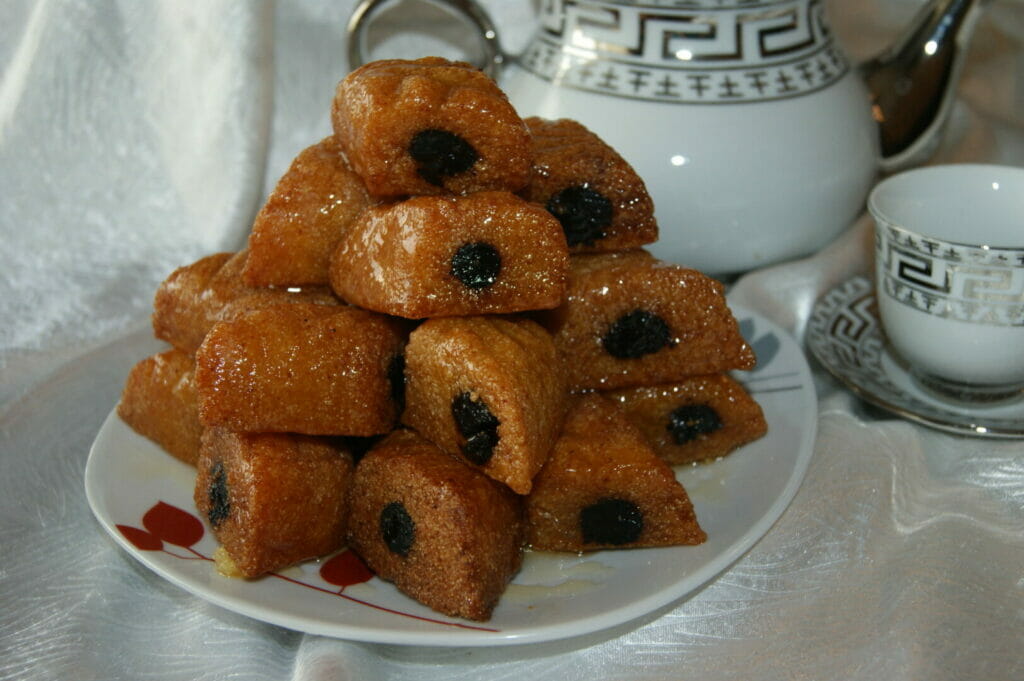
Diamonds of semolina stuffed with date paste, flavoured with orange blossom, which are deep-fried or baked and drizzled with honey. Don’t confuse them with: The pastry is made from semolina and the dates form the filling, it’s not just any old date paste.
A fact to start with: the makrout He arrived in Morocco from Tunisia, and it is one of the most widespread sweets throughout North Africa.
The most unusual of them all: it’s neither baked nor fried. It is a compacted mixture of toasted flour, ground almonds, sesame seeds, butter, cinnamon and honey, with a grainy texture, served in a bowl or in small mounds.
It is enormously energy-related, hence its two uses: it is prepared in Ramadan to recharge our batteries and, as is traditional, It is given as a gift to women who have just given birth. It’s reminiscent of a crumbled polvorón.
Moroccan biscotti. It is baked in a loaf, cut into thin slices and it is baked again, so it turns out crispy and it keeps for weeks. They contain almonds, raisins, sesame seeds or aniseed, depending on the bakery.
You’ll see the name written in both ways, fekkas and feqqas: they are the same sweet; only the transliteration from Arabic differs. They are dipped in tea and eaten every day, without any special occasion. Because they keep well, they are the traditional gift to take away.
A pastry dough filled with almond paste flavoured with cinnamon and orange blossom, coiled into a spiral shaped like a coiled snake — hence the name — and baked until golden brown. It is finished with icing sugar and cinnamon, or drizzled with honey.
It is the most eye-catching sweet A traditional Moroccan sweet, served whole at the table to be cut in front of the guests. Typically served at celebrations.
Pancakes semolina which, as they are cooked on one side only, become filled with tiny holes. That’s the beauty of it: those pores they soak up the honey and melted butter with which they are served.
It’s a sweet treat for breakfast and as a snack, not from a serving tray. If you’re offered baghrir, the thousand holes should be wide open; if they’re closed, the batter hasn’t rested properly.
Light and fluffy fritters, fried and sprinkled with sugar, sold at street stalls. You have to eat them straight after they’ve been made: when it’s cold, they lose completely.
It’s the most street-food-style and popular item on this list, and the traditional breakfast in the medinas, dipped in tea.
A semolina cake juicy, covered in apricot jam and desiccated coconut, sometimes with a hint of orange blossom or vanilla. It is cut into square pieces or shaped into balls.
It’s the exception to the rule: Yes, it is a sponge cake that can be sliced., not a small piece of a tray.
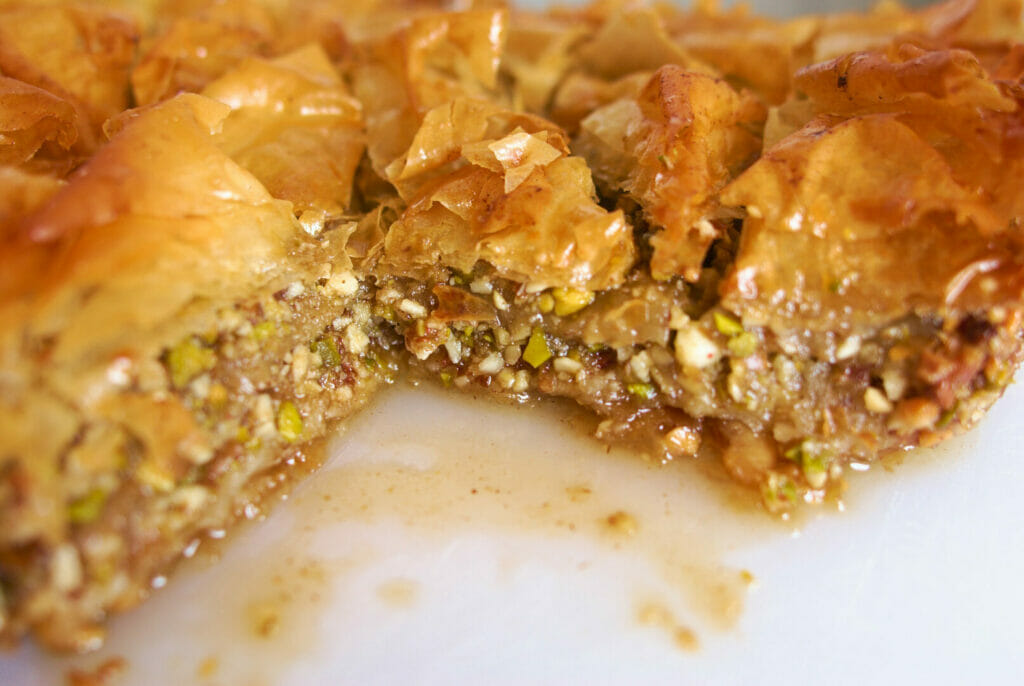
Thin layers of filo pastry with chopped almonds or pistachios, soaked in syrup or honey after baking.
A word of honesty: baklava he is not of Moroccan origin, but rather an Eastern one, in the Ottoman tradition. It is widely available in bakeries across the country and is served at celebrations, but it is not part of the local repertoire in the same way as the previous ones.
1. With tea, every day. The traditional sweets —fekkas, ghriba— are the everyday ones and those served to visitors. You can find the context in typical Moroccan drinks.
2. During Ramadan. Chebakia, briouats, makrout and sellou are prepared in large quantities to break the fast at sunset, along with the harira and dates. They’re deliberately high in calories: you need to make up for a whole day without eating.
3. At celebrations. Weddings, births and big celebrations call for the most elaborate: gazelle horns, mhencha and baklava. Serving them is a gesture of generosity towards the guest.
A word of advice: You only need a few of each sort. They’re very sweet and quite rich, and two of each will be more than enough.
We are a local operator based in Málaga with over 50 years’ experience organising trips around Andalusia and northern Morocco. These day trips cross the Strait and include Moroccan menu featuring Arabic pastries:
To prepare for the trip, you need to What to see in Tangier, what to see in Tetouan y how to travel to Morocco from Spain. And if you want to bring some sweets back, What to buy in Tangier. The whole destination at The Morocco Guide.
Chebakia: a dough flavoured with aniseed, cinnamon, saffron and sesame, plaited into the shape of a flower, deep-fried and drizzled with hot honey before being coated in sesame seeds. It is the traditional Ramadan sweet, eaten when breaking the fast alongside harira soup, although it can be found in patisseries all year round. Fez is renowned for making the best.
Yes, it’s the same sweet written in two different ways when transliterated from Arabic. It’s Moroccan biscotti: a dough made with almonds, raisins, sesame seeds or aniseed, which is baked, cut into thin slices and baked again to make it crispy. As it keeps for weeks, it’s the typical gift that visitors take home.
It is a mixture of toasted flour, ground almonds, sesame seeds, butter, cinnamon and honey that is neither baked nor fried, with a sandy texture similar to crumbled polvorón. It is also known as sfouf or zamita. Due to its very high energy content, it is made during Ramadan and, traditionally, is given as a gift to women who have just given birth.
No. Traditional Moroccan pastries do not contain alcohol, as Morocco is a predominantly Muslim country. The sweetness always comes from honey, sugar and fruit, and the typical flavours are orange blossom water, rose water and cinnamon.
The ghriba bahla is made with flour and butter and is crispy on the outside and crumbly on the inside, with toasted sesame seeds. The ghriba bzouka contains almonds and is richer and more fragrant with orange blossom. And the coconut ghriba, made with grated coconut, is soft on the inside. They all share the same round shape and the characteristic crack on the surface.
In the traditional patisseries of Fez, Marrakesh, Tetouan or Tangier, where they are sold by weight and made fresh every day, allowing you to choose a selection and pay by the gram. They can also be found at stalls in the souks, where the range on offer increases significantly during Ramadan. It’s best to ask for small quantities of many different types, as they are very sweet and quite rich.