Setenil de las Bodegas It is probably the most original of Andalusia’s white villages. It is in the province of Cadiz, right in the heart of the Serranía, and its centre lies within the gorge formed by the Trejo River: the houses are built beneath enormous rock overhangs that serve as roofs, with winding, cobbled streets spread across different levels. Its historic centre has been declared Bien de Interés Cultural.
You can see everything on foot in half a day, as the town centre is compact and the ten places featured in this guide are just a few minutes’ walk from one another. Setenil is about 18 kilometres from Ronda, so most visitors combine a visit to both villages in a single day: you can do this with a Day trip to Ronda and Setenil from Málaga or, if you’re staying further south, with the excursion from Gibraltar and Tarifa.
The route we suggest follows the course of the River Trejo, which is the central feature that has shaped the village: it starts at the bottom, in the streets beneath the rock face, and ends at the top, at the Torreón and the viewpoints. This way, you only have to climb once and avoid having to go up the same slopes twice.
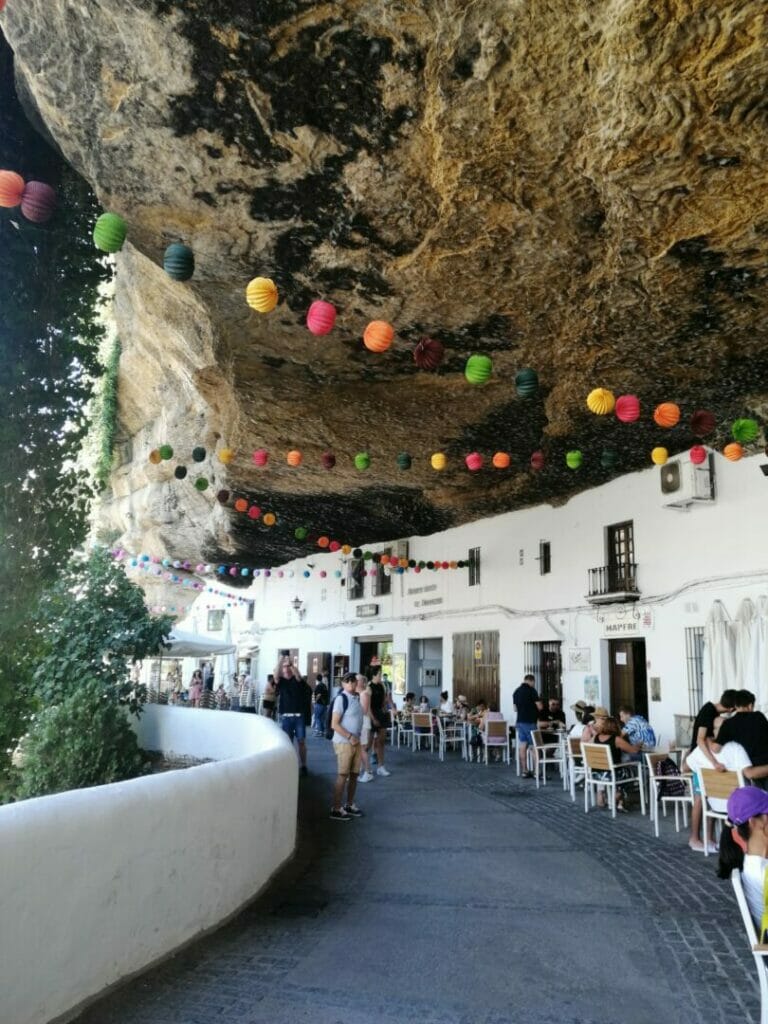
It is the village’s most recognisable sight and the spot where almost all the photographs are taken. It is situated in the lower part of the village, running parallel to the River Trejo: the houses are lined up beneath a large overhanging rock that acts as a natural roof — the coat, as they call it here— whilst the other side looks out over the water.
It enjoys sunshine for much of the day – hence its name – and is the busiest area in the municipality, with bar and restaurant terraces carved directly into the rock, such as the well-known Frasquito Bar. It’s the perfect place to have a drink before carrying on.
A word of advice: first thing in the morning or late in the afternoon, the low-angled light brings out the shape of the rock above the rooftops much better.
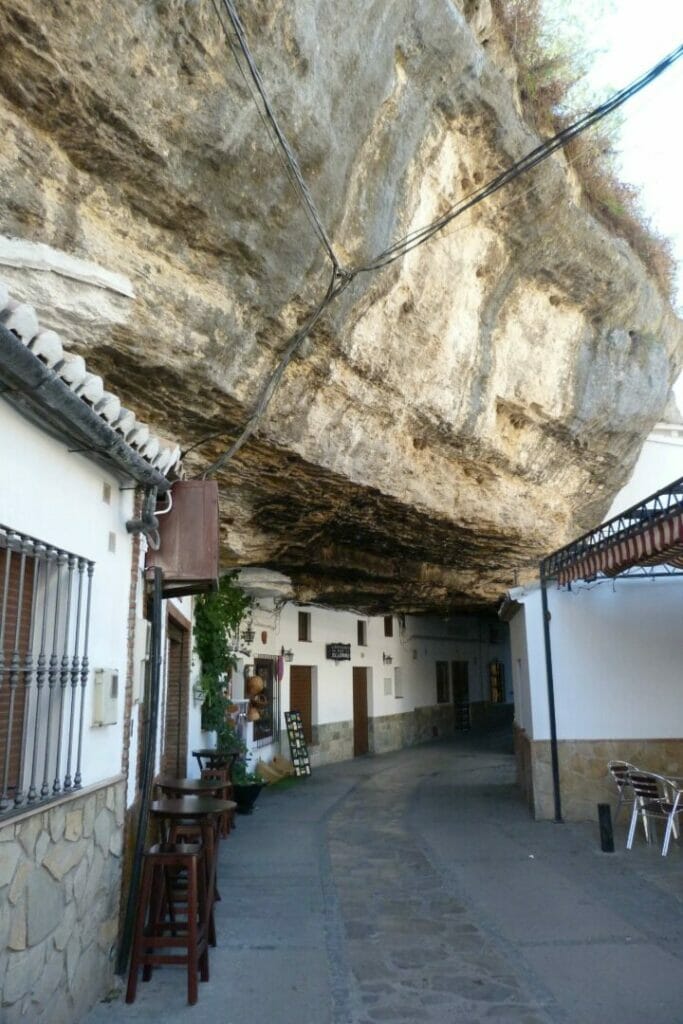
It runs along the opposite bank of the Trejo, just a few metres from the previous one, and here something different happens: The rock covers the entire width of the track and extends all the way to the houses on the opposite side, literally creating a tunnel between the façades.
Hardly any direct light gets in, which keeps the street cool even in the height of summer. The contrast between the two streets — one bathed in sunlight and the other in shadow — is the best way to understand why Setenil was built this way, making use of the stone rather than clearing it away.
Cave houses have increasingly become a tourist attraction, and many have now been restored as country cottages and accommodation providers.
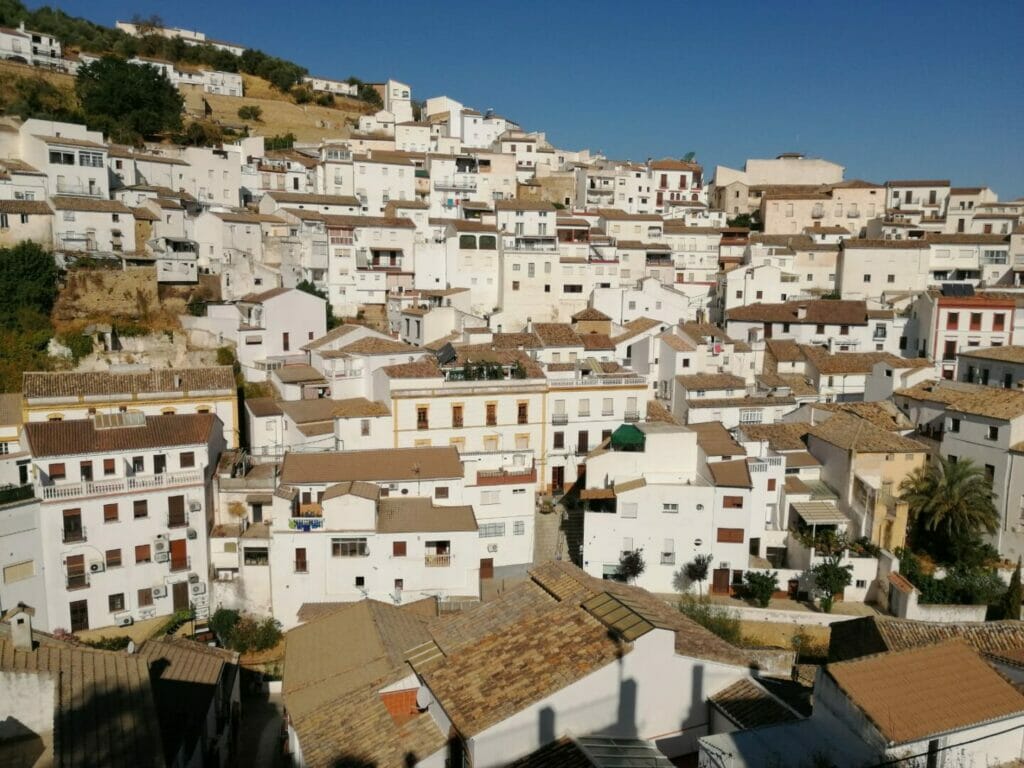
Here they are the best views of Setenil. You climb up some rather narrow stairs and, at the top, a panoramic view of the village opens up, with its white houses, the Tower of Homage, the remains of the city wall and the Church of La Encarnación. It is this view that allows one to understand the course of the river and the rooftops nestled beneath the stone.
At the same point is the Hermitage of the Virgin of Carmen, from the 18th century. Our Lady of Mount Carmel is the patron saint of Setenil and its festivals are held on mid-July, which is the best time of year to see the village in its natural setting.
It is the heart of the upper town and a landmark to help you find your way around. Here you’ll find the Town Hall, with its cover, and the Tourist Information Office, which is worth noting down for opening times and leaflets. The streets leading to the castle and the church branch off from the square, and this is where local social life is centred.
The Herrería Street It takes its name from a former blacksmith’s workshop, and is one of the most characterful streets in the old town: narrow, steep, with houses that cling to the slope and the rock face.
But what has made it famous is at the end: a a plaque surrounded by blue plant pots with the text "Kiss me in this corner". It is one of the most photographed spots in the village and is well worth a visit.
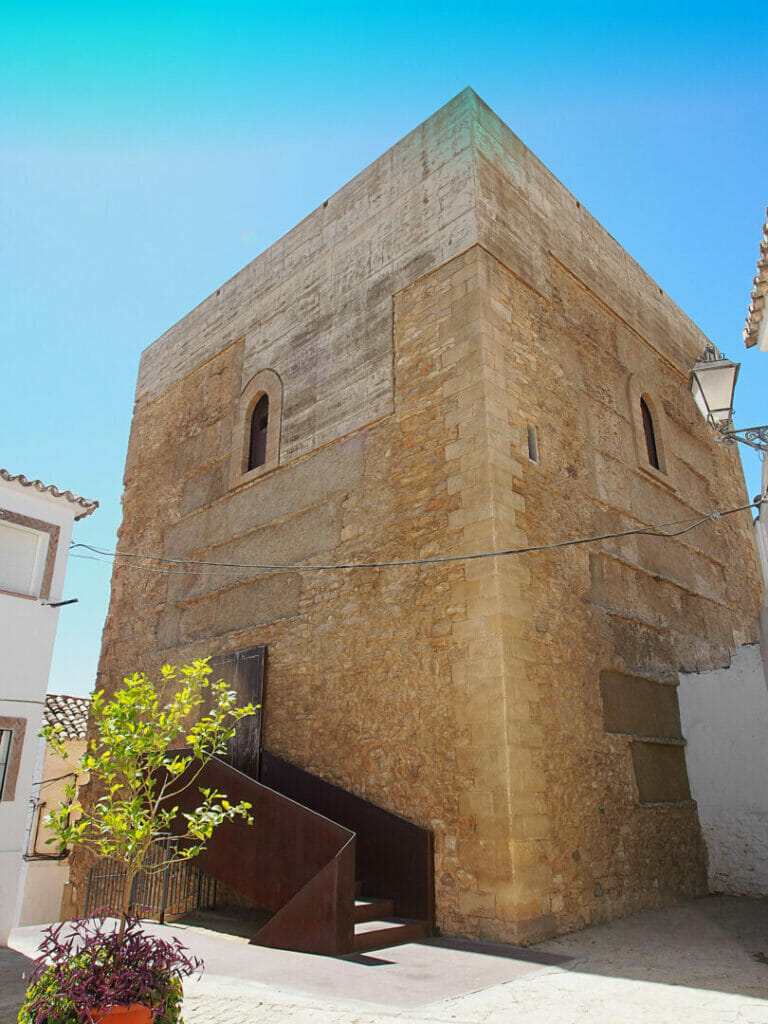
That’s all that’s left of the a fortress built during the Islamic occupation. Of the original complex, the main tower remains — the Tower of Homage, known here as El Torreón— and a secondary tower that flanked the entrance gate. It was built at the highest point in the municipality, next to the church, and today houses temporary exhibitions.
Its location on the Trejo Pass made it particularly difficult to besiege, and this is where the most curious part of the town’s history comes in: the square withstood several Christian sieges before falling into 1484, shortly before the end of the Kingdom of Granada. The name «Setenil» is commonly associated precisely with the great cost involved in conquering it.
In the Villa neighbourhood, next to the Torreón, this church in Late Gothic it was built between the 15th and 17th centuries and it is built on the site of the old mosque. It still has its Gothic façade and a wooden coffered ceiling inside.
Thanks to its location on the hilltop, the surrounding area serves as another natural vantage point over the hamlet.
The second of the village’s commemorative plaques. As you walk between the Mina Street and the Vega Street you will find a plaque bearing the text «A flower, a woman», in tribute to the women of Andalusia.
It’s just a brief stop, but it has become one of the standard photo opportunities for anyone visiting Setenil, along with the one on Calle Herrería.
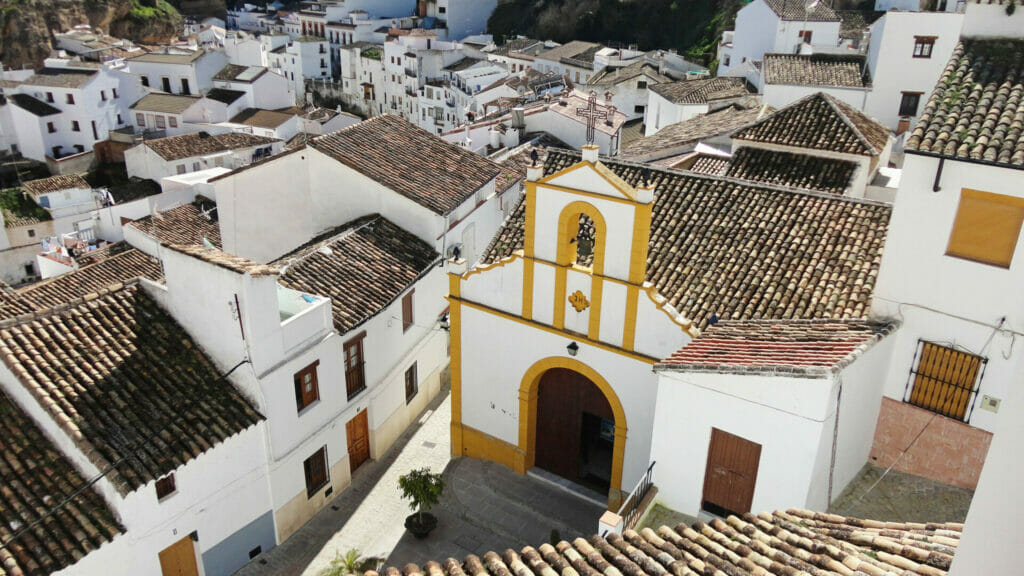
A small church situated within the historic centre, a little way off the busiest streets. The exact date of its construction is unknown, and today it is home to the Brotherhood of Our Father Jesus of Nazareth.
Its simplicity contrasts with the spectacular nature of the streets carved into the rock, and makes for a peaceful stop on the route.
Round off the tour with a different perspective to the previous ones: from the Lizón Viewpoint, on the banks of the Trejo, you can see at a glance how the village winds its way down the river gorge, with the streets and houses terraced at different levels.
Many guidebooks overlook it, but it’s well worth the slight detour. And if you’ve got time to spare, have a wander aimlessly along the side streets: much of the old town still has sections where the houses make use of the rock formations as roofs or walls, and that’s where the essence of Setenil lies. You can find out more with the Interesting facts about Setenil de las Bodegas.
The ten sites are all concentrated within the town centre, which you can walk from one end to the other in just a few minutes, so the whole visit can be done on foot. The most efficient route, from the bottom to the top:
The full tour, including stops for photos, takes between two and three hours. The village has uneven ground and cobbled sections, so comfortable footwear is advisable. And a useful tip for the summer: the streets beneath the rock stay cool and they offer the best shelter during the middle of the day.
Setenil is about 18 kilometres from Ronda and just over 100 from Málaga.
An important notice: Access to the town centre is narrow and parking is very limited, and the streets in the town centre are closed to traffic. The best option is to leave your car in the designated areas in the upper part of the town and walk down towards the river.
For further information about the destination, you can find it at the A comprehensive guide to Setenil de las Bodegas.
As the two villages are just a few kilometres apart, the most common way to visit them is to see both in a single day: in the morning at Ronda, including the Puente Nuevo and the historic centre, and an afternoon in Setenil wandering through the streets carved into the rock. It’s a full-day itinerary that means you don’t have to rush in either place.
If you don’t want to drive or worry about parking in villages with narrow streets, the organised tour includes transport from Málaga and the Costa del Sol, with a guide accompanying you throughout the day. And from the Campo de Gibraltar, there’s an alternative route that departs from Gibraltar and Tarifa.
Ten key sites, all within the town centre and accessible on foot: Cuevas del Sol and Cuevas de la Sombra streets, the Mirador del Carmen with its chapel, the Plaza de Andalucía, Herrería Street with the «Kiss me in this corner» spot, the Torreón, the Church of Nuestra Señora de la Encarnación, the «Una flor una mujer» plaque, the Chapel of San Benito and the Mirador del Lizón.
You can see all of Setenil in half a day. The town centre is compact and the ten main attractions are just a few minutes’ walk from one another, so in two or three hours’ time you can explore the streets carved into the rock, the viewpoints, the Torreón and the church. If you fancy a meal at one of the terraces carved into the rock, allow a full day.
Both run along either side of the River Trejo, with houses nestled beneath the rock, but they differ in their orientation. Cuevas del Sol enjoys sunshine for much of the day and is the best-known sight in Setenil, with its bars and terraces. In Cuevas de la Sombra, the rock covers the entire width of the street and extends right up to the houses opposite, forming a tunnel where hardly any light enters and which stays cool in summer.
Because the village is situated in the gorge carved out by the River Trejo, and its inhabitants made use of the large rock overhangs as roofs and walls rather than clearing them away. It is a form of urban planning born of adapting to the rock, which also provides thermal insulation: the streets beneath the rock remain cool in summer and mild in winter.
It is about 18 kilometres from Ronda and just over 100 from Málaga; the journey by car takes around an hour and a half via the A-357 and A-367, passing through Ronda. Public transport links are limited: there are buses from Ronda, but they run only a few times a day. Parking in the town centre is very limited, so it’s best to leave your car in the upper part of the town and walk down.
Yes, that’s the most common combination, as they’re about 18 kilometres apart. The best way to go about it is to spend the morning in Ronda, which has more to offer, and the afternoon in Setenil, which can be seen in two or three hours. Many organised day trips from Málaga and the Costa del Sol include both villages in a single day.