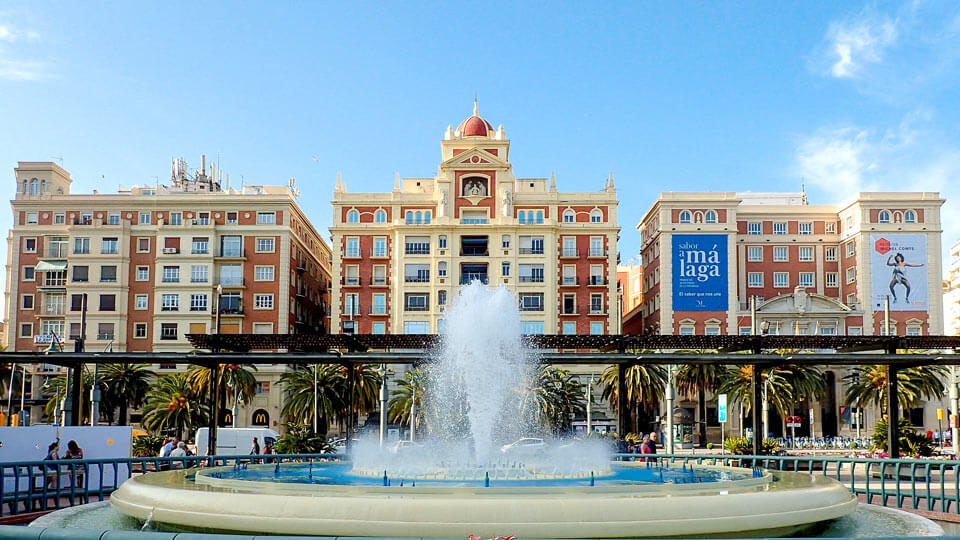
The Plaza de la Marina It is the junction where the Alameda Principal, Málaga Park, Calle Larios and the entrance to the port meet. It is the the first thing cruise passengers see upon disembarking, and the place where almost everyone gets their bearings before setting off.
But there are two things that are often overlooked: El Cenachero, one of the city’s landmarks, and a few archaeological remains visible inside the underground car park.
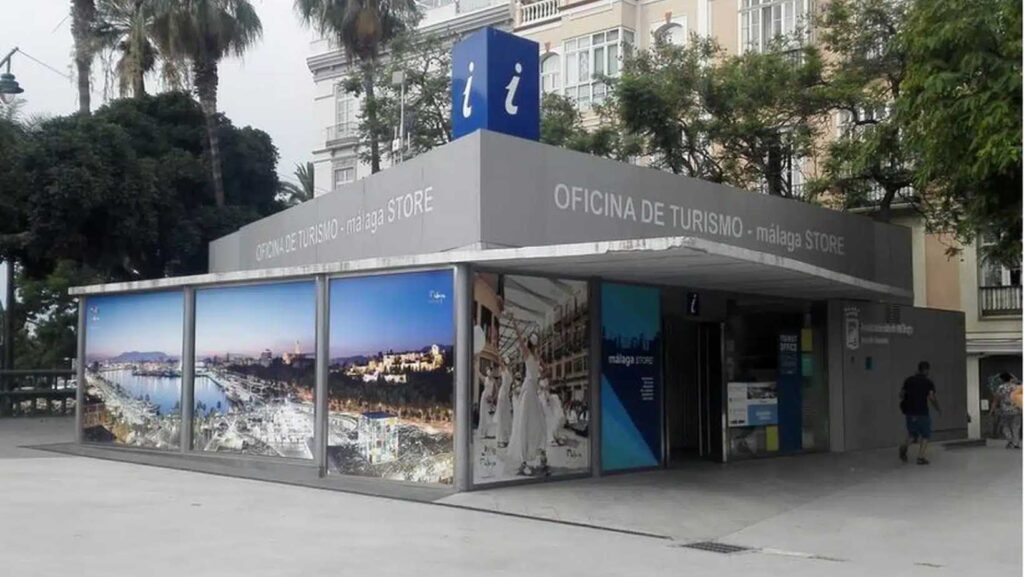
It’s behind the Tourist Office, which is why many people walk right past it without noticing it. It is a bronze sculpture of Jaime Fernández Pimentel, from the 1960s, and one of the emblems of Málaga alongside the biznaguero and the boquerón.
What it represents: a lost trade. The ash bin He was the street vendor who roamed the streets hawking fish fresh from the bay, with two cenachos —esparto baskets— slung over their shoulders, making them sway to keep their balance. Hence the name. They sold Victorian anchovies, horse mackerel, sardines and whiting.
The sculpture shows how he was dressed: sash, hanging pouches and hat to keep out the heat. And at its feet there is a a plaque bearing verses by the Málaga-born poet Salvador Rueda devoted to the figure.
Two further details to provide some context:
Its companion statue, the Biznaguero, also by Pimentel, did not return: it is in the Pedro Luis Alonso Gardens, next to the Town Hall.
This is the square’s best-kept secret, and it’s underground.
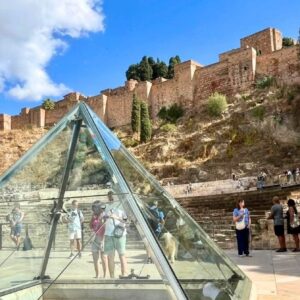
Whilst work was being carried out on the underground car park Archaeological remains from two periods were discovered: sections of the Nasrid wall and a 17th-century harbour wall. Instead of covering them up, they were incorporated into the car park itself and can be viewed through glass panels, with information panels.
In other words: if you park there, you’ve got an archaeological site right in front of you without having to pay an entrance fee. And it explains at a glance what the history of the square is all about, because those walls marked where the sea reached before the fillings.
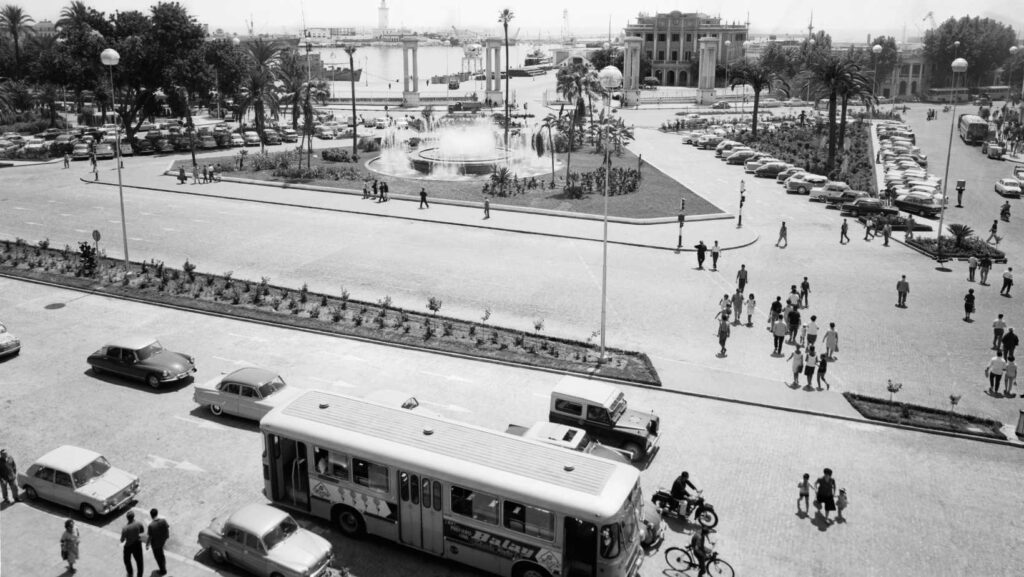
The place was formerly known as the Marina Promenade, and the name simply comes from its proximity to the sea: the water came up to here.
The current square was designed to the mid-19th century, when the Nasrid walls in the south of the city, and land was reclaimed from the sea as part of the urban expansion project. The very same process that led to the Málaga Park, which is right next door and is also built on land reclaimed from the water.
The buildings on the main façade, with their modern lines, were built amongst 1948 and 1960, designed by the architect Juan Jáuregui Briales. And the light source, with its nine water features, the 15 January 1964. The last major refurbishment, which involved the construction of the car park, took place in 1984.
You may also be interested in
The square serves mainly as starting point, and that’s the beauty of it: four different paths branch out from here, and they all lead somewhere.
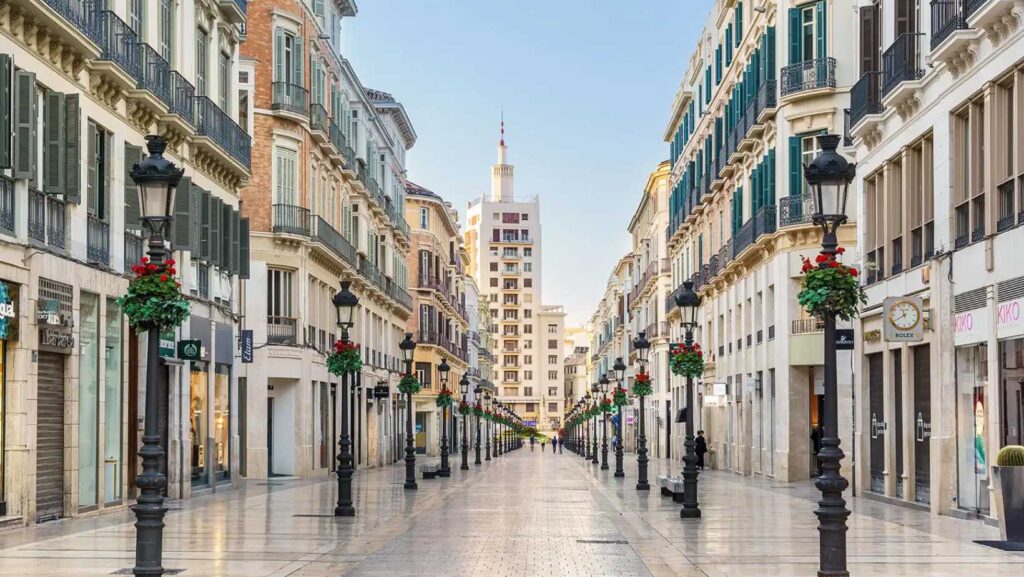
And if you walk along Molina Lario Street, you’ll reach the Cathedral. Virtually the whole historic centre is less than a fifteen-minute walk away.
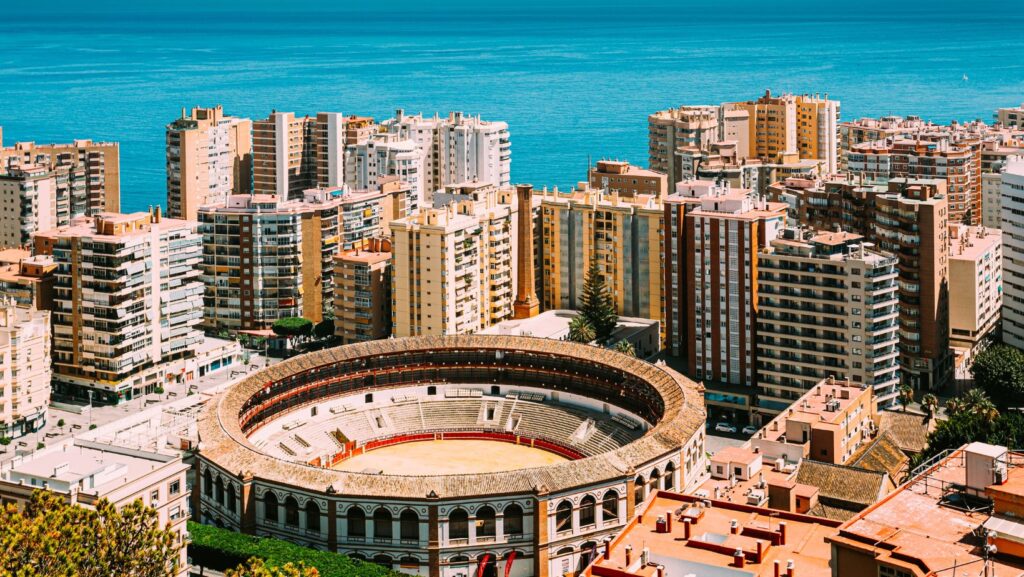
If you’re after views, the climb to the… starts from the park Gibralfaro Castle. You have more options at the best viewpoints in Málaga.
On foot from anywhere in the city centre: it’s the most central spot in Málaga and almost everything is nearby.
As the whole area is pedestrianised and has restricted traffic, it’s best to leave your car here and carry on on foot. And you’ll get to see the archaeological remains as you walk down.
Early in the morning or at sunset. At midday, it’s teeming with people coming and going, and in summer there’s hardly any shade in the centre of the square. As evening falls, with the fountain lit up and the atmosphere of the harbour nearby, it changes quite a lot.
It’s a very busy, well-lit area, so it’s also lively at night. And as it’s right next to the harbour, it’s the natural last stop before setting off on an excursion or heading back to the hotel.
We are a local tour operator based in Málaga with over 50 years’ experience organising trips around Andalusia. If you’re setting off from the city centre, these are the most popular options:
And if you’d rather stay in town, you’ve got free things to do in Málaga y what to see in Malaga in one day.
A landscaped, pedestrianised area in the city centre, situated between the port, Málaga Park, the Alameda Principal and the start of Calle Larios. It is one of the city’s key hubs and the first thing cruise passengers see as they leave the port. It is home to the illuminated fountain, the Tourist Office, the statue of El Cenachero and an underground car park.
It is situated in the Plaza de la Marina, just behind the Municipal Tourist Information Office, which is why many visitors walk right past it without noticing it. It is a bronze sculpture by Jaime Fernández Pimentel depicting a street fishmonger with his two esparto baskets slung over his shoulders. At its base is a plaque bearing verses by Salvador Rueda.
A now-extinct Malaga trade: the street vendor who roamed the streets hawking fish fresh from the bay. He carried two ‘cenachos’ – esparto grass baskets – slung over his shoulders, making them sway to keep his balance, which is where the name comes from. He mainly sold Victorian-style anchovies, as well as horse mackerel, sardines and young whitebait.
Yes, inside the underground car park. During the building work, sections of the Nasrid city wall and a 17th-century harbour wall were uncovered; these have been incorporated into the car park itself and can be viewed behind glass panels featuring explanatory information. They mark the point up to which the sea once reached before this land was reclaimed from the water.
Beneath the square itself there is a public underground pay-and-display car park, one of the most popular options for those travelling to the city centre by car. As the whole area is pedestrianised and has restricted traffic, leaving your car here and continuing on foot is the most practical option. During peak season and at weekends it fills up quickly, so it’s best to arrive early.
Marqués de Larios Street runs northwards from the square; the port and the Palmeral de las Sorpresas are directly opposite, Málaga Park stretches eastwards as far as the Town Hall, and via Molina Lario Street you can reach the Cathedral in five minutes. Walking up through the park, you’ll reach the Alcazaba, the Roman Theatre and Gibralfaro Castle.