The Cathedral of the Incarnation It is called «La Manquita» because it’s missing a tower. And the story of why it’s missing is better than is usually told.
Price, opening hours, what to see inside, and the real story behind the tower that isn’t there.
General admission is around €10 It includes an audio guide, with concessions for students, senior citizens and groups. Residents of Málaga have free access proving it.
Roofing is charged for separately and they’re offering passes with limited places, so it’s best to book in advance.
Please check the admission prices and opening hours on the official website before you go: they vary depending on religious holidays, and the site is closed to visitors on Sunday mornings.
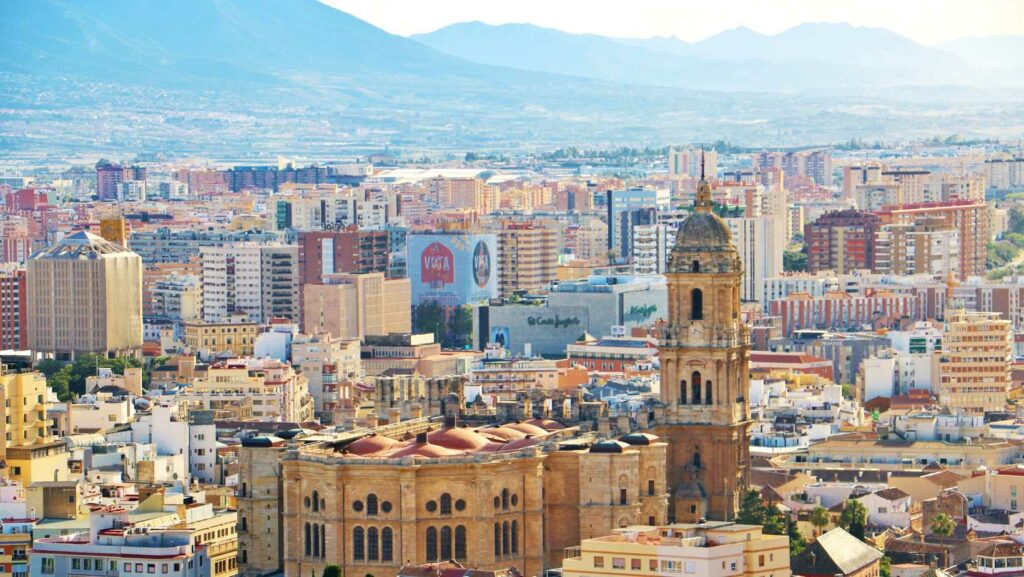
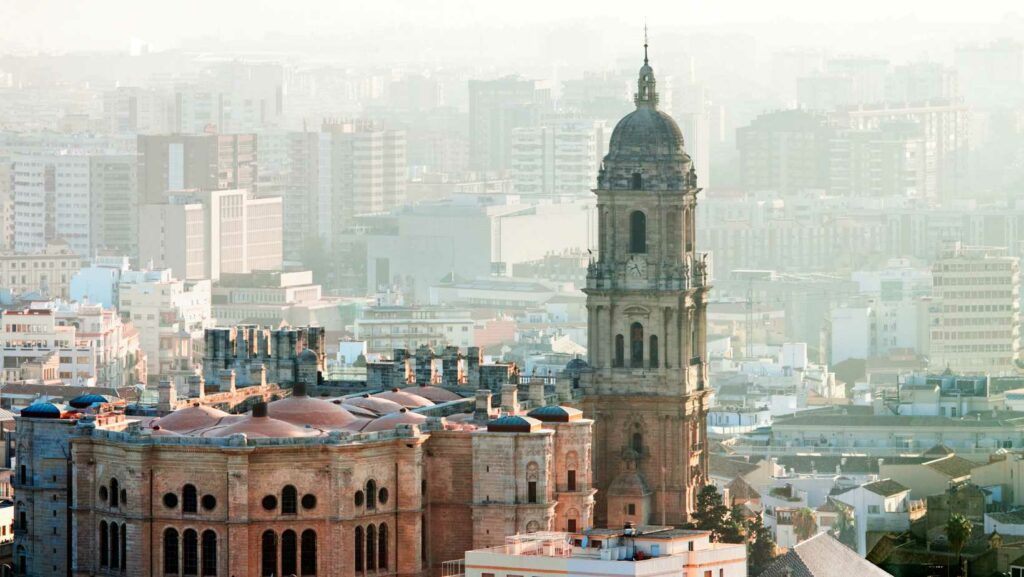
The project comprised two twin towers. Only the north wind picked up, reaching 84 metres and it is the second-tallest cathedral in Andalusia, second only to the Giralda.
The south wind comes to an abrupt halt at the deck level, and you can see the unfinished column capitals. Hence the nickname.
That the money was sent to finance the American War of Independence against the British. The following is cited: Luis de Unzaga, a native of Málaga and Spanish governor of Louisiana, and also to Bernardo de Gálvez.
It is the most widely told version of Málaga, and there is a grain of truth in it: Spanish involvement in that war was a reality.
Here’s what’s almost never mentioned. What historians support is rather more down-to-earth:
The reason for those journeys was no small matter either: Merchants’ carriages were being attacked by bandits so frequently that the routes were being abandoned. Repairing the road was an economic priority for the city.
To put it another way: the tower wasn’t built because the road was more urgently needed. Less romantic, but more typical of Málaga.
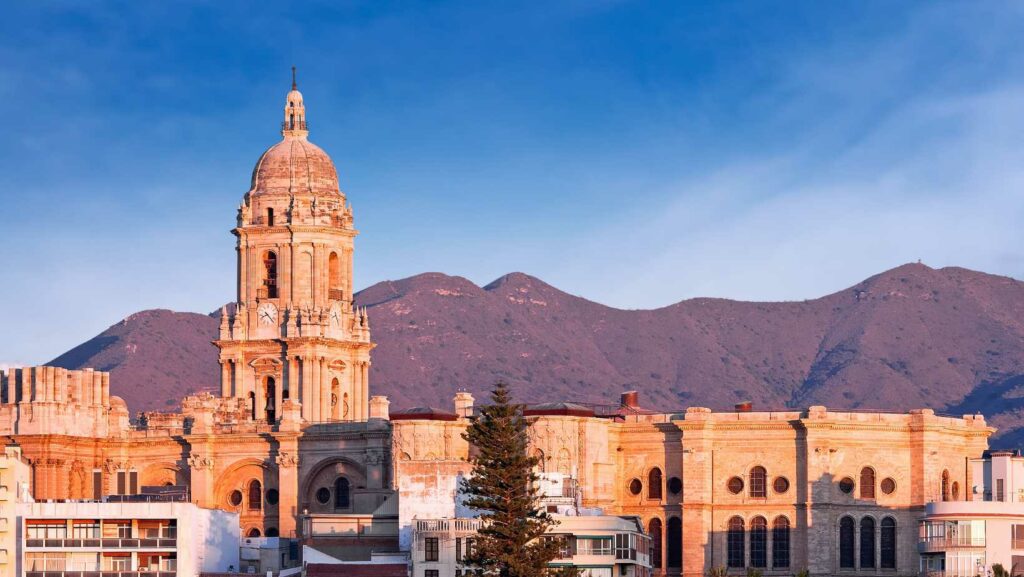
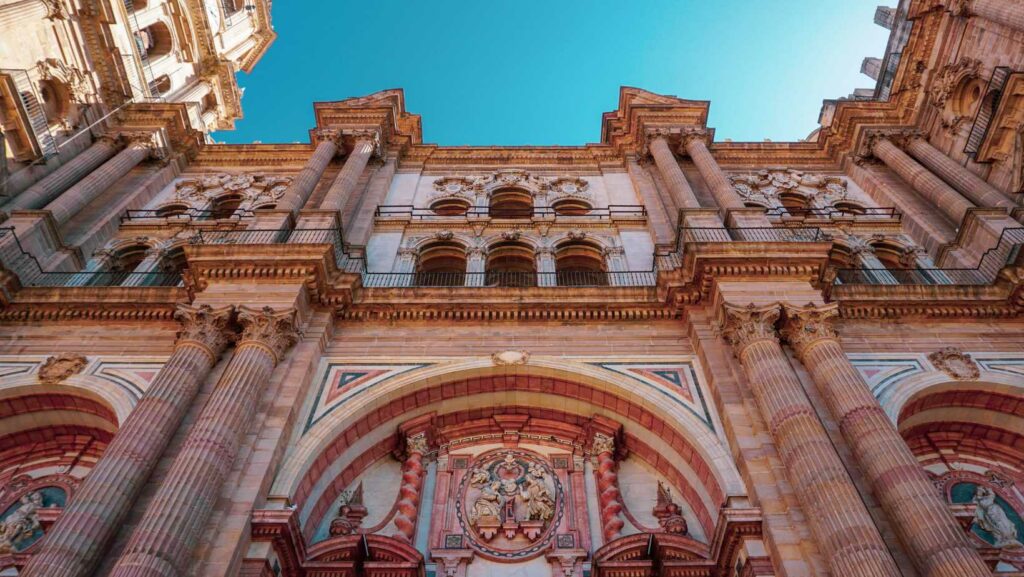
Almost three centuries of work, hence the mix: Renaissance core, Baroque additions and a few Gothic remnants. It’s not a contradiction; it’s simply how long it took.
The choir stalls, by Pedro de Mena. It is the largest piece in the church and one of the finest examples of Andalusian Baroque sculpture. Forty carved seats who are worth taking the time to sit and watch.
The two bodies, standing opposite the choir, with thousands of pipes and still in use.
The high altarpiece and the chapels in the side aisles, each with its own patron saint and purpose.
And the three ships, soaring high, with vaulted ceilings that lend the interior its characteristic sense of spaciousness.
It is worth clarifying this as it is often misunderstood: the high-profile visit doesn't go up the north tower. They are visited the roofs, that is to say, the temple’s roofs.
And that’s the best bit: you can see it from above a close-up of the unfinished south tower, with its truncated columns – which is the best way to understand the nickname. Plus the views of the old town and the Mediterranean in the background.
This is charged separately and has limited capacity.
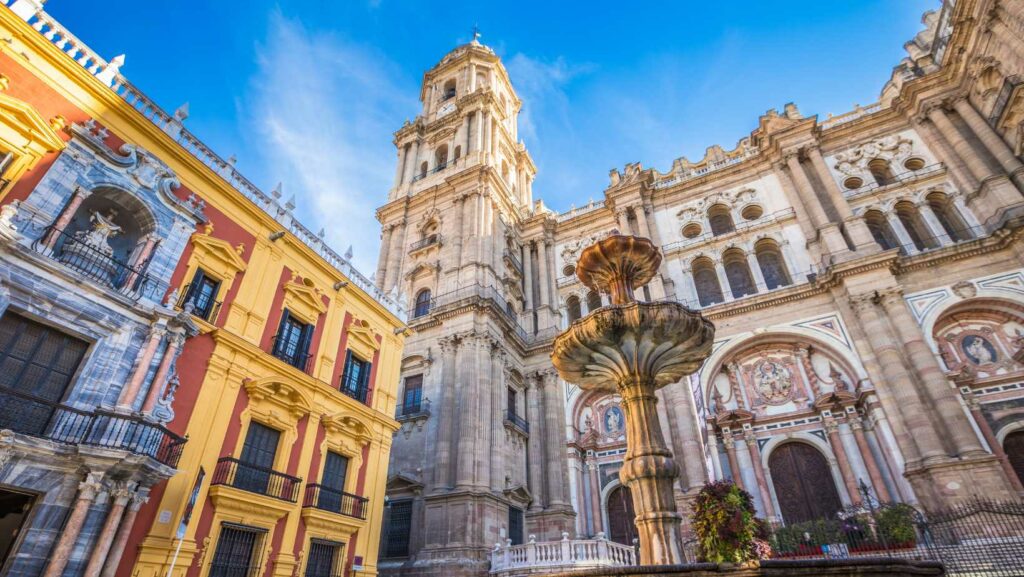
A morning is well spent visiting the cathedral, the Alcazaba and the Roman Theatre, and the afternoon is free for museums or the harbour. All in what to see in Malaga.
Molina Lario Street, just a few metres from Calle Larios.
We are a local tour operator based in Málaga with over 50 years’ experience organising trips around Andalusia. You can see the cathedral on your own in a morning; if you’ve got a spare day, there are destinations just a couple of hours away:
Pick-up point at Avenida de Andalucía, 10. All tours are accompanied by a guide speaking Spanish and English.
And if you’d rather stay in the province: All excursions from Málaga.
Because it is missing one of the two towers originally planned for the project. Only the northern tower, standing 84 metres tall, was completed, whilst the southern tower stops at roof level, with the column bases left exposed. It is this asymmetry that has earned it the affectionate nickname by which the people of Málaga know it.
This is the most popular version, although historians favour another. During the reign of Charles III, with the Count of Floridablanca as Secretary of State, funding for the project was halted, and the available money was allocated to the upgrading of the Antequera Road and the roads linking Málaga with Vélez, which had been severely damaged by bandit raids. The American legend mentions Luis de Unzaga, a native of Málaga and governor of Louisiana, and Bernardo de Gálvez.
General admission is around 10 euros and includes an audio guide, with reduced rates for students, senior citizens and groups. Residents of Málaga can enter free of charge upon presentation of proof of residence, and access to the rooftops is charged separately. It is advisable to check the current price on the official website.
Not the tower, but the roofs – that is, the rooftops of the temple. From there, you can see the unfinished south tower up close, with its truncated columns, as well as the old town and the Mediterranean. There is an additional charge on top of the general admission fee; entry is by ticket with limited capacity, and it is advisable to book in advance.
Monday to Friday: 10.00–20.00; on Saturdays and the eve of public holidays, from 10.00 to 18.00; and on Sundays and holy days of obligation, only from 14.00 to 18.00, as there are services in the morning. Opening times may vary on religious holidays, so it is advisable to check before your visit.
The choir stalls by Pedro de Mena, with their forty carved seats, are the most impressive feature. These are complemented by the two organs facing each other above the choir, the high altarpiece, the chapels in the side aisles and the naves themselves, which are very high. And a visit to the rooftops to view the unfinished tower from above.