Jerez de la Frontera is the birthplace of sherry and Andalusia’s longest-established wine tourism destination. Its great estates offer guided tours and tastings, and almost all of them are located within the town centre.
Here you have the five historic wineries with direction and, above all, including its closing days: this is the factor that determines whether you visit, because it’s the biggest of them all It is not open at weekends and on Sundays there are only two options.
Every winery has its own schedule, and they don’t all coincide. Here’s the situation:
Translated into a plan: If you’re travelling at the weekend, Williams & Humbert is out of the question, and it’s the one on the outskirts. On Sundays, you can only rely on Tradición and Tío Pepe, both in the morning. And On Monday, Fundador is on sale.
Always book in advance. They all operate on fixed-time slots, and none of them are designed for walk-ins. At Lustau, they put it bluntly: without a prior booking, there’s nothing to see.
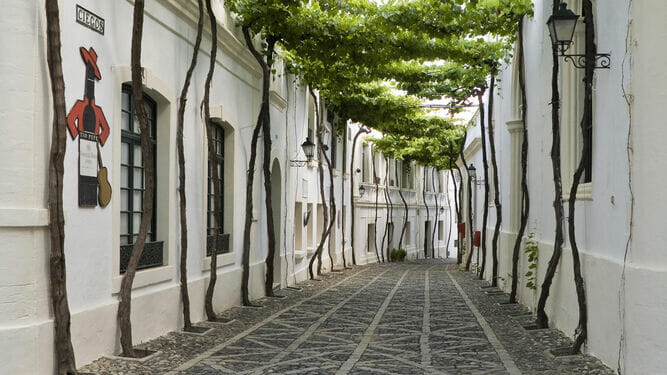
The highest-rated of the five, and for two reasons. It is a small family-run winery specialising in very old wines, with criaderas and soleras that have been aged for decades – a fact that is officially certified – so the tasting experience is unlike any other in the city.
And it has an unusual feature: it houses the private collection of Spanish paintings owned by the family, featuring works by Goya, Velázquez, El Greco and Zurbarán, which is covered during the tour itself. Bear this in mind, as it’s sometimes explained incorrectly: It is not a collection about wine, is Spanish painting from the 15th to the 19th centuries.
Address: 3 Cordobeses Street.
Timetable: Monday to Saturday, from 10.00 to 14.00 and from 15.30 to 18.00; Sundays from 10.00 to 12.00.
Who is it for: A leisurely visit, small groups and the best way to spend your Sunday.
The oldest working winery in Jerez, originating from 1730, and the house where the sherry brandy. Preserve the building The Mosque, the largest in the complex, and the visit is particularly impressive because of its sheer scale.
A quick note to avoid any confusion: Fundador is a brandy, not a wine. The tour offers an insight into both the wine and brandy production processes in their respective ageing cellars, and the tasting session usually combines the two. Options range from basic tours to tastings of VORS aged over thirty years.
Address: Calle Puerta de Rota, no.
Timetable: It is closed on Mondays and Sundays. Afternoon sessions from Tuesday to Saturday, with evening screenings from Thursday to Saturday.
Notice: Opening times are irregular and vary by season, so please book and confirm your ticket.
A leading establishment known for its wines from a wine merchant and for a range that encompasses all the styles of the region. Its ageing cellars have the height and tranquillity of a cathedral, and a visit here is more intimate than at the large winery-cities.
The tour explains the criaderas and soleras system and concludes with a tasting designed to Compare Fino, Amontillado, Oloroso and Pedro Ximénez one after the other. It’s the best choice if you already know a bit about sherry and want to understand its nuances.
Address: 53 Calle Arcos.
Timetable: Monday to Friday from 9.00 am to 4.00 pm and Saturdays until 3.00 pm. Closed on Sundays.
Important: It does not accept walk-in visitors. Without a prior booking, the winery is not open to the general public.
One of the largest wine-making complexes in Europe, with around 65,000 casks in its cellars. The tour combines the ageing process with the history of brands such as Dry Sack, and given its size, it is well-suited to groups and offers guided tours in several languages. On certain dates, it also organises equestrian displays.
Address: N-IV road, km 641, on the outskirts of Jerez on the way to the circuit.
Timetable: Monday to Friday, from 8.00 am to 3.00 pm. It is closed on Saturdays and Sundays.
Double warning: It’s the only one outside the town centre, so you’ll need a car, and it’s also the one that brings the weekend to a close. If your trip is from Saturday to Sunday, tick it off.
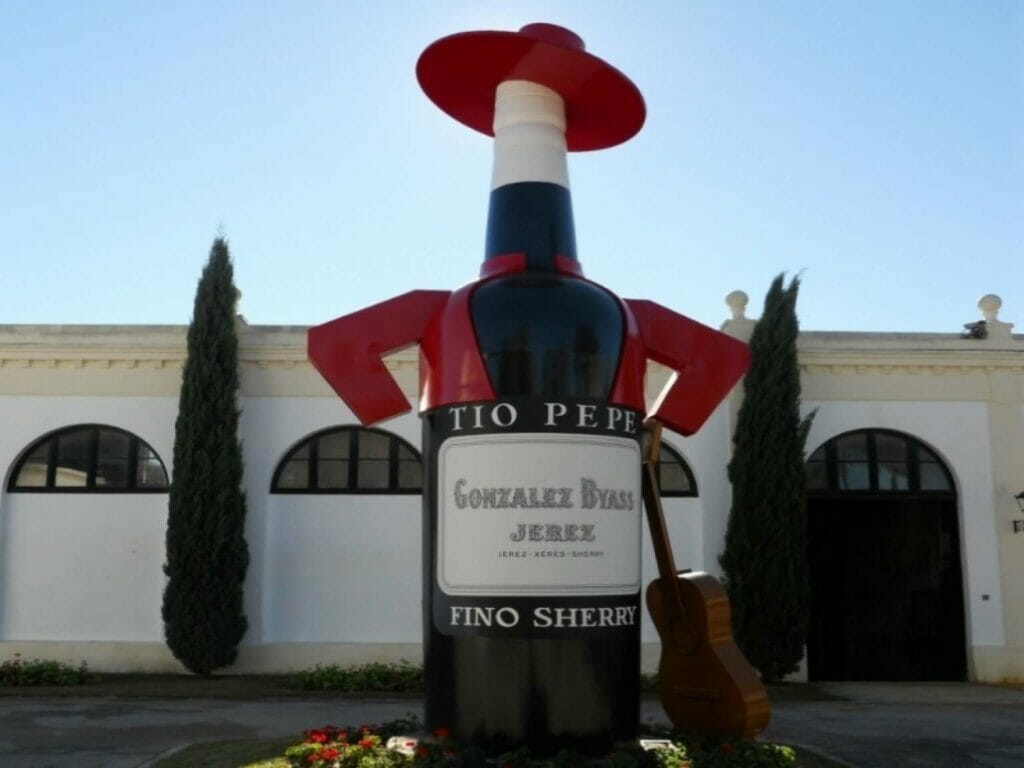
The home of the world’s best-known fino, founded in 1835, and the city’s most popular tourist attraction. The site is a genuine wine-cellar city next to the Alcázar and the Cathedral, with its own streets, gardens and historic buildings, which can be explored partly on foot and partly on a train.
The most recognisable feature is the La Concha Winery, a circular building with a metal frame attributed to the workshop of Gustave Eiffel, and the barrel room, with barrels signed by people who have visited the place.
Address: 12 Manuel María González Street.
Timetable: Every day, with midday and afternoon screenings on weekdays and morning screenings only at the weekend.
Let’s be honest: It is the most famous of the five, and yet, the one with the lowest rating. The tour and the surroundings are up to scratch, but the final tasting is often criticised for being rushed and impersonal, and with the more expensive options there are complaints about what you get in return. If you’re going for the venue and the history, it does the job; if you’re going for the tasting, have a look at the other four.
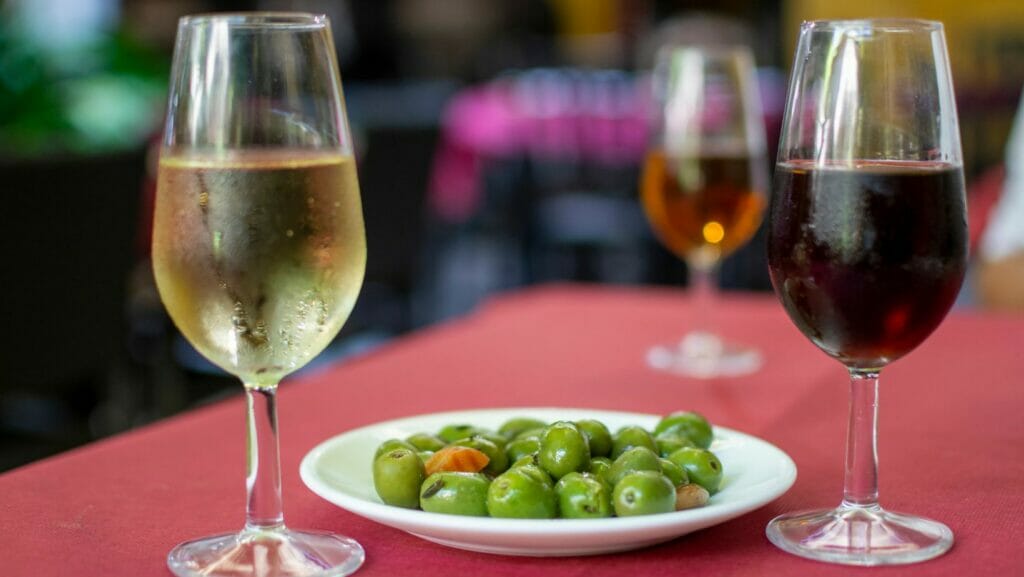
Sherry has been around for more than three thousand years history. The Phoenicians The vine was first introduced, the Romans spread it, and the Arabs contributed techniques and varieties. But it was the British influence, from the 18th century onwards, which turned it into a major export and led to the construction of the large ageing cellars that can be visited today.
The Designation of Origin Jerez-Xérès-Sherry was established in 1933, one of the first in Spain, and protects the Marco de Jerez: the triangle formed by Jerez de la Frontera, El Puerto de Santa María and Sanlúcar de Barrameda, where the soil of albariza and the Atlantic climate shape the character of the wine.
What sets these wines apart is the the ‘criaderas and soleras’ system: the barrels are stacked on top of one another and the wine is transferred from one to another over the years, so that each bottle is a blend of different vintages. This is where the fine and the chamomile, aged under a floral veil, and those aged using the oxidative method, such as the Amontillado, the fragrant and the Pedro Ximénez.
If you’re interested in learning about the city’s history before your visit, we have our Interesting facts about Jerez de la Frontera.
The pattern is similar across the board: an hour or an hour and a half, a tour of the warehouses with an explanation of the solera system and final tasting featuring two or three wines, with options available for tastings featuring more wines, tapas pairings or premium tastings. Almost all of them offer the tour in Spanish and English, whilst the larger ones include additional languages.
Five things you should know:
The best time of year for wine tourism in Jerez is spring and autumn. In September, the Grape Harvest Festival, with tastings and street activities.
To fit the wine cellars in with the rest of the city — the Alcázar, the Cathedral, horse riding and motorcycling — you have What to see in Jerez de la Frontera.
If you wish, you can enjoy an incredible walk with a guided tour of Jerez de la Frontera.
Jerez is a good base for exploring the rest of the province, and wine tourism is easily combined with other activities:
We are a local tour operator based in Málaga with over 50 years’ experience organising trips around Andalusia. These are the trips that depart from the Campo de Gibraltar and Tarifa areas, just a stone’s throw from Jerez:
The five historic houses are Bodegas Tradición, Fundador, Lustau, Williams & Humbert and González Byass (Tío Pepe). Tradición is the highest-rated, with long-aged wines and a private collection of Spanish paintings. Fundador is the oldest, dating back to 1730, and is the home of Jerez brandy. Lustau is the best choice if you want to explore the different styles in depth, whilst Williams & Humbert is the largest in scale. Tío Pepe is the most famous and the most popular with tourists.
Yes, and at all of them. They operate on a fixed-time admission system and none of them allow entry without an appointment; in the case of Lustau, without a prior booking there is nothing to see. Booking in advance is particularly important at weekends, in May during the Horse Fair, and around the time of the Motorcycle Grand Prix, when the city gets very busy.
Just two, and both in the morning: Bodegas Tradición, from 10.00 to 12.00, and Tío Pepe, with morning tours. Williams & Humbert is closed on Saturdays and Sundays, Lustau is closed on Sundays, and Fundador is closed on Mondays and Sundays. If you’re visiting at the weekend, it’s best to plan your trip around these closing days.
A tour of the ageing cellars, including an explanation of the criaderas and soleras system, followed by a tasting of two or three wines. It lasts between one hour and an hour and a half, and is usually offered in Spanish and English. There are extended versions featuring more wines, tapas pairings or premium tastings, and at Fundador there is also a Sherry brandy tasting.
No. Contrary to popular belief, these are high-ceilinged, street-level buildings known as ‘cathedral-style cellars’. Their orientation and thick walls maintain a stable temperature throughout the year, which is exactly what the ageing process requires. There is no need to go down into any cellars or caves.
Spring and autumn, when temperatures are milder and there are fewer visitors. In September, the Grape Harvest Festival takes place, featuring tastings and street activities. May is the trickiest month due to the Horse Fair: the town gets very busy and the wineries need to be booked much further in advance.