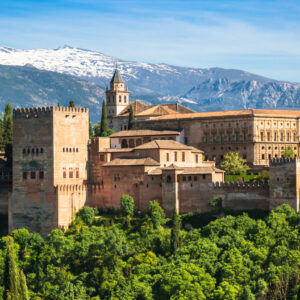
There are so many legends surrounding the Alhambra because, for centuries, It wasn’t a monument: it was a building in a state of disrepair, inhabited by local residents. Stories were told there, and in 1829 An American writer arrived, Washington Irving, who settled there and set them down in writing.
These five are the ones with a documented history. And finally, a phenomenon that seems like a legend but is actually real.
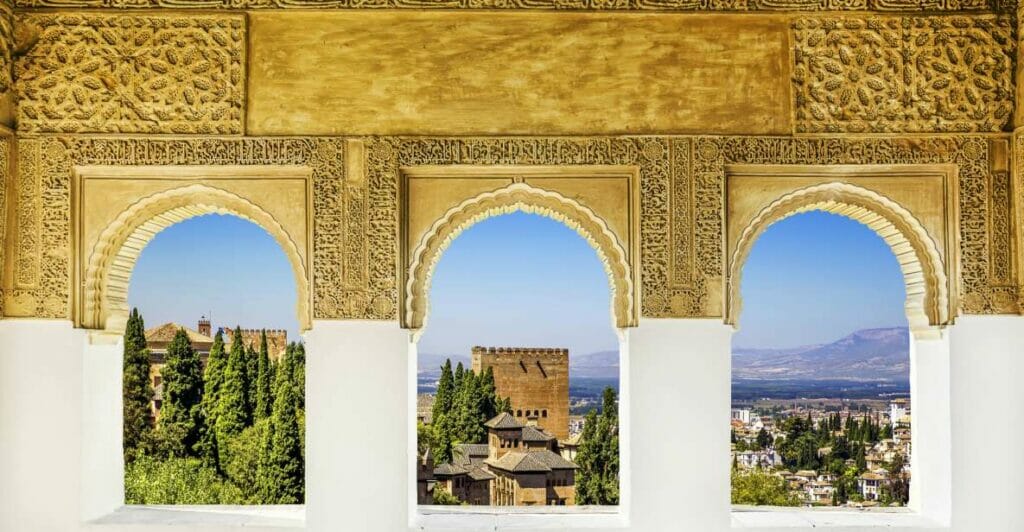
January 1492. Boabdil, the last Nasrid king, surrenders Granada to the Catholic Monarchs and leaves the city. Upon reaching a vantage point on the road to the coast, he turns to look at the Alhambra for the last time and sighs.
And then his mother, Aixa, blurts out:
«Weep like a woman for what you have failed to defend as a man.»
It is worth noting that: the sentence is tradition, not a document. There is no historical record of Aixa ever having said it. But the place does exist and is called: the Suspiro del Moro Pass, on the road from Granada to the coast, from where you can still see the city in the distance.
Another account places Boabdil’s departure at the Tower of the Seven Floors, and he says he asked for it to be bricked up so that no one would ever walk through it again.
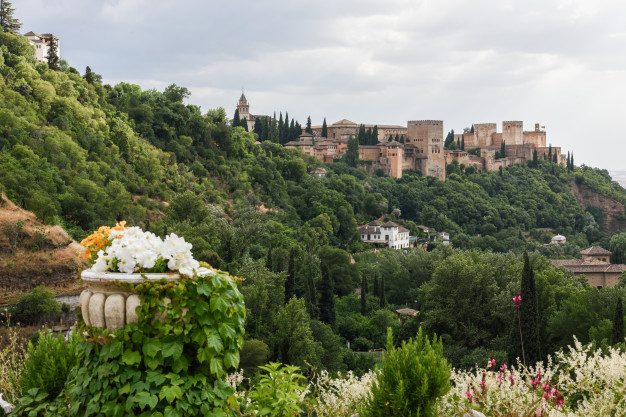
At the top of Cerro del Sol, high above the Generalife, stand the ruins of a fortress. The locals call it the Moor’s Chair.
The story: The final years of Boabdil’s reign were a disaster, with riots in the city and strife within his own family. Legend has it that he used to come up here to take refuge, and from above he gazed down upon the city in turmoil, which was slipping through his fingers.
And it’s still working: It is one of the best viewpoints in the complex, and can be reached on foot from the Generalife.
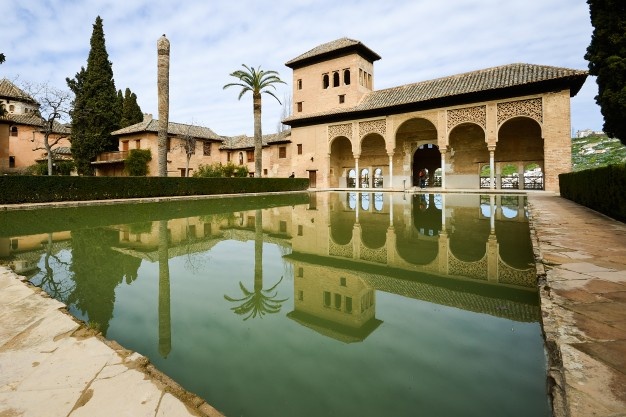
This one’s by Irving, and it’s got the best plot of them all.
A student from Salamanca who was walking around Granada came across a soldier dressed in ancient armour and carrying a spear. The soldier told him that he was carrying more than three hundred years trapped by a curse, condemned to guard the Moorish king’s treasure, and who it can only come out once every hundred years.
To break the spell, two things are needed: a young Christian woman and a fasting priest.
The young woman is fine. The priest, too. But the chosen one turns out to be a glutton: halfway through the spell, he pounces on the delicacies prepared for the end of the ritual, breaks his fast and it ruins everything.
The spell was not broken, and they say that the soldier is still wandering around the grounds, waiting for his next century.
It is the bloodiest, and there is physical evidence of this inside the palace.
The Abencerrajes They were a very powerful noble family at the Nasrid court. Legend has it that The sultan invited them to a banquet in a room at the Palacio de los Leones, and there the ordered everyone to be beheaded, one by one, on suspicion of conspiracy or — depending on the account — because one of them was having an affair with the sultana.
And here’s the bit that really grabs your attention: on the floor of the The Abencerrajes Room, next to the central fountain, there is reddish patches which tradition attributes to the blood that could never be washed away.
The real explanation is more prosaic: are iron oxide of the water and the stone itself. But look for them, because they’re there.
Another one by Irving, and the most novelistic.
A sultan imprisons his three daughters — Zayda, Zoraida and Zorahaida — in the Tower of the Princesses to protect them from the world. From the window, they watch as three captive Christian knights and they fall in love with them.
The two eldest run away with their partners. The little girl, Zorahaida, backs out at the last moment, out of fear or loyalty to his father, and stays in the tower.
And there it is, they say: His spirit haunts the Torre de las Infantas, lamenting the decision.
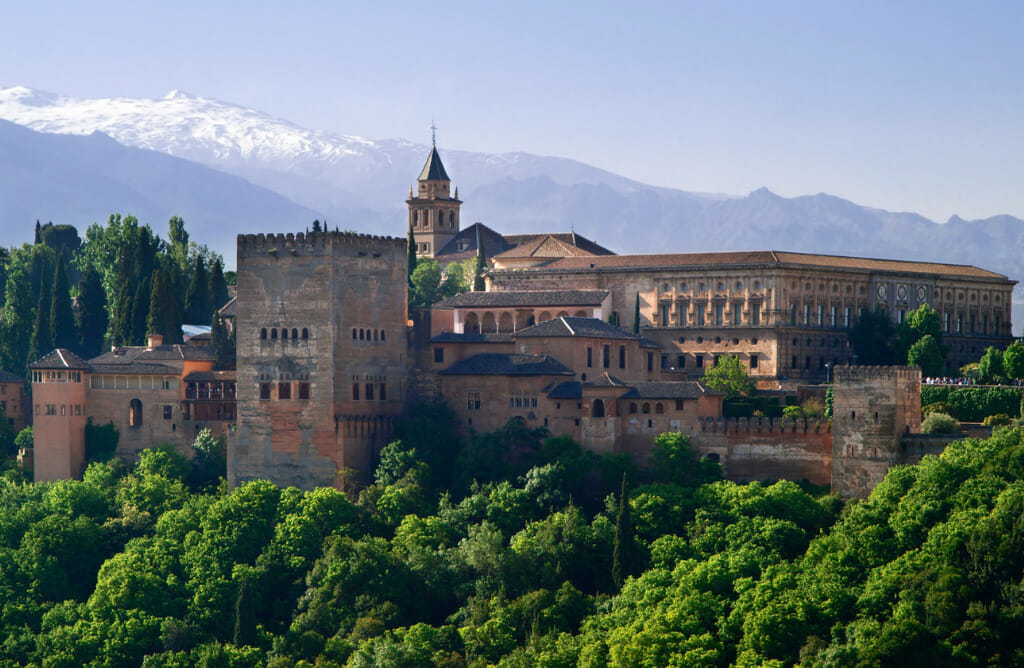
It is said that the Alhambra is a huge sundial. And it’s not just a legend: it really is.
The assembly is oriented in such a way that You can tell the time by the way the light moves through the rooms. The effect is more obvious at midday, when the shadows split the rooms in two.
It is recognised as an astronomical instrument, and some describe it as the world’s largest sundial. It’s not just folklore: it’s design.
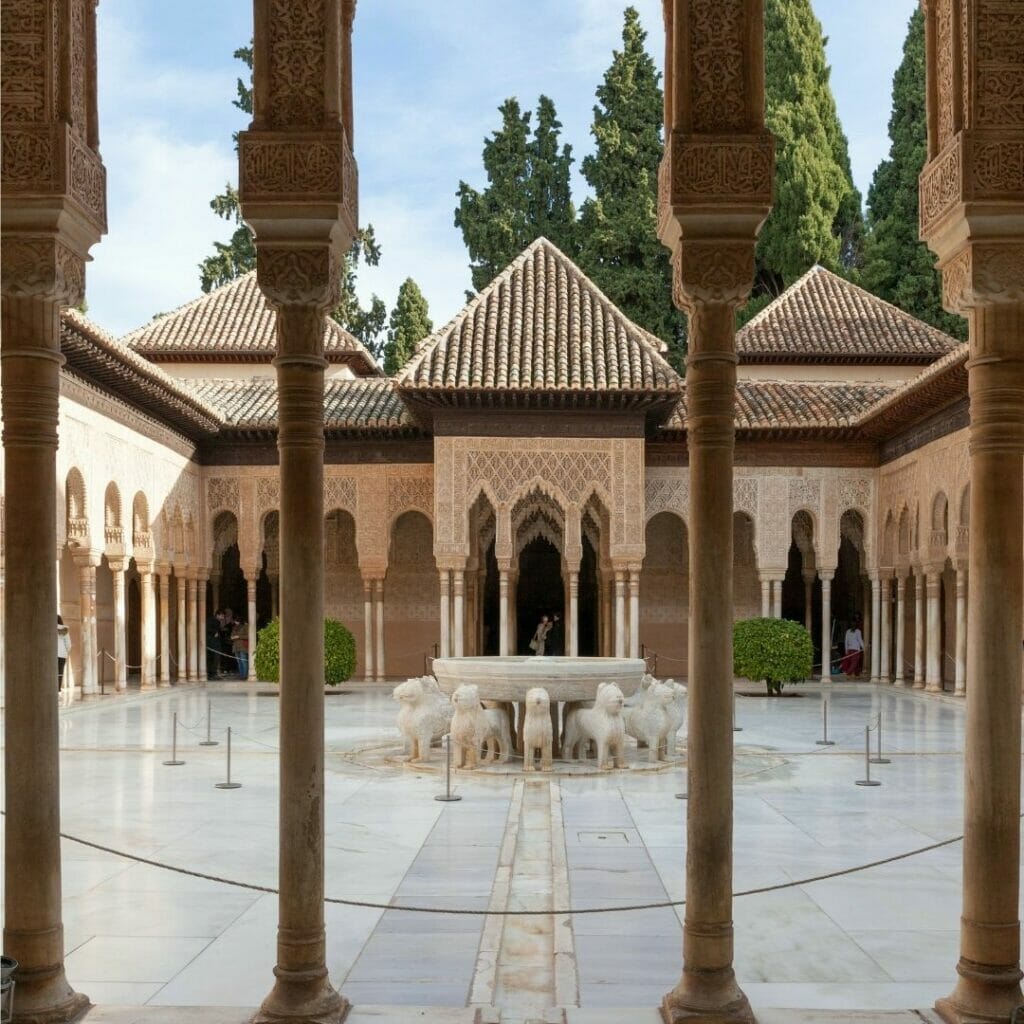
There isn’t just one legend; there are four interpretations which have been debated for centuries:
Full details at Interesting facts about the Patio de los Leones y the fountains of the Alhambra.
Washington Irving arrived in Granada in 1829 and managed to find accommodation within the grounds. He gathered the accounts of the inhabitants and published them in 1832 as Tales of the Alhambra.
That book changed the monument’s fate: He introduced it to Europe and the Americas and kick-started tourism in Granada. Without him, many of these stories would have been lost.
More at The inscriptions of the Alhambra, Eight interesting facts and, with children, their story told for them.
We are a local tour operator based in Málaga with over 50 years’ experience organising trips around Andalusia. Tickets include admission to the Nasrid Palaces, where the Hall of the Abencerrajes and the Courtyard of the Lions are located:
Before you go, How to visit the Alhambra, and as for the rest, What to see in Granada.
The Moor’s Sigh, the Moor’s Chair, the Enchanted Soldier, the massacre of the Abencerrajes and that of the three princesses of the Tower of the Infantas. Several of these were recorded by Washington Irving in his *Tales of the Alhambra*, published in 1832 after he had lived within the complex itself.
«Weep like a woman for what you have failed to defend as a man» is a tradition, not a documented fact: there is no historical record of Aixa ever having uttered these words. What is real, however, is the place itself: the Puerto del Suspiro del Moro, on the road from Granada to the coast, from where the city can be seen in the distance.
Tradition has it that these are the blood of the noble Abencerrajes, who were beheaded there on the Sultan’s orders during a banquet, and that the blood could never be cleaned away. In reality, it is iron oxide from the water and the stone itself, although the reddish stains are indeed on the ground, next to the central fountain.
Yes, and it is not just a legend. The complex is oriented in such a way that the passing of the hours can be tracked by the path of the light as it moves through its rooms, an effect that is particularly noticeable at midday, when the shadows divide the rooms in half. It is recognised as an astronomical instrument.
Washington Irving, an American writer and diplomat who took up residence on the site in 1829, when it was in a state of disrepair and inhabited by local residents. He collected the stories they told him and published them in 1832. The work proved instrumental in raising the monument’s profile in Europe and America and in the emergence of tourism in Granada.
Four interpretations have been put forward: the twelve signs of the zodiac, the twelve tribes of Israel, the four rivers of paradise — represented by the channels flowing from the fountain — and an allegory of the sultan’s power, with the lions as guardians. This last interpretation is the one that has the most support and fits with the poem by Ibn Zamrak inscribed on the cup.