You can easily see all of Gibraltar in a day. It is a small territory, covering just over six square kilometres, with the main attractions concentrated on the Rock and in the centre, so a well-planned day allows you to climb to the top, see the monkeys, visit St Michael’s Cave, explore the historic tunnels and stroll down Main Street. What makes the difference between a perfect day out and a half-hearted visit isn’t the time, but the order: this itinerary puts each stop in its rightful place, from top to bottom.
It’s just over an hour and a half’s drive from Málaga and the Costa del Sol, and within just a few kilometres it offers a blend of nature, history and shopping. If you’d prefer to organise your visit without having to worry about transport or parking, you can do so with a organised day trip to Gibraltar from Málaga with transport and a guide included.
The entrance to the Nature Reserve costs £30 for adults and £22 for children aged 5 to 11, free for children under that age. Rates for August 2026.
Gibraltar occupies a peninsula at the southernmost tip of the province of Cádiz, linked to Spain by a narrow, flat isthmus. Access by land is via the pass situated at La Línea de la Concepción. From Málaga and the Costa del Sol, the usual route is the A-7 motorway towards Algeciras, a journey of an hour and a half or so, depending on the traffic.
An important update: from 15 July 2026, there will no longer be passenger checks at the border crossing, following the entry into force of the agreement between the European Union and the United Kingdom. The legendary queues at La Verja, which for decades were a feature of any visit, have disappeared and traffic flows smoothly across the border. Even so, it is advisable to carry a valid national identity card or passport, and bear in mind that There are still checks in place if you enter Gibraltar via its port or airport. You can find the details in our guide on Do you need a passport to enter Gibraltar?.
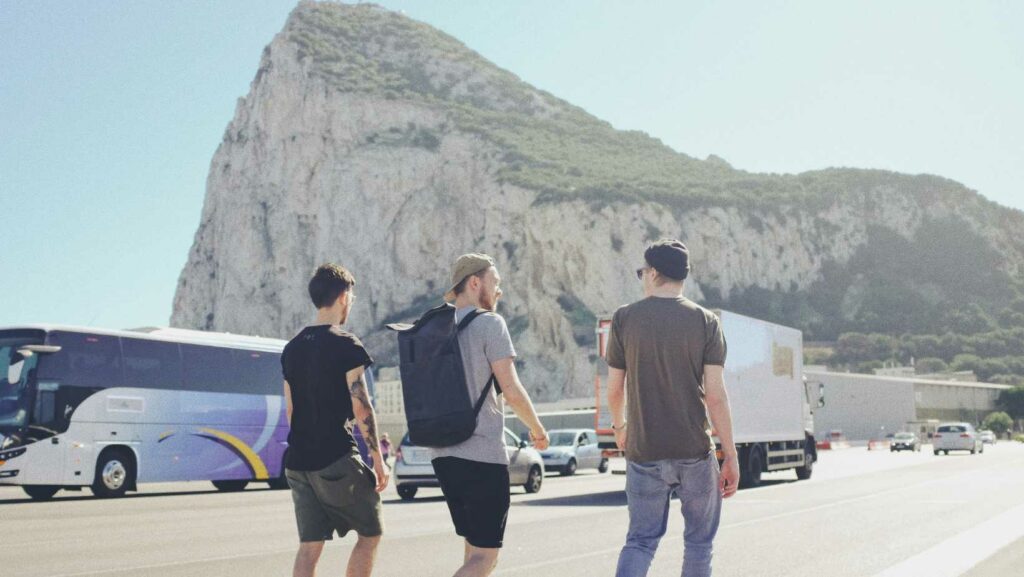
A curious fact that surprises everyone as soon as they cross over: to enter the city, you have to go through the airport runway itself. Winston Churchill Avenue literally cuts across the runway, so that when a flight is arriving or departing, a barrier stops traffic, just like at a level crossing. It is one of the few airports in the world where a major road crosses the active runway, and it is the first photo almost everyone takes. There is also an underpass to keep traffic flowing smoothly.
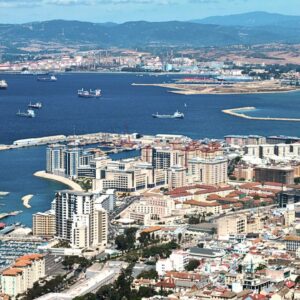
To give you a sense of where you are: once you’ve crossed the isthmus, on your left is the eastern face of the Rock, which drops almost vertically down to the sea, and straight ahead lies the city, which stretches along the western slope overlooking the Bay of Algeciras. You can see the whole of Gibraltar in a single walk: just over six square kilometres and some thirty thousand inhabitants, with English as the official language, plenty of Spanish spoken on the streets and the plain, the distinctive blend of the two.
Driving in Gibraltar isn’t the most practical option for a day trip: the streets in the city centre are narrow and parking spaces are limited and expensive. The most convenient option is leave your car in La Línea de la Concepción and cross on foot. Near the pass are the Santa Bárbara Car Park and the Western Beach Parking.
If you’d rather drive in, once you’re inside the area you’ll find the Midtown Car Park or the car parks at Wellington Front. Once you’re inside, it’s about a fifteen- to twenty-minute walk along a flat path from the border to the centre and the base of the Rock; there are also city buses, taxis and the Rock’s tourist minibuses.
If you don't want to worry about parking we recommend you:
The official currency is the Gibraltar pound (GIP), which is pegged to the pound sterling and equivalent to it, but is not valid outside the territory or in the United Kingdom. Many shops accept euros, although the exchange rate is not usually favourable and it is common for your change to be given in local pounds – the very ones that are then difficult to use.
The most practical thing to do is pay by card, which is accepted as standard on the cable car, at the attractions, in the shops and in the restaurants. If you need cash, please bear in mind that the ATMs in the area dispense pounds, not euros.
The plan for a day in Gibraltar is simple: first, head up to the top of the Rock, where you’ll find nature, viewpoints and the major historical attractions, and leave the town centre and shopping for last, as these are down below, near the border. That way, you avoid having to go up and down several times and make the most of the middle of the day at the top.
The first thing to do each day is to climb the Peñón, the limestone promontory of 426 metres which overlooks the bay. The upper part forms the Upper Rock Nature Reserve (Upper Rock Nature Reserve), a protected area with an admission charge that includes access to almost everything there is to see up there: San Miguel Cave, the historic tunnels, the viewing points, the castle and the monkey enclosure.
⚠️ Important notice: The cable car is closed since November 2025 for a comprehensive reconstruction, and It is not expected to reopen until 2027. Until then, these are the options available:
And here’s something worth knowing: Private vehicles are not allowed to enter the Nature Reserve. You can park down below, but you’ll have to find another way up.
Allow plenty of time: It used to take six minutes to get to the top, but now you have to allow a good two hours for the ascent.
You can find full details of each option in our guide on A step-by-step guide to climbing the Rock, and you can check the updated cable car fare and the different options — one-way, return, or combined with entry to the Reserve — before deciding how to get down.
As for opening hours, the cable car opens at 9:30 All year round. In summer, from 1 April to 30 September, the last ascent is at 7.15 pm and the last descent at 7.45 pm; in winter, from 1 October to 31 March, they are at 5.15 pm and 5.45 pm respectively. The service may be suspended due to bad weather, so it’s a good idea to check the forecast.
Avoid the queues for the cable car during the high season
In summer, the queues for the cable car can be long and take up time that could otherwise be spent sightseeing. Buying your ticket in advance or joining an organised tour, which includes transport and a guide, will save you from having to wait.
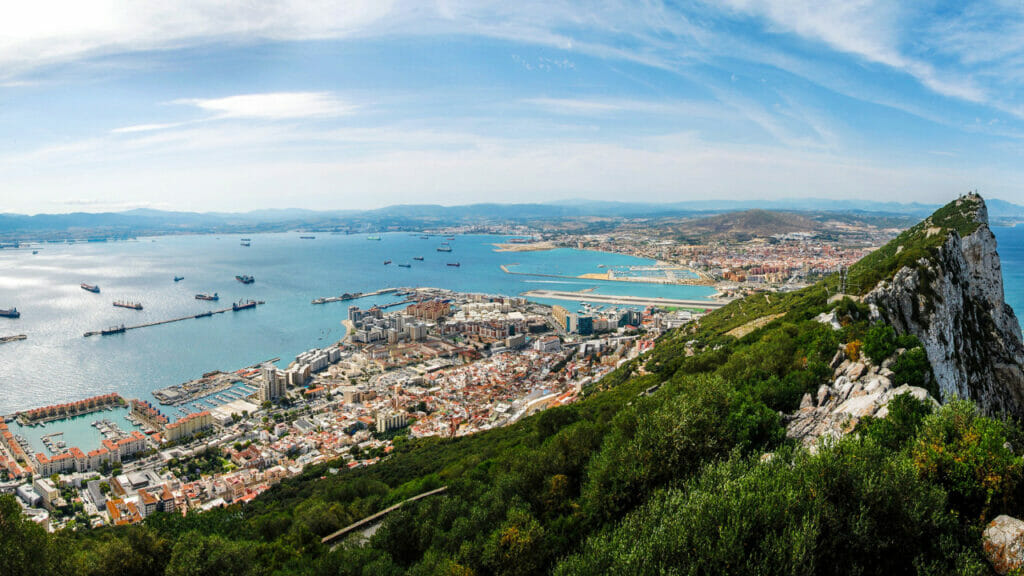
It is the most iconic and challenging route on the Rock. It starts on the eastern side, in the area known as Jews’ Gate, near the southern entrance to the Nature Reserve, where you’ll find the signpost for the footpath.
Avoid doing this during the middle of the day in summer. Once you reach the top, you can come down via a different route or take the cable car back.
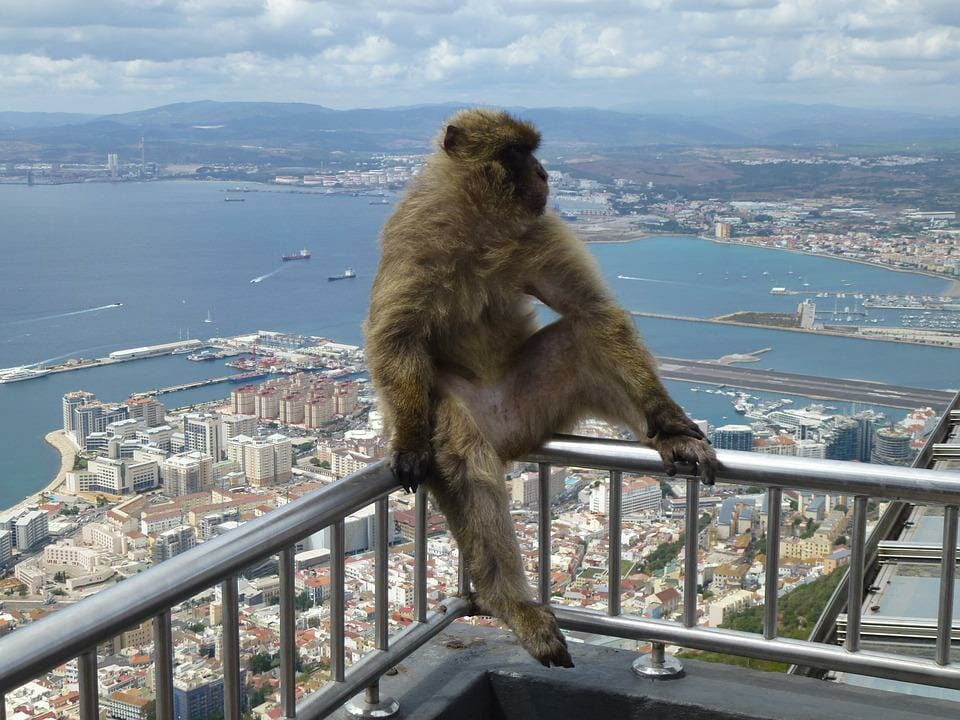
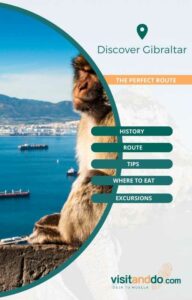
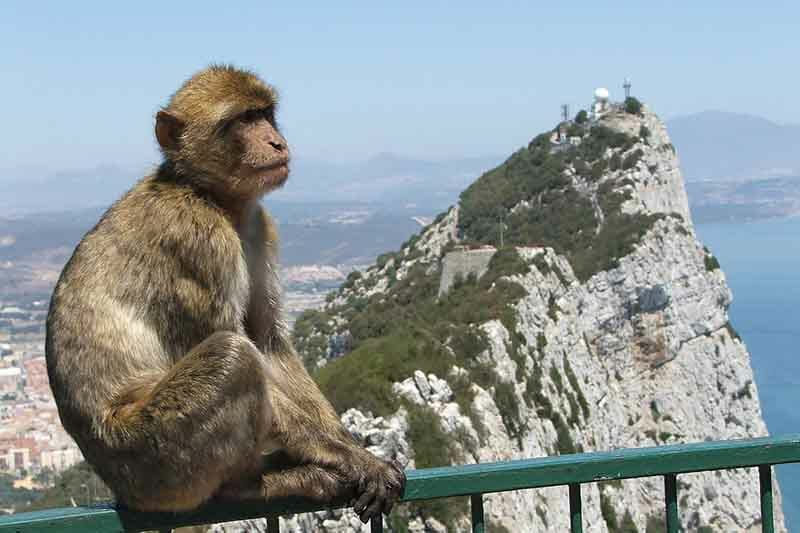
The monkeys are Gibraltar’s most recognisable symbol. They are Barbary macaques (Macaca sylvanus), the only free-ranging primate population in Europe, which lives in the upper part of the Rock within the Nature Reserve. It is estimated that there are around two hundred of them, divided into groups of between ten and forty individuals, with a well-defined hierarchy: the females remain in their natal group for life, whilst the males leave when they reach maturity.
Local legend has it that as long as there are monkeys on the Rock, Gibraltar will remain British – a story that explains why the authorities take such good care of them. The best places to spot them are the top station of the cable car and the nearby viewing points, particularly the Apes’ Den.
They are wild animals, and the rules are not just recommendations: they are the law.
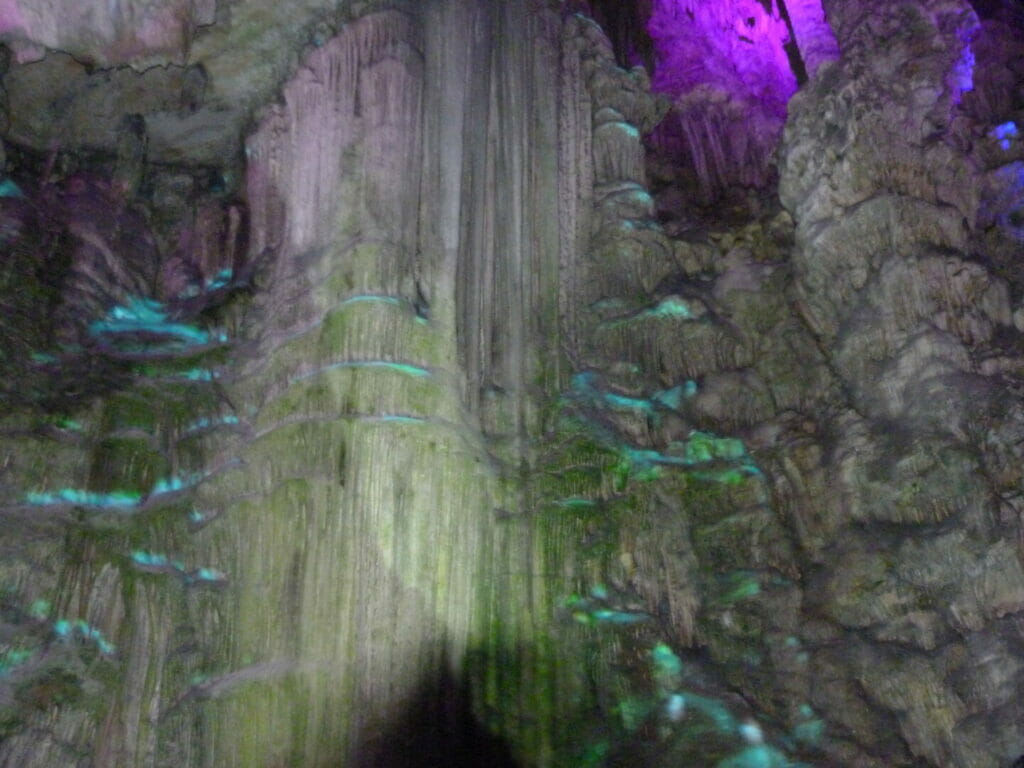
Situated more than 300 metres above sea level, it is an impressive limestone formation featuring stalactites and stalagmites created by water seeping through the rock over millennia. Its name is thought to derive from a similar cave on Mount Gargano in Italy.
Its main camera, the Cathedral Cave, has been fitted out as an auditorium thanks to its excellent natural acoustics and can accommodate up to 600 people at concerts and events. Known since prehistoric times, it has given rise to legends such as the belief that it is a gateway to the underworld, and during the Second World War it was fitted out as an emergency hospital, although it was never actually used for that purpose.
It is on St Michael’s Rd, GX11 1AA, and a visit is included in the Nature Reserve admission fee. It is open from 9.00 am to 6.00 pm in winter —last entry at 5.45 pm— and from 9.30 am to 7.00 pm in summer, with last admission at 6.45 pm.
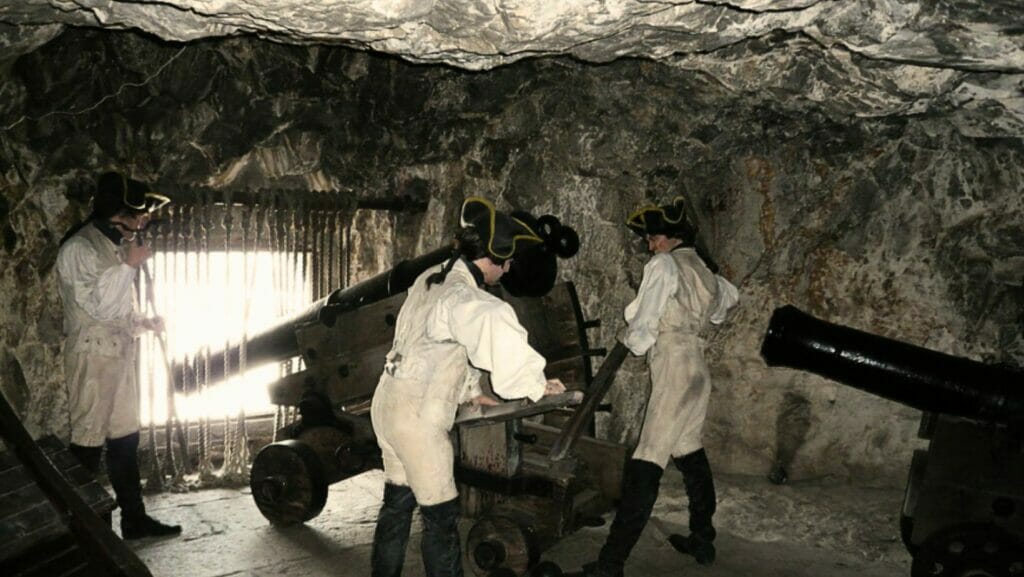
It is important not to confuse these two distinct systems, as they are the products of different eras and serve different purposes.
The Great Siege Tunnels (Great Siege Tunnels) were dug by British troops during the Great Siege of 1779-1783, when Spanish and French forces attempted to recapture the fortress. Hand-carved out of hard limestone, they include strategically positioned gun emplacements that allowed firing from protected positions, and today visitors can explore them whilst viewing displays detailing the history of the siege, complete with replicas of cannons and period uniforms. They are open from 9.00 to 18.00 and admission is included in the Reserve entry fee.
The World War II tunnels They form a much more extensive network — kilometres of tunnels — dug out in the 20th century to house troops, warehouses, water reservoirs, a power station and even hospitals inside the mountain, turning the Rock into a self-sufficient fortress.
Very close by, on the hillside overlooking the town, is the Castle of the Moors, a medieval fortress whose keep is a reminder of the region’s Al-Andalus past: the town was conquered in 711, and that is where its name comes from, Yabal Tariq, Tariq's mountain.
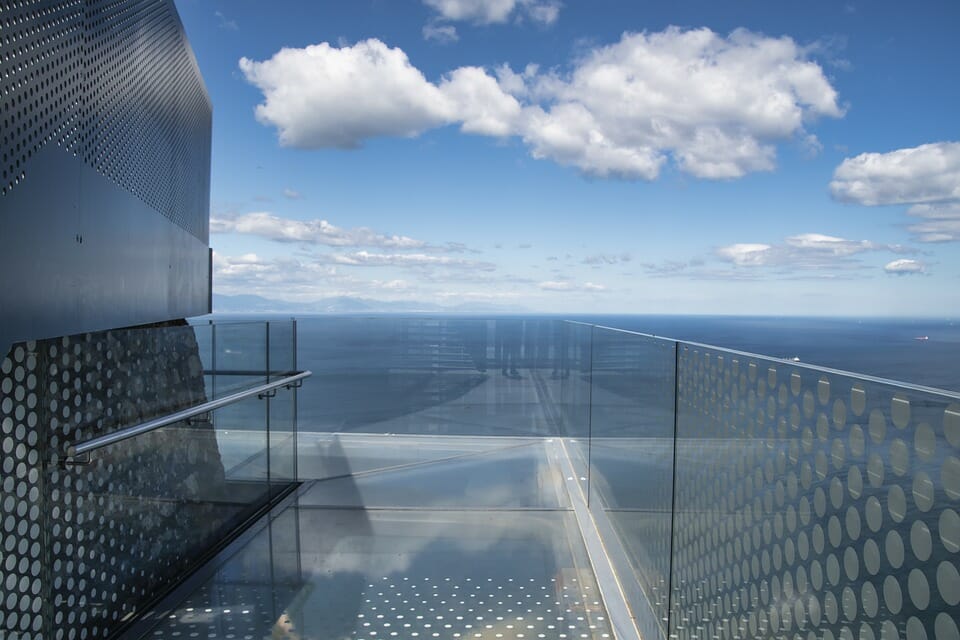
The Skywalk, which opened in 2018, is a glass-floored walkway suspended from 340 metres above sea level, with 360-degree views over the Bay of Algeciras, the Strait and, on clear days, the Moroccan coast. Standing on the glass with the void beneath your feet is a thrilling experience, and it is one of the most photographed spots on the Rock.
Just a few steps away is the O’Hara Viewpoint (O’Hara’s Battery), the highest point open to the public, featuring a large coastal artillery emplacement and views stretching from the Mediterranean to the Atlantic. It is usually less crowded than the Skywalk.
To link the upper area on foot, the Windsor Suspension Bridge (Windsor Suspension Bridge), a footbridge 71 metres which crosses a ravine with views of the bay as you walk across. And don’t miss the Pillars of Hercules, the viewpoint marking the entrance to the Strait, with a plaque explaining its historical significance.
If you want to take your time planning everything listed above and in what order, we have a guide focusing on What to see inside the Rock and the Nature Reserve.
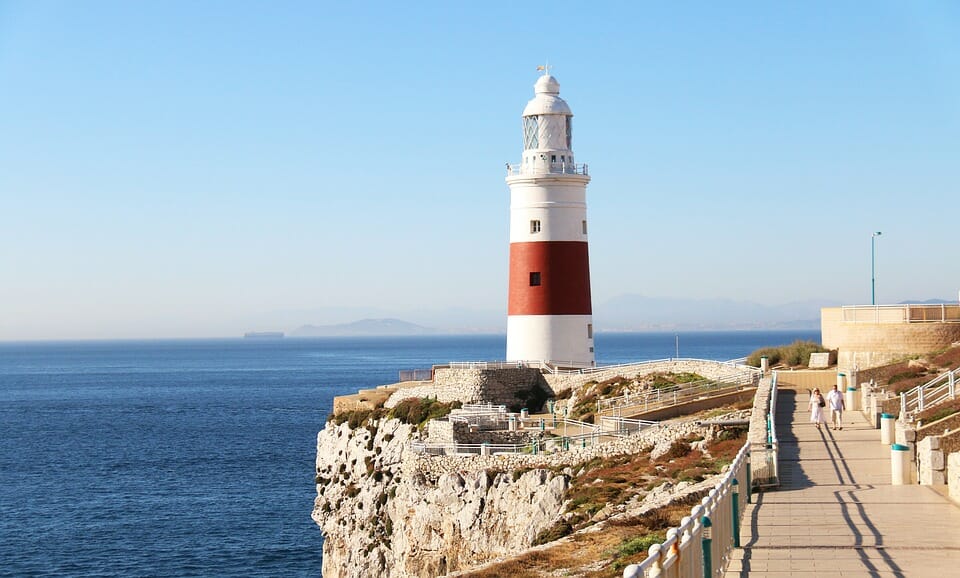
At the southernmost point of Gibraltar, right at sea level, Europa Point offers a direct view of the African continent, just fourteen kilometres across the Strait, right where the Mediterranean meets the Atlantic. There, three buildings stand side by side, encapsulating the diversity of the territory:
You can get there by city bus from the city centre or as part of the guided tour of the Rock.
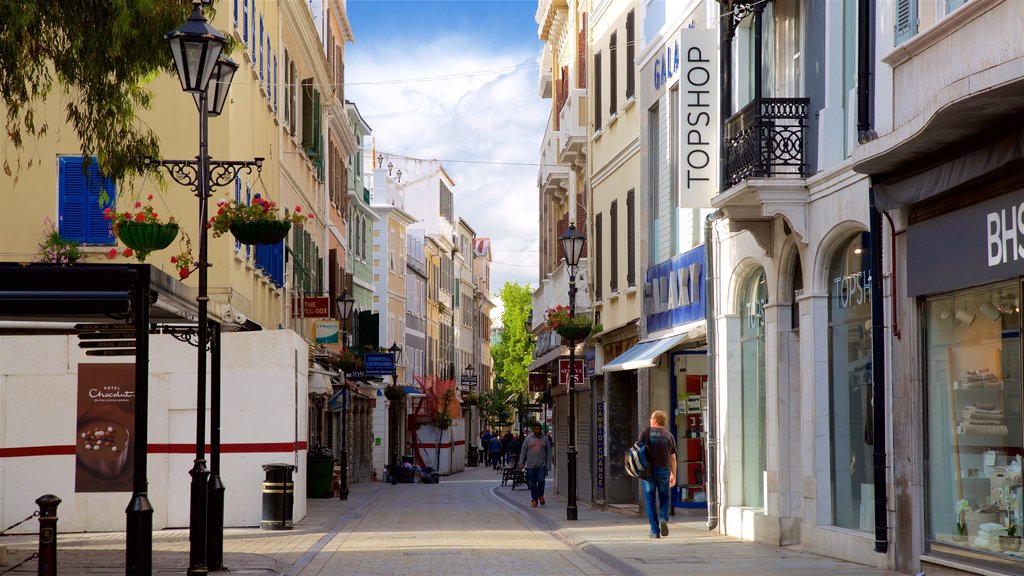
After coming down from the Rock, the route continues along Main Street, the main shopping street. It is a pedestrianised street with an unmistakably British feel, featuring colonial-style buildings, wrought-iron balconies, red postboxes, pubs and cafés, which runs through the town centre from one end to the other. Along this street are the Anglican cathedral and the Catholic cathedral of Santa María la Coronada, and it leads to Casemates Square, the large square next to the border, which serves as the social heart of the town centre.
When it comes to shopping, it is worth setting the record straight on a widely held belief: Gibraltar It has never been subject to VAT and still isn’t, but From 2026, a transaction tax of 15 % will apply Under the agreement with the European Union, which has narrowed the price gap with Spain. There are still some attractive categories — perfumes, sunglasses, glassware — but not everything is cheaper any more, and it is worth comparing products on a case-by-case basis. Furthermore, excise duties on tobacco and alcohol are converging with those in Spain. We explain this in detail in our guide on What to buy in Gibraltar.
Near the centre, there are two spots well worth a visit if you have time to spare: the Alameda Botanical Gardens, next to the cable car’s lower station, with Mediterranean and subtropical vegetation and shaded footpaths; and the area around the Marina and Ocean Village, a modern marina with restaurants and terraces overlooking the water.
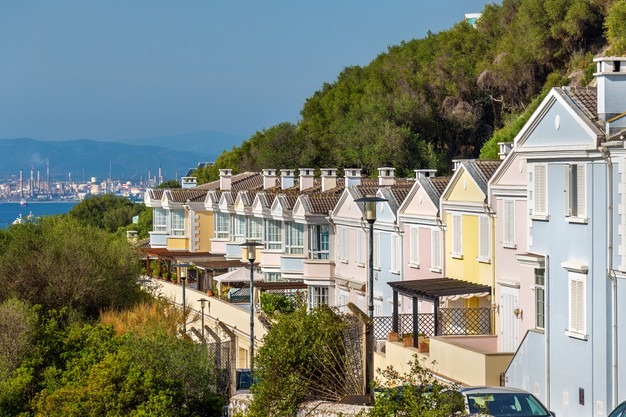
Although Gibraltar is best known for its Rock, it also has beaches where you can relax by the sea:
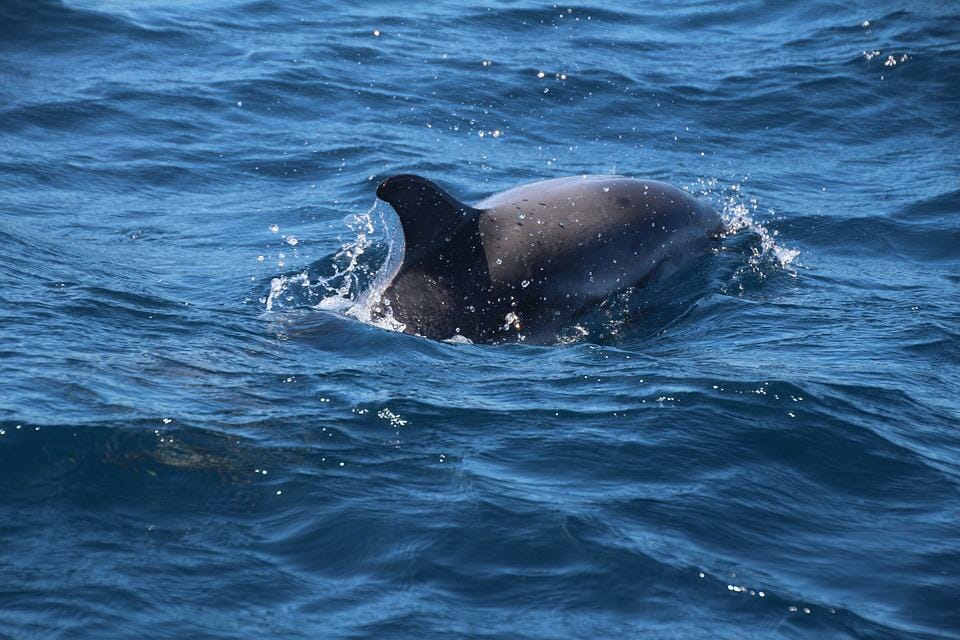
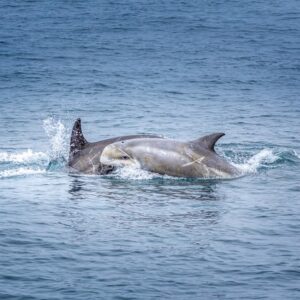
Gibraltar Bay is one of the places in Europe where it is easiest to spot dolphins in the wild. The Strait has been designated UNESCO World Biosphere Reserve, and where the Mediterranean meets the Atlantic, currents particularly rich in food are created: common dolphins, bottlenose dolphins and striped dolphins live here all year round.
The trips depart from the Marina area and last between one hour and an hour and a half, with an open-air deck for sightseeing and commentary from the crew. It is an activity suitable for all ages and offers a chance to see the Rock from the sea – a completely different perspective. You can book the boat trip with dolphin spotting.
To fit it into a full day, a midday or early afternoon trip works well before heading into the city centre. Bear in mind that it depends on sea conditions — on days with strong easterly winds, the trip may be cancelled — and that, as these are wild animals, no company can guarantee a sighting 100 per cent of the time, although the success rate is high.
The local cuisine blends British traditions — fish and chips, pubs serving draught beer, and English breakfast — with the Mediterranean cuisine of the Campo de Gibraltar. Here are a few examples:
And very close by, in La Línea de la Concepción, is El Rincón de Juan - The Wine Bar, serving Mediterranean cuisine and offering a good selection of wines. You’ll find more options in our guide to Where to eat in Gibraltar.
As for the best time of year, Gibraltar can be visited all year round thanks to its mild climate, but spring and autumn offer the most comfortable conditions, with temperatures ranging from 17 to 24 degrees and fewer visitors. In July and August, the heat on the south-facing side is intense and more cruise ships arrive; the winter is mild but can bring days of strong easterly winds that reduce visibility towards Africa and affect boat trips. A clear day makes the viewpoints all the more worthwhile.
If you’re thinking of staying the night, within the area you’ll find the Sunborn Gibraltar —a floating hotel and casino in Ocean Village—, The Rock Hotel colonial-style with views of the bay, The Eliott Hotel with a rooftop swimming pool and the Holiday Inn Express as the most economical option. Staying in La Línea is usually cheaper, although this means having to cross the border every day.
And one final organisational tip, which is what really makes the day run smoothly: plan the route from top to bottom. Start by heading up to the Rock, where you can visit the cave, the tunnels, the viewpoints, the castle and the monkeys, and save the town centre, lunch and shopping for the final stretch.
If you’ve got time to spare or come back another day, there’s plenty more to see in the area. You could head over to Algeciras, on the other side of the bay, or cross the Strait on a One-day trip to Morocco from Algeciras and Gibraltar.
Yes. Gibraltar is a small territory and its main attractions are concentrated on the Rock and in the centre, so a well-organised day out allows you to climb the Rock, see the monkeys, visit St Michael’s Cave, explore the tunnels and stroll down Main Street. The key is to start early, plan your route from top to bottom and leave the shopping until last. If you want to take it at a more leisurely pace or add activities such as dolphin watching, two days are more comfortable.
Not any more. Since 15 July 2026, there have been no border controls for travellers at the border crossing between La Línea de la Concepción and Gibraltar, following the agreement between the European Union and the United Kingdom. As a result, traffic flows smoothly and the legendary queues at ‘La Verja’ have disappeared. Even so, it is advisable to carry a valid national identity card or passport, and checks are still in place if you enter via the port or the airport.
The official currency is the Gibraltar pound, which is equivalent to the pound sterling but is not valid outside the territory. Many shops accept euros, although the exchange rate they apply is not usually favourable and it is common to receive change in local pounds. The most convenient way to pay is by card, which is widely accepted at attractions, shops and restaurants.
Barbary macaques live in the wild on the upper part of the Rock, within the Nature Reserve. The best places to spot them are the top station of the cable car and nearby viewing points, such as Apes’ Den. Do not touch them or feed them: feeding them can result in fines of up to £4,000 and, since 2020, touching them has been a criminal offence in Gibraltar.
The Rock rises to 426 metres above sea level. The upper part forms the Rock Nature Reserve, which charges an entrance fee; visitors can reach the top by cable car in around six minutes, on foot via the Mediterranean Steps, or by official tourist minibuses. The highest viewing point open to the public is O’Hara’s Battery, and the Skywalk is at 340 metres.