Plaza de la Constitución is Málaga’s most central public space and one of the landmarks of the old town. It is situated at the start of Calle Marqués de Larios, in the heart of the historic centre, and has served as the city’s meeting place for centuries. Given its location and the pedestrian streets that converge on it, it is virtually impossible to walk through the centre of Málaga without passing through this square.
More than just a simple crossroads, the square is the hub of much of Málaga’s public life: markets, proclamations and festivals have been held here throughout history, and today it continues to host events, concerts and celebrations all year round. To situate it within the Old Town as a whole and understand the historical context of every corner without worrying about the logistics, you can explore it with a guided tour of Málaga which requires a visit to the centre.
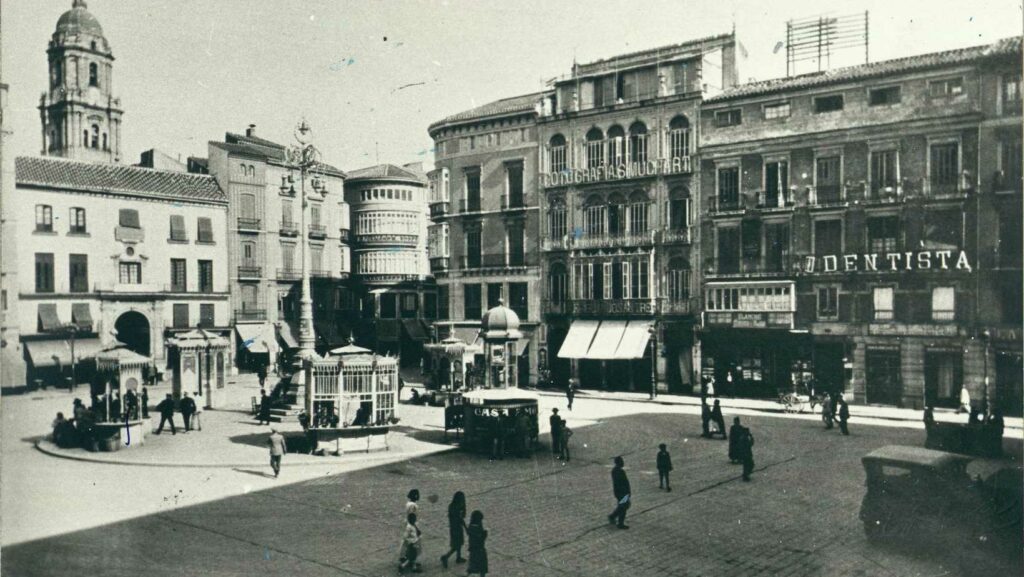
The Plaza de la Constitución has been the heart of Málaga since the period following the Christian conquest of the city in the 15th century. It was originally known as Plaza Mayor or the Plaza Pública, where government institutions, markets and the main communal events of Malaga’s public life were established. Its administrative and social role soon made it the focal point of the town centre.
Over the centuries, the square has changed its name several times, reflecting the country’s political ups and downs. Its current name pays tribute to the Constitution of 1812, Spain’s first Constitution, which was promulgated in Cádiz, and was definitively consolidated in the 20th century. Throughout this period, the square continued to serve as a meeting place and a venue for the city’s major celebrations.
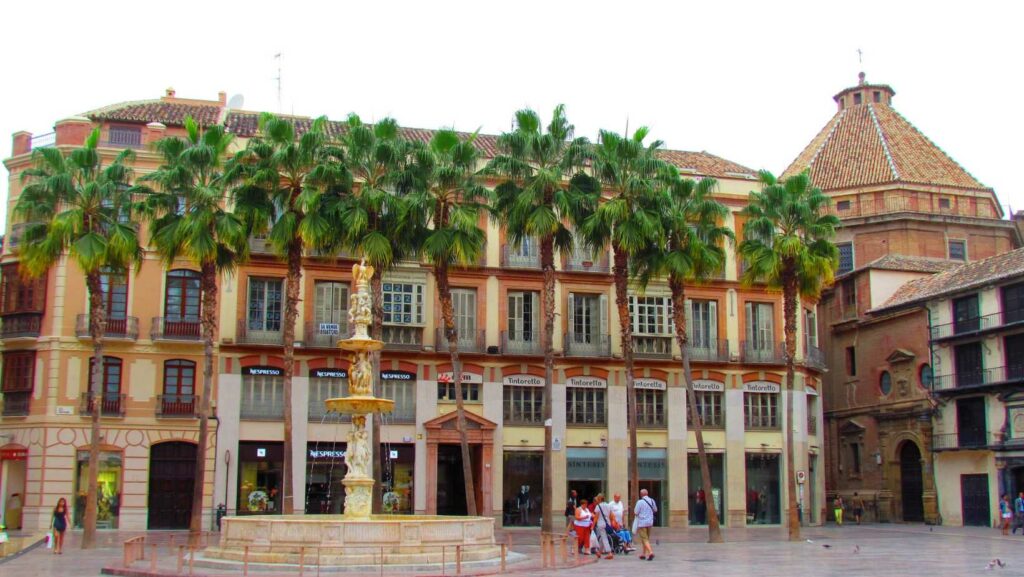
The square’s current appearance is the result of successive renovations. The pedestrianisation of the historic centre and the regeneration of the surrounding area have transformed it into a peaceful space, dominated by the Fuente de Génova fountain and surrounded by historic buildings. This transformation has reinforced its role as Málaga’s grand urban square, directly connected to Calle Larios and the network of narrow streets in the old town.
It only takes a few minutes to walk around the square, but it’s well worth stopping to take in the whole scene: the fountain at its centre, the façades surrounding it and the streets that branch off from it. These are the sights you shouldn’t miss.
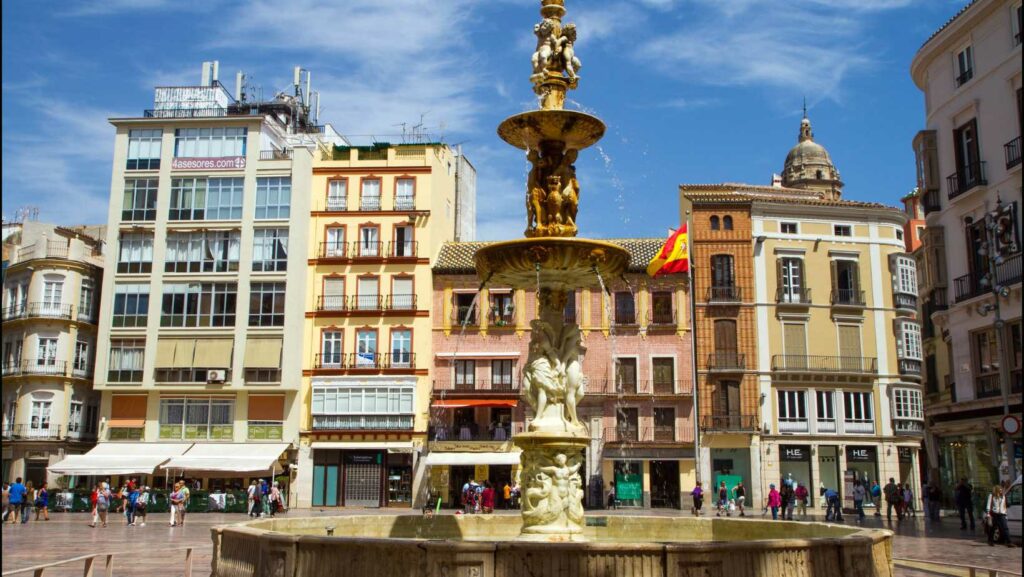
The most recognisable feature of the square is the Genoa Fountain, also known as the Fountain of the Three Graces. It is an Italian Renaissance-style marble fountain dating from the 16th century, decorated with mythological figures and classical motifs, and one of the oldest surviving examples in the city.
It has been situated in various locations around Málaga throughout its history before finally settling in the centre of the square, where it has become one of the square’s symbols and a meeting point for people in the city centre.
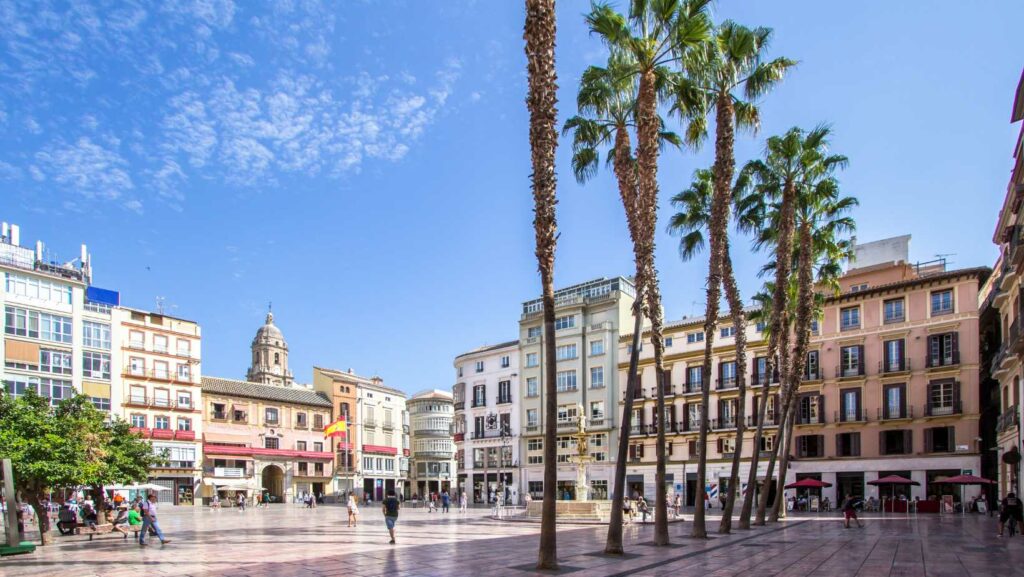
The square is surrounded by buildings of interest that reflect different periods in the history of Málaga city centre. The most notable is the former building of the Consulate, now the headquarters of the Royal Economic Society of Friends of the Country, in the building which for centuries housed the city’s governing bodies, including the former Town Hall.
This is complemented by stately homes and the façades of houses and shops with wrought-iron balconies, which preserve the atmosphere of the historic centre. The ensemble offers a coherent overview of Málaga’s civil architecture and frames the square with a pleasing sense of uniformity.
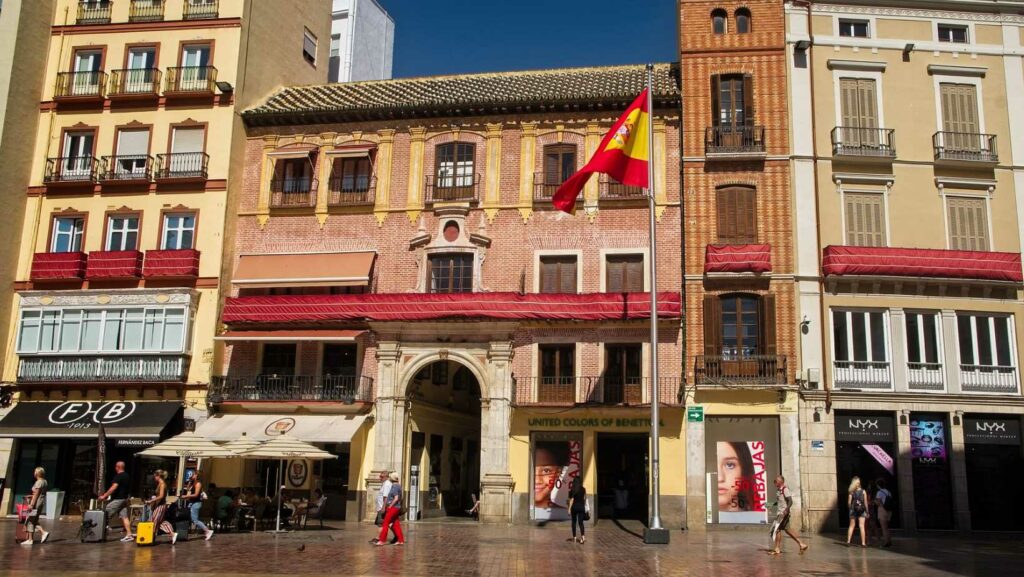
From one side of the square, you can access the Chinitas Passage, one of the most historic spots in the city centre. It was home to the famous café-concert El Chinitas, a flamenco singing and dancing venue that was a landmark of Málaga’s bohemian life, a meeting place for poets and artists, and which even inspired verses by Federico García Lorca.
Today, the street retains its working-class atmosphere, with traditional taverns and shops keeping its heritage alive. It’s a one-minute detour that offers a completely different perspective from the square.
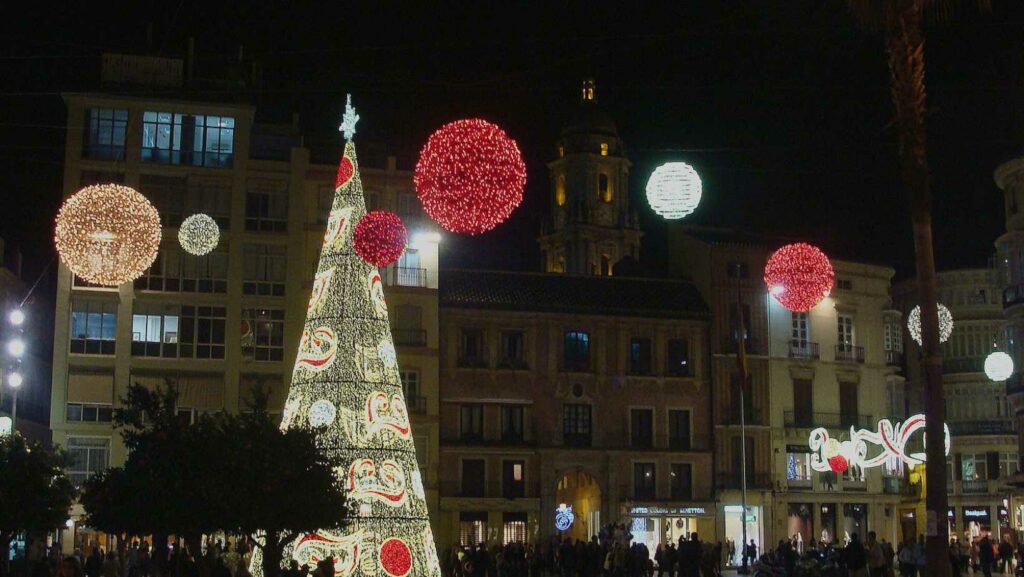
The square is one of the regular venues for cultural life in Málaga. During the Easter It forms part of the official route and is a mandatory stop for all the brotherhoods. In August, with the Malaga Fair, is filled with live music during the daytime fair. And in December, it is one of the main venues for the Christmas lights and the markets in Christmas in Málaga.
Throughout the year, it also hosts concerts, official events and celebrations, which help to maintain its role as a meeting place for the city.
Getting to the Plaza de la Constitución is easy, as it is situated right in the heart of Málaga’s pedestrianised centre and just a few minutes’ walk from Calle Larios, the Cathedral and the Picasso Museum. Here are the options:
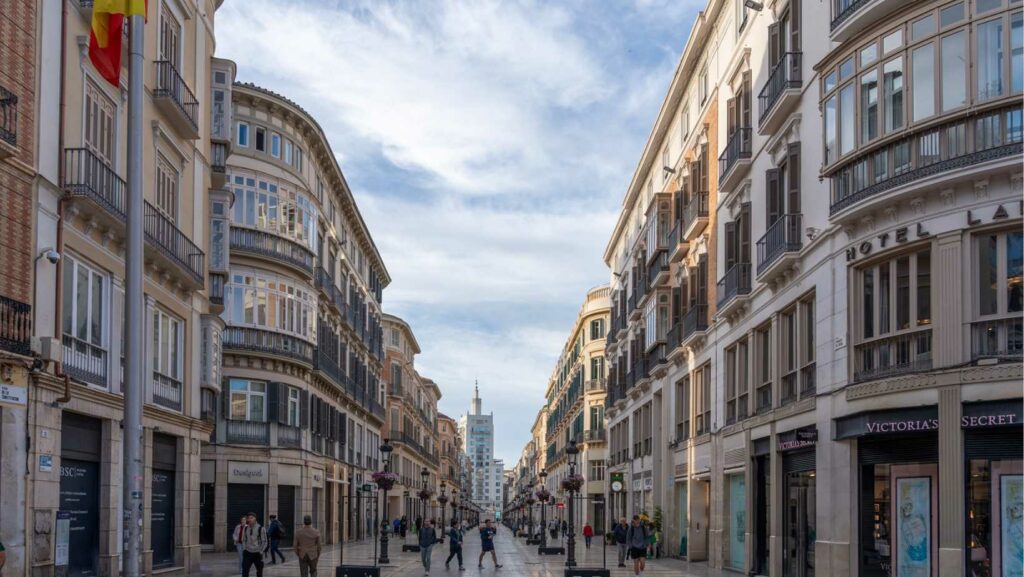
The square is the best starting point for exploring the centre of Málaga, as it provides direct access to its main attractions. The most obvious one is Marqués de Larios Street, the main shopping and pedestrian street that starts at the square and runs through the old town towards the Alameda and the harbour.
Just a few minutes’ walk away are Málaga Cathedral, known as ‘La Manquita’, the area around the Alcazaba and the Roman Theatre, and the Central Market of Atarazanas, as well as a network of pedestrianised streets lined with tapas bars, cosy squares and traditional shops.
The square is also a good place to stop for a bite to eat: there are restaurants and outdoor terraces in the surrounding area where you can try local specialities, from grilled sardines to gazpachuelo from Malaga, including classic tapas.
The Plaza de la Constitución fits naturally into any tour of the city centre, and if you’d like to extend your visit to the province, all our excursions from Malaga they leave from the pick-up point at the 10 Avenida de Andalucía, a short distance from the city centre:
Every excursion includes comfortable transport and the option of a guided tour. And if you’d like to get a comprehensive overview of the city before you leave, you can check out our guide to What to see in Málaga in 3 days.
No, visiting the Plaza de la Constitución is completely free. It is an open-air public space, open 24 hours a day and situated right in the heart of Málaga’s pedestrianised centre, where you can stroll freely at any time. It also costs nothing to visit the Fuente de Génova or explore the passageways leading off from it.
The square is in Málaga’s pedestrianised centre, at the start of Calle Marqués de Larios, so the easiest way to get there is on foot from the old town or from the Alameda Principal. By public transport, Atarazanas metro station is 5–10 minutes away, and bus routes 1, 3, 7, 11, 16 and 19 have stops nearby. If you’re coming by car, you should use the nearby car parks, such as the one at Plaza de la Marina or the Alcazaba car park.
The highlight is the Fuente de Génova, also known as the Fuente de las Tres Gracias, which dominates the square. Surrounding it are historic buildings such as the former Consulate, and the square provides access to the Pasaje de Chinitas, associated with flamenco and the memory of the café cantante that inspired García Lorca. It is also the starting point of Calle Larios and an ideal base from which to explore the historic centre.
The name pays tribute to the 1812 Constitution, Spain’s first constitution, which was promulgated in Cádiz. It was previously known as the Plaza Mayor or Plaza Pública, and throughout the 19th century its name changed several times in line with the country’s political upheavals, until the current name was definitively established in the 20th century.