The Cádiz Carnival is the city’s best-known festival and one of the carnival celebrations in Spain with the strongest sense of identity. It has been declared Festival of International Tourist Interest and it stands out from other carnivals due to the prominence of popular music and satire: for several weeks, the carnival groups —chirigotas, comparsas, choirs, quartets and romanceros— perform songs containing social, political and topical criticism, both on stage at the Gran Teatro Falla and in the streets of the old town. More than just a fancy-dress parade, it is a cultural festival with a tradition of creativity and wit that defines the character of Cádiz.
The next edition will take place from Thursday 4 to Sunday 14 February 2027. In this guide, we look at what the Carnival is all about, the full 2027 programme, how the groups and the Falla Competition work, how to get tickets, what the festivities are like on the streets, and what else is worth knowing about Cádiz if you’re planning a visit.
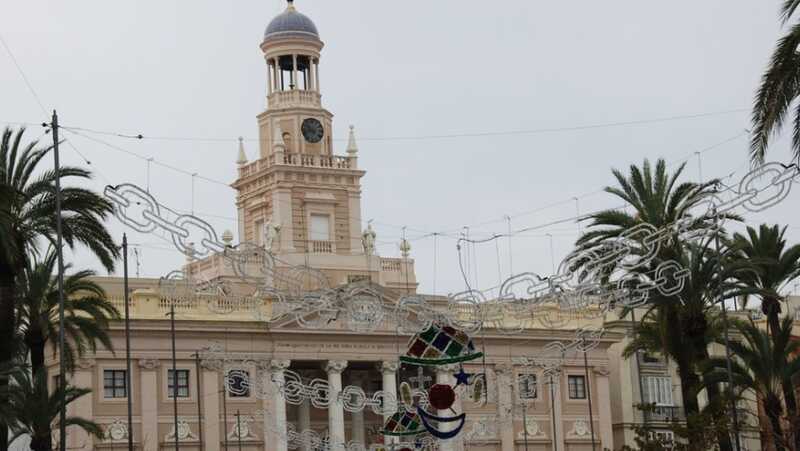
The Cádiz Carnival is held on a variable date, as it depends on the calendar leading up to Lent and changes every year. The The 2027 edition takes place from Thursday 4 to Sunday 14 February: eleven days of street celebrations spanning two full weekends – the busiest in the old town.
But Carnival begins much earlier at the Gran Teatro Falla. The Official Carnival Groups Competition (COAC) The 8 January 2027 and lasts for almost a month. January is the month of the Falla; February is the month when the Carnival takes to the streets.
These are the key dates confirmed by Cádiz City Council:
It is advisable to check the final programme with the local authorities before finalising your travel and accommodation arrangements, as the schedule is subject to change each season. And a practical tip: accommodation in Cádiz sells out well in advance for the two major weekends.
The Cádiz Carnival is a popular celebration with festive and satirical roots, centred on the city’s historic centre. Its defining feature is the carnival troupe: groups of people who compose and sing their own repertoire each year, combining humour, social commentary and references to current affairs. This combination of music, witty lyrics and mass participation in the streets sets it apart from other forms of carnival centred solely on dance troupes or fancy dress.
And there is one key difference compared with other major festivals: The street carnival is free. You don’t need a ticket or an invitation to experience it. Only the Falla competition requires a ticket.
The Cádiz Carnival has its roots in the festivities of the 16th and 17th centuries, when the city was one of Europe’s busiest trading ports and maintained close ties with Italy, particularly with Genoa. This Mediterranean influence, combined with the open-minded nature of a port city, gradually gave rise to a tradition of masks, folk songs and mockery.
The festival survived even the periods when it was banned, and over time evolved into the model of groups that we know today, in which the content of the lyrics is just as important as the stage performance. That resilience is part of its identity: in Cádiz, Carnival is seen as an exercise in freedom of expression.
The Cádiz Carnival has been designated a Festival of International Tourist Interest, the highest accolade awarded by the Spanish tourism authorities to a popular celebration. This distinction attests to its cultural significance, its deep historical roots and its ability to attract visitors, and places the Cádiz Carnival amongst the major festivals on the Spanish calendar alongside other events of international renown.
You may also be interested in:
At the heart of the Cádiz Carnival are its groups, which are divided into four main categories, each with its own distinct style, in addition to the ‘romanceros’:
Each group puts together a new repertoire every year — a performance, pasodobles, cuplés and a medley — which makes Carnival a festival of constant creativity.
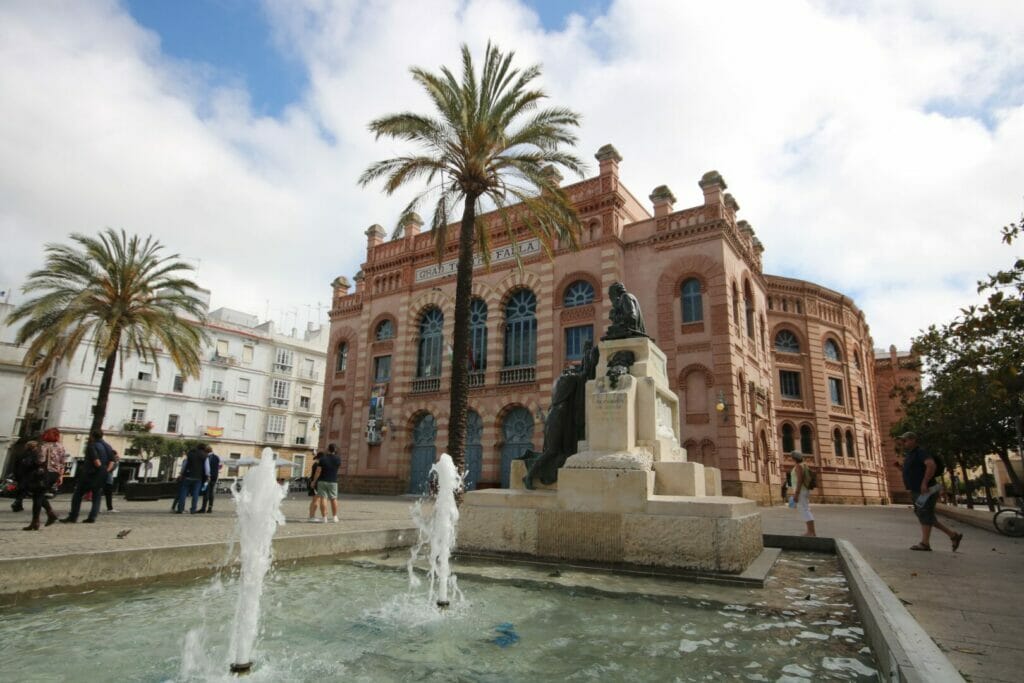
The Official Carnival Groups Competition (COAC) It is the competition in which the groups perform their repertoire before a jury and the audience. It takes place at the Gran Teatro Falla, the Carnival’s most iconic venue, and is held in stages — heats, quarter-finals, semi-finals and the Grand Final — over several weeks leading up to the street celebrations.
The groups perform folk songs on a variety of themes that reflect the social criticism, satire and humour characteristic of the festival. The Falla Grand Final, on Friday 5 February 2027, is one of the most eagerly anticipated moments of the entire Carnival, with a televised broadcast and huge anticipation to find out which groups have won prizes in each category.
Online tickets. They are purchased via the official platform Bacantix, where you need to register in advance. Tickets are registered, so you’ll need the ID card details of each attendee. Demand is extremely high and tickets sell out in minutes, so it’s a good idea to keep an eye on the sale dates and log on promptly.
Tickets at the box office. They are also sold in the box office at the Gran Teatro Falla, which usually open from 10.00 am on market days. The limit is two tickets per person per performance, and you must present your national identity card at the time of purchase.
Please bear in mind that the competition sessions are long: evenings at the Falla Theatre last several hours, with eight groups performing per session in the later stages.
Alongside the Falla competition, the Cádiz Carnival has an equally important street dimension. During the main days of the festival, the old town is filled with people in fancy dress and groups putting on spontaneous performances: these are the street chirigotas and the «illegals» – groups that do not take part in the official competition but sing in the city’s squares and nooks and crannies, often with the sharpest lyrics of the whole Carnival.
Added to this atmosphere are the two horse rides —the first and last Sundays—, the chorus carousels parades, the Burning of the God Momo and, to round off the festivities, the Burning of the Witch Piti. The Choir Mondays It’s a local bank holiday, so the city takes to the streets on a weekday.
The heart of the street party is the old town, and in particular the La Viña neighbourhood, the birthplace of much of the carnival tradition. The Plaza del Mentidero, the Plaza de las Flores, the Plaza de la Catedral, the area around the central market and the streets of La Viña are where the atmosphere is at its liveliest. The Baluarte de la Candelaria and the seafront promenades also host events and concerts.
To experience the festival, the Gran Teatro Falla is the place to go; to experience the street atmosphere, simply wander through the historic centre during the two main weekends, when the groups perform continuously in the open air.
Forget about the car: parking in Cádiz during Carnival is practically impossible, and traffic in the old town is heavily restricted. The alternatives that work are the commuter train, which allows for special opening hours throughout the night on major weekends; the bus, with the station just a few minutes’ walk from the Town Hall; and the catamaran from El Puerto de Santa María or Rota, which is also the most picturesque way to enter the city if the sea is calm.
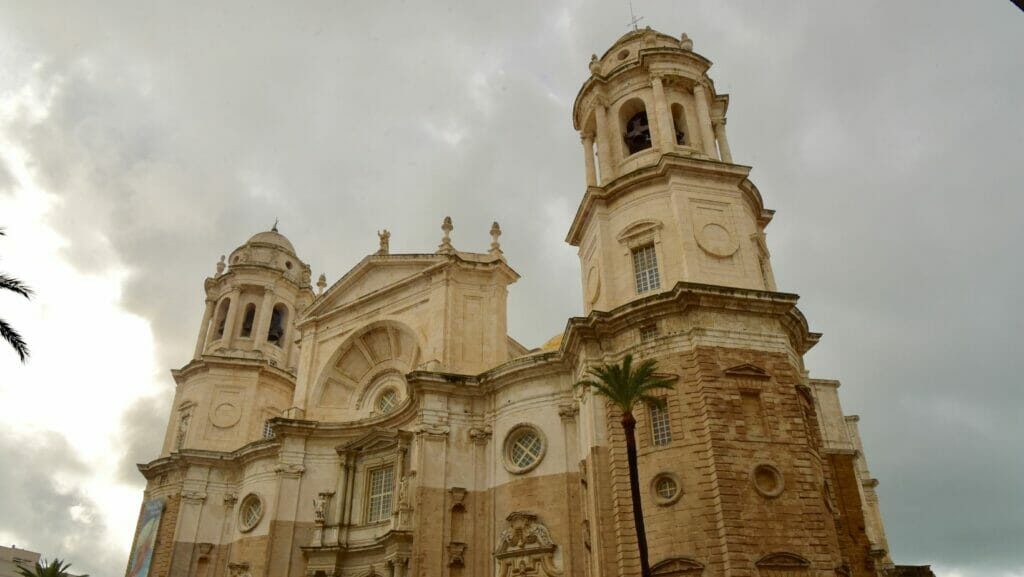
Cádiz is a city to enjoy all year round, not just during Carnival. Its status as one of the oldest continuously inhabited cities in Western Europe, its old town enclosed by walls and surrounded by the sea, its city beaches and its cuisine make it a well-rounded destination.
If you’re planning your visit, we recommend having a look at our guide to What to see in Cádiz to organise the rest of the stay, as well as a few Interesting facts about Cádiz which help us to understand the character of the city and, by extension, that of its Carnival.
If, as well as the Carnival, you fancy exploring the rest of Andalusia, here are some of the day trips you can go on by yourself at any time of year:
The 2027 Cádiz Carnival takes place from Thursday 4 to Sunday 14 February, with eleven days of street celebrations spanning two weekends. The competition at the Gran Teatro Falla begins earlier, on 8 January, with the Grand Final taking place on Friday 5 February. As the dates of the festival vary depending on Lent, it is advisable to check the City Council’s official programme before finalising your travel arrangements.
The Cádiz Carnival is the city’s best-known festival and has been declared a Festival of International Tourist Interest. Its defining feature is the prominence of folk music and satire: the carnival groups —chirigotas, comparsas, choirs, quartets and romanceros— perform lyrics that offer social and topical criticism, both at the Gran Teatro Falla and in the streets of the old town. It is, above all, a cultural event centred on creativity and wit.
Tickets for the competition can be purchased online via the official Bacantix platform, following registration, or at the box office of the Gran Teatro Falla, which opens at 10.00 am on days when tickets are on sale. Tickets are named and require each attendee’s ID card; a maximum of two tickets per person per performance is permitted. They sell out very quickly, so it’s a good idea to keep an eye on the sale dates.
Chirigotas are groups with a humorous and satirical tone, featuring witty lyrics and costumes that reinforce the joke; they are the most popular form of the Carnival. The comparsas have a more serious and lyrical character, with polished vocals and elaborate musical arrangements, and approach their criticism from a more poetic angle. Both groups put together a new repertoire every year.
No. The Street Carnival is free and open to everyone: the street chirigotas, the parades, the choir processions and the atmosphere in the old town do not require a ticket. You only have to pay to attend the official competition sessions at the Gran Teatro Falla.
The heart of the street festivities is the old town, and in particular the La Viña neighbourhood, the birthplace of much of the carnival tradition. Squares such as El Mentidero, Las Flores and La Catedral are where the atmosphere is at its most intense during the two main weekends, when the groups perform continuously in the open air.