No, the Caminito del Rey isn’t dangerous. It was, and that’s why it has that reputation, but the route taken today It has nothing to do with the person who gave it that name.
Here’s where the myth comes from, what the actual risk is, and the two things you really should bear in mind.
Its notoriety stems from a specific and tragic event: the deaths of four hikers between 1999 and 2000.
The original path, built in the early 20th century, had been abandoned for decades. Entire sections of the concrete had crumbled away, there were no railings left, and yet there were still people crossing it on their own, clinging to the steel bar on the wall.
The most memorable accident It involved three residents of El Chorro who attempted to cross the gorge on a zip line all the way to the railway line on the other side. The cable couldn’t bear the weight of the three of them and snapped.
After that the passage was blocked, and it remained that way for over a decade.
Four years of building work and a completely new catwalk:
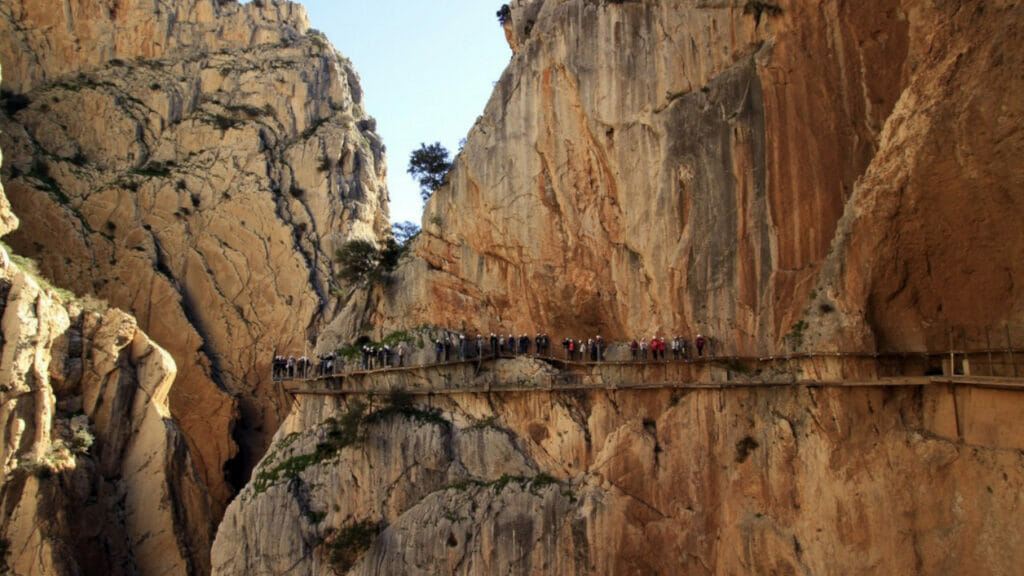
A detail you might notice as you walk past: on The old concrete path is still there, just below of the new footbridge, which can be seen from various vantage points. It’s well worth taking a look: it’s the best way to understand why it had the reputation it did.
The full story, at The origins of the Caminito del Rey.
It is worth making this clear, because the opposite is often implied: The Caminito del Rey is low difficulty. The elevation gain is minimal, the distance isn’t great, and there are no sections requiring technical skills.
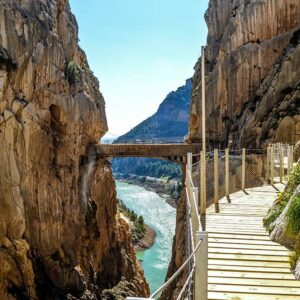
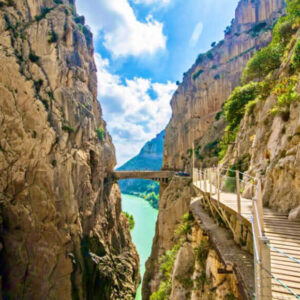
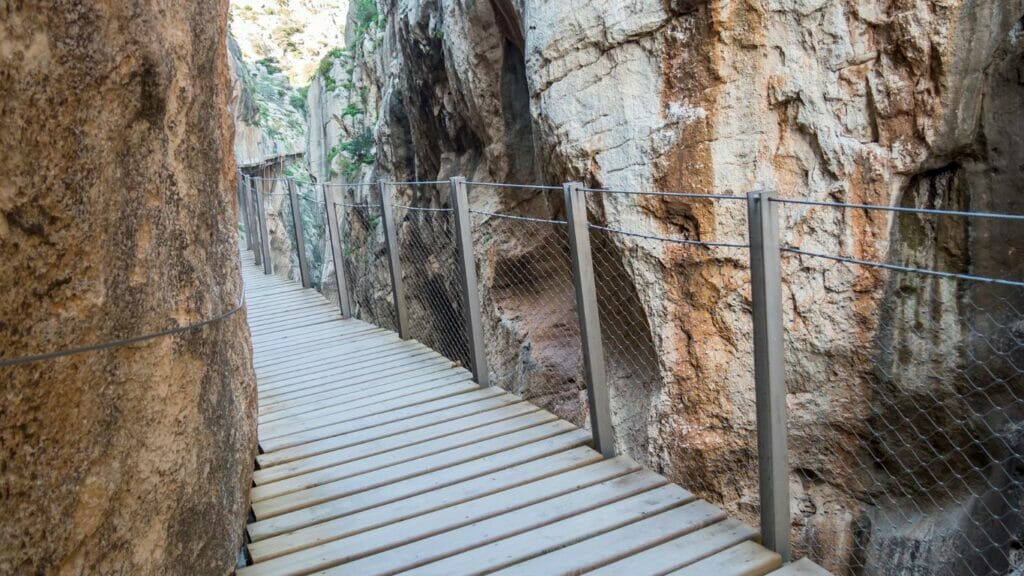
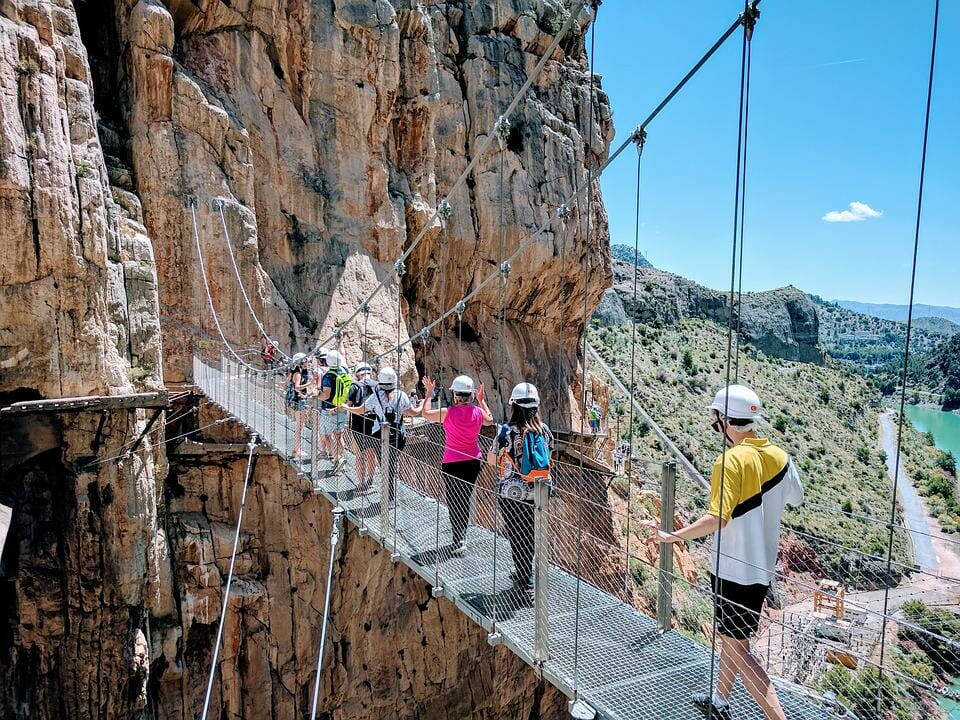
What isn’t mild is the vertigo. The footbridges have sections of barely a metre wide and the suspension bridge spans the gorge at 105 metres above the river. The canyon walls reach a height of 400 metres and at the narrowest points there are ten metres from one to the other.
It’s protected, but you can see the gap. If that affects you, in What to see at the Caminito del Rey You’ll find details of each section so you know what to expect.
For mild or moderate vertigo, yes. The walkways are sturdy, have handrails and you can walk at your own pace. The trick is look at the catwalk, not down, and do not stop on exposed sections.
If you are experiencing severe vertigo, seek medical advice. There are a glass-enclosed platform with the void beneath your feet, and the suspension bridge is truly impressive. And there’s no turning back: Once you’re inside, you come out at the other end.
It’s done in moderate rain. The organisation closes when there is torrential rain, strong winds, risk of landslides or urgent maintenance.
And here’s a rule that catches a lot of people out: Umbrellas are not allowed. If it’s going to rain, a raincoat.
If they close, you’ll be notified and the track is clear again. Check the weather report for El Chorro the day before, as conditions in the mountains can change quickly.
That’s what really spoils the day, and it’s got nothing to do with danger.
The route is linear: entry is compulsory in the north, in Ardales, and you’re out in the south, in El Chorro. If you’ve left your car in the north, you end up kilometres away from him.
The solution is the shuttle bus, and there are three things you should know:
The bus stop is 300 metres away from the departure point, and the journey takes about 18 minutes. Bring cash from home: There isn't an ATM there.
And the trick that almost nobody makes use of: on The train arrives at the south entrance, which is exactly where end The route. If you go by train, you take the shuttle bus northwards, walk, and end up back at the station. No problem getting back.
Where to eat: in the north, next to the car park, is The Kiosk; at the end of the route, in El Chorro, there are restaurants in the finish area.
The full list of prohibited items can be found at Tips for visiting El Caminito.
Look up every now and then: through the gorge golden vultures are circling making the most of the thermals, and the gorge has been declared Designated a Natural Area since 1989.
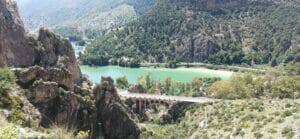
Below, the turquoise waters of the reservoir. And if you’re really into heights, it’s right there the via ferrata at El Chorro, which is something else entirely.
We are a local tour operator based in Málaga with over 50 years’ experience organising trips around Andalusia. With this excursion, there’s no need to worry about the return journey or cash: The bus will take you there and back, and the tickets have already been booked.
Two formats: with transport from Málaga and the Costa del Sol, or just tickets including a guide and shuttle bus if you’re going on your own.
You can find the full itinerary at the Caminito del Rey.
No. The current walkways date from 2015: a metal structure anchored to the rock, with a continuous handrail along the entire route, compulsory helmets and visitor numbers controlled by time slots. The reputation as the «world’s most dangerous trail» refers to the old, abandoned and unprotected path, where four hikers lost their lives between 1999 and 2000 and which was closed for over a decade.
Downhill. The gradient is gentle, the distance is manageable and there are no sections requiring mountaineering skills. It is 7.7 kilometres in total, of which 2.9 are footbridges, and can be completed in three or four hours. The challenge lies not in the physical exertion but in the sensation of height, with sections barely one metre wide and a suspension bridge 105 metres above the river.
On the shuttle bus, as the route is a straight line: you board at the northern entrance, in Ardales, and alight at the southern exit, in El Chorro. It costs 2.50 euros, is not included in the admission price and can only be paid for in cash to the driver, so it’s a good idea to have the exact change ready. The ticket allows you to travel in both directions all day, and the stop is 300 metres from the exit.
If you suffer from mild or moderate vertigo, yes – just walk slowly and look at the walkway rather than the drop below. If you suffer from severe vertigo, it’s best to think carefully before going on, as there is a glass-bottomed platform and a suspension bridge at a great height. Furthermore, the walkway is one-way, so once you’re on it, you can’t turn back.
In moderate rain, yes. The organisers close the park in the event of torrential rain, strong winds, the risk of landslides or urgent maintenance work, and in such cases they will issue a warning and admission fees will be refunded. Please note that umbrellas are not permitted, so if rain is forecast, you should bring a raincoat.
Because the original path, built in the early 20th century, had been neglected for decades, with the concrete crumbling and no railings, and yet there were still those who crossed it on their own. Between 1999 and 2000, four hikers died; in the most memorable incident, three residents of El Chorro attempted to cross the gorge on a zip line and the cable snapped. Following that, the route was closed.